



When travelers create their list of cose da fare in Islanda, Parco nazionale di Thingvellir consistently ranks among the top destinations. This UNESCO World Heritage Site offers a rare combination of historical significance and geological marvel, where visitors can literally walk between two continental tectonic plates. Located just 45 minutes from Reykjavik, Parco nazionale di Thingvellir serves as the perfect introduction to Iceland’s dramatic landscapes and rich cultural heritage.
Whether you are interested in Viking history, plate tectonics, crystal-clear diving, or stunning photography opportunities, this comprehensive guide will cover everything you need to know about visiting Thingvellir Iceland. From the ancient Althing parliament site to the Silfra fissure, we will explore all the attractions, activities, and practical information to help you plan an unforgettable visit to one of Iceland’s most important national parks.
What is Thingvellir National Park?
Parco nazionale di Thingvellir is Iceland’s oldest and most historically significant national park, located in the southwest region of the country. The name “Thingvellir” translates to “Fields of Parliament” or “Assembly Plains,” reflecting its role as the meeting place of Iceland’s ancient parliamentary assembly, the Althing, which was established in 930 AD.
In 2004, Thingvellir was designated as a UNESCO World Heritage Site, recognizing its outstanding universal value as both a cultural and natural landmark. The park covers approximately 240 square kilometers and features dramatic rift valleys, crystal-clear springs, waterfalls, and vast lava fields.
Unique Geological Significance
What makes Thingvellir truly extraordinary is its location directly on the Mid-Atlantic Ridge, where the North American and Eurasian tectonic plates meet. This is one of the few places on Earth where you can see and walk between two continental plates above sea level. The plates are drifting apart at a rate of approximately 2 centimeters per year, creating visible fissures, cracks, and valleys throughout the park.
Historical Significance
Beyond geology, Thingvellir holds immense cultural importance as the birthplace of Icelandic democracy. The Althing parliament met here annually for over 800 years, making it one of the oldest parliamentary institutions in the world. Laws were recited, disputes were settled, and major decisions affecting the entire nation were made on these plains.
History of Thingvellir National Park
Comprendere la storia di Thingvellir Iceland adds profound meaning to your visit. This landscape has witnessed over a millennium of Icelandic history.
The Establishment of the Althing (930 AD)
In 930 AD, Icelandic chieftains established the Althing as a national assembly where representatives from all regions would gather to make laws and settle disputes. This was revolutionary for its time, creating a form of democracy in a remote Nordic island.
The Law Speaker: Each year, a Law Speaker (Lögsögumaður) would recite the entire body of Icelandic law from memory at the Law Rock (Lögberg). This oral tradition continued for centuries before laws were written down.
Annual Gathering: The Althing met for two weeks each summer, attracting thousands of people who camped on the plains, traded goods, shared news, and participated in the legislative process.
Key Historical Events
| Anno | Event |
|---|---|
| 930 AD | Althing parliament established |
| 1000 AD | Iceland’s conversion to Christianity decided at Thingvellir |
| 1262 AD | Iceland came under Norwegian rule; Althing’s power diminished |
| 1798 AD | Althing discontinued as a legislative body |
| 1847 AD | Althing revived in Reykjavik |
| 1930 AD | Thingvellir declared a national park |
| 2004 AD | UNESCO World Heritage Site designation |
The Conversion to Christianity (1000 AD)
One of the most pivotal moments in Icelandic history occurred at Thingvellir in the year 1000. The assembly voted to adopt Christianity as the official religion, though pagan practices were allowed to continue privately for a time. This decision prevented civil war and unified the nation under a single faith.
National Park Designation
In 1930, on the millennial anniversary of the Althing’s establishment, Thingvellir was officially declared Iceland’s first national park. This protected the site from development and preserved it for future generations to appreciate both its natural and cultural significance.
Geography and Geology
The geological features of Parco nazionale di Thingvellir are as compelling as its history. The park provides a front-row seat to the forces that shape our planet.
Tectonic Plates
North American Plate: The western side of Thingvellir belongs to the North American tectonic plate.
Eurasian Plate: The eastern side belongs to the Eurasian tectonic plate.
The Rift Valley: Between these plates lies the Almannagjá rift valley, a dramatic gorge that marks the boundary. Walking through this valley means you are literally stepping between continents.
Visible Geological Features
Fissures and Cracks: Throughout the park, you will see numerous fissures where the earth has split apart. Some are narrow cracks, while others are wide valleys filled with water.
Fault Scarps: Steep cliffs and walls mark where the earth has dropped down as the plates separate. These can be several meters high and stretch for kilometers.
Lava Fields: Ancient lava flows cover much of the park, creating rugged, otherworldly terrain. The lava is covered in vibrant green moss in many areas.
Springs and Streams: Meltwater from Langjökull glacier filters through underground lava tubes for decades before emerging as crystal-clear springs throughout the park.
Lake Thingvallavatn
Size: Iceland’s largest natural lake, covering approximately 84 square kilometers.
Depth: Reaches depths of up to 114 meters in some areas.
Formation: Created by tectonic activity and volcanic eruptions over thousands of years.
Fish: Home to unique species of Arctic char that have evolved differently in various parts of the lake due to isolation.
Attività: Fishing, boating, and shoreline walking are popular activities around the lake.
Main Attractions Within Thingvellir National Park
Thingvellir offers numerous points of interest that showcase both its geological and historical significance. Here are the must-see attractions within the park.
Almannagjá Rift Valley
Descrizione: The most famous geological feature in Thingvellir, Almannagjá is a dramatic rift valley that marks the boundary of the North American tectonic plate.
Esperienza: Walk through the valley floor between towering rock walls that rise up to 40 meters high. The path is well-maintained and suitable for most fitness levels.
Fotografia: The contrast between the dark volcanic rock, green moss, and blue sky creates stunning images. Visit during golden hour for the best light.
Tempo necessario: Allow 30 to 45 minutes to walk the full length of the valley.
Lögberg (Law Rock)
Descrizione: The historical heart of Thingvellir, this is where the Law Speaker recited Icelandic law and where major decisions were made during the Althing assemblies.
Significance: Stand where Viking chieftains gathered over 1,000 years ago to shape the destiny of a nation.
Marker: A stone monument now marks the approximate location of the original Law Rock.
Views: The site offers excellent views across the assembly plains and toward Lake Thingvallavatn.
Silfra Fissure
Descrizione: Perhaps the most famous diving and snorkeling location in the world, Silfra is a fissure between the tectonic plates filled with glacial water.
Water Visibility: Exceeds 100 meters, making it some of the clearest water on Earth.
Temperature: Water temperature remains between 2°C and 4°C year-round.
Attività: Snorkeling and scuba diving tours operate regularly (requires certification for diving).
Esperienza: Swim or dive between two continents in water so clear you can see every detail of the underwater landscape.
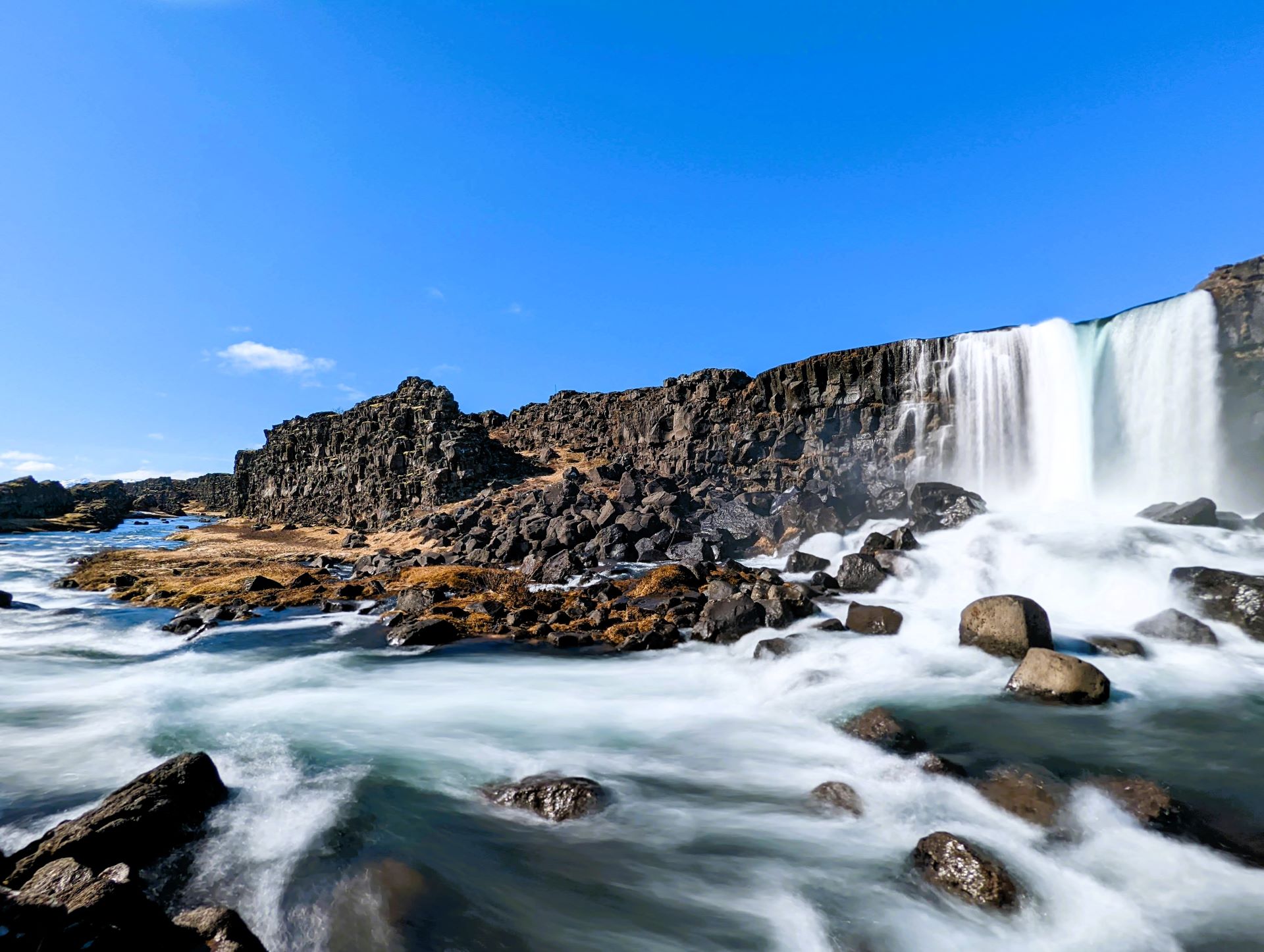
Öxarárfoss Waterfall
Descrizione: A beautiful 20-meter waterfall that cascades over a cliff into a pool below.
Accesso: Easily reachable via a short walking path from the main parking area.
History: The waterfall was actually diverted by humans during the time of the Althing to provide water for the assembly camp.
Fotografia: Excellent photo opportunities, especially when ice formations create natural frames in winter.
Tempo necessario: 15 to 20 minutes to view and photograph.
Hrafnagjá Rift
Descrizione: Another impressive rift valley similar to Almannagjá but less crowded.
Esperienza: Offers a more secluded experience for those willing to walk a bit further from the main tourist areas.
Geology: Clear examples of fault scarps and tectonic activity visible along the walls.
Thingvellir Church
Descrizione: A small Lutheran church built in 1859, reconstructed in the 20th century.
History: Several churches have stood on this site since Iceland’s conversion to Christianity.
Servizi: Occasional services are held; visitors are welcome to enter when open.
Cemetery: The churchyard contains graves of notable Icelanders, including several national heroes.
Visitor Center
Descrizione: The main hub for information, exhibitions, and facilities.
Mostre: Learn about the park’s geology, history, and ecology through interactive displays.
Strutture: Restrooms, gift shop, cafe, and information desk available.
Personale: Knowledgeable rangers can answer questions and provide maps.
Activities at Thingvellir National Park
Thingvellir offers a variety of activities suitable for different interests and fitness levels.
Hiking and Walking
Difficulty Levels: Ranging from easy paved paths to moderate hiking trails.
Popular Trails:
- Almannagjá Valley Walk (Easy, 1 km)
- Öxarárfoss Trail (Easy, 500 meters)
- Lake Shore Walk (Moderate, varies)
- Extended Park Trails (Moderate to Difficult, 5-10 km)
Calzature: Sturdy walking shoes recommended; hiking boots for longer trails.
Durata: From 30 minutes to full-day hikes depending on chosen routes.
Snorkeling and Diving
Silfra Fissure: The premier location for underwater adventures between tectonic plates.
Requisiti:
- Snorkeling: No certification required; basic swimming ability necessary
- Diving: Valid scuba certification required; minimum dive experience
Equipment: Dry suits provided by tour operators (essential due to cold water).
Tour Operators: Multiple companies offer guided tours from Reykjavik and on-site.
Durata: Approximately 3-4 hours including transportation, briefing, and water time.
Periodo migliore: Year-round; water visibility remains excellent in all seasons.
Fishing
Lake Thingvallavatn: One of Iceland’s best fishing locations.
Species: Primarily Arctic char and brown trout.
Permits: Fishing licenses required; available for purchase at the visitor center.
Stagione: June through September offers the best conditions.
Guides: Local fishing guides can enhance your experience with knowledge of best spots.
Fotografia
Landscape: Endless opportunities for dramatic geological and landscape photography.
Wildlife: Birds, including Arctic terns, nest in the park during summer.
Northern Lights: Thingvellir is an excellent location for aurora photography in winter due to minimal light pollution.
I momenti migliori: Golden hour for landscapes; night for Northern Lights (winter months).
Campeggio
Designated Areas: Camping is permitted only in designated areas within the park.
Stagione: Typically May through September, weather permitting.
Strutture: Basic amenities including restrooms and water access.
Reservations: Recommended during peak summer months.
Regulations: Follow Leave No Trace principles; no open fires allowed.
Educational Programs
Ranger Talks: Park rangers occasionally offer guided walks and educational presentations.
Gruppi scolastici: The park is a popular destination for educational visits.
Mostre: The visitor center features informative displays about geology and history.
Best Time to Visit Thingvellir National Park
Iceland’s seasons dramatically affect the Thingvellir experience. Understanding the differences helps you plan accordingly.
Estate (da giugno ad agosto)
Vantaggi:
- Ore massime di luce diurna (quasi 24 ore a giugno)
- All facilities and services fully operational
- Best weather for hiking and outdoor activities
- Green landscapes with vibrant moss and vegetation
- All roads and trails accessible
- Snorkeling and diving conditions most comfortable
Svantaggi:
- Alta stagione turistica; maggiore affluenza di pubblico.
- Prezzi più alti per alloggi e tour.
- Popular sites can feel crowded, especially midday
- Midnight sun means it never gets fully dark (affects Northern Lights viewing)
Ideale per: First-time visitors, families, hikers, and those wanting full access to all activities.
Inverno (da novembre a marzo)
Vantaggi:
- Poca folla; esperienza tranquilla
- Prezzi più bassi per tour e alloggi.
- Opportunity to see Northern Lights
- Dramatic snow-covered landscapes
- Ice formations at waterfalls create unique photography opportunities
Svantaggi:
- Luce diurna molto limitata (4-5 ore a dicembre)
- Alcune strutture potrebbero avere orari ridotti
- Weather can be harsh; roads may close due to snow
- Snorkeling and diving still possible but colder experience
- Some trails may be inaccessible due to snow and ice
Ideale per: Photographers, Northern Lights hunters, budget travelers, and those seeking solitude.
Stagione intermedia (aprile-maggio, settembre-ottobre)
Vantaggi:
- Un buon equilibrio tra luce naturale e meno folla.
- Prezzi moderati
- Possibile aurora boreale a settembre-ottobre e aprile
- Fioriture primaverili o colori autunnali
- La maggior parte delle strutture è operativa
Svantaggi:
- Il tempo può essere imprevedibile
- Alcuni servizi potrebbero essere in fase di transizione tra le stagioni.
- Road conditions can vary
Ideale per: Viaggiatori alla ricerca di un equilibrio tra folla, costi e condizioni.
Ora del giorno
Early Morning (6:00 AM to 9:00 AM): Fewest visitors; best light for photography; peaceful atmosphere.
Mezzogiorno (dalle 11:00 alle 15:00): Busiest period; tour groups present; good for facilities and services.
Late Afternoon (3:00 PM to 6:00 PM): Crowds thin; golden hour lighting; ideal for photography.
Evening/Night: Excellent for Northern Lights in winter; very quiet; limited facilities.
How to Get to Thingvellir National Park
Thingvellir’s proximity to Reykjavik makes it one of the most accessible national parks in Iceland.
Da Reykjavik
Distanza: Approximately 45 kilometers (28 miles) from downtown Reykjavik.
Tempo di percorrenza: 45 minutes to 1 hour depending on traffic and weather.
Itinerario: Take Route 1 (Ring Road) north, then turn onto Route 36 toward Thingvellir.
Condizioni stradali: Paved roads year-round; generally well-maintained.
Con auto a noleggio
Vantaggi:
- Massima flessibilità in termini di tempi e durata.
- Ability to stop at viewpoints along the way
- Facile da abbinare ad altre attrazioni della costa meridionale.
- Conveniente per gruppi e famiglie
Parcheggio: Free parking available at multiple locations within the park.
Navigazione: GPS and road signs clearly mark the route; download offline maps as backup.
Carburante: Fill up in Reykjavik; limited gas stations near the park.
In autobus turistico
Vantaggi:
- Vietata la guida in condizioni non familiari
- Guided commentary provides historical and geological context
- Often combined with Golden Circle tours
- Nessun problema di parcheggio.
Considerazioni:
- Gli orari fissi limitano la flessibilità
- Less time at each location
- Il ritmo di gruppo potrebbe non essere adatto a tutti.
Tipologie di tour: Half-day, full-day, and multi-day tours available from Reykjavik.
Con i mezzi pubblici
Disponibilità: Limited public bus service to Thingvellir.
Stagionale: Servizio più frequente in estate; ridotto in inverno.
Planning: Check current schedules before relying on public transport.
Raccomandazione: Rental car or tour bus recommended for most visitors.
Come parte del Circolo d'Oro
Thingvellir is the first stop on Iceland’s famous Percorso del Circolo d'Oro, which also includes:
- Geysir: Home to the Great Geysir and Strokkur geyser
- Gullfoss: One of Iceland’s most powerful waterfalls
Itinerario tipico: Most Golden Circle tours spend 1-2 hours at Thingvellir before continuing to the other attractions.
Giornata intera: Allow 6-8 hours for the complete Golden Circle experience.
Entrance Fees and Facilities
Planning your budget for Parco nazionale di Thingvellir requires understanding the fee structure and available facilities.
Entrance Fees
Park Entry: There is no entrance fee to visit Thingvellir National Park itself.
Parcheggio: Free parking is available throughout the park at designated areas.
Centro visitatori: Free entry to the visitor center and exhibitions.
Attività: Specific activities have separate fees:
- Snorkeling tours: $100-$150 per person
- Diving tours: $150-$200 per person
- Fishing permits: Varies by duration and type
- Camping: Small nightly fee for designated campsites
Strutture
Centro visitatori:
- Sportello informazioni con personale multilingue.
- Interactive exhibitions about geology and history
- Servizi igienici (puliti e ben tenuti)
- Negozio di souvenir con articoli da regalo e materiale didattico.
- Small cafe serving snacks and beverages
Servizi igienici:
- Located at visitor center and main parking areas
- Utilizzo gratuito
- Ben tenuto durante tutta la stagione
Cibo e ristorazione:
- Caffetteria presso il centro visitatori (menù limitato)
- Distributori automatici disponibili
- Nearest restaurants in nearby towns (20-30 minutes drive)
- Si consiglia di portare snack e acqua per le visite più lunghe.
Accessibilità:
- I percorsi principali e il centro visitatori sono accessibili alle persone in sedia a rotelle.
- Alcuni sentieri naturali presentano un terreno irregolare.
- Sono disponibili servizi igienici accessibili ai disabili.
- Assistenza disponibile su richiesta.
Wifi:
- Limited WiFi available at visitor center
- Cell service generally good throughout the park
- Download offline maps before arrival
Photography Tips for Thingvellir
Thingvellir offers exceptional photography opportunities. Here is how to capture the park at its best.
I migliori luoghi per scattare fotografie
Almannagjá Rift: Dramatic rock walls create leading lines and natural frames.
Silfra Fissure: Underwater photography requires specialized equipment; surface shots show the clear water.
Öxarárfoss Waterfall: Long exposure creates silky water effects; ice formations in winter add interest.
Lake Thingvallavatn: Sunrise and sunset reflections on the water; include foreground elements for depth.
Lögberg: Historical significance adds meaning to images; capture the vast assembly plains.
Lava Fields: Textured landscapes with moss create unique foregrounds.
Impostazioni della fotocamera
Landscape:
- Aperture: f/8 to f/16 for maximum depth of field
- Shutter Speed: Varies; use tripod for slow exposures
- ISO: Keep low (100-400) for best quality
- Focus: Hyperfocal distance for sharpness throughout
Waterfall:
- Shutter Speed: 1/2 second to 2 seconds for silky effect
- Treppiede: essenziale per la stabilità
- ND Filter: Helps achieve slow shutter in bright conditions
Northern Lights:
- Apertura: f/2.8 o più ampia
- Tempo di posa: 10-25 secondi (regolare in base al movimento dell'aurora boreale)
- ISO: 1600-3200 depending on conditions
- Treppiede: assolutamente indispensabile
Best Times for Photography
L'ora d'oro: Sunrise and sunset provide warm, directional light that enhances textures.
Ora blu: Twilight creates beautiful contrast between sky and landscape.
Giornate nuvolose: Soft, even light reduces harsh shadows on rock formations.
Notte: Essential for Northern Lights; bring headlamp for navigation.
Raccomandazioni sull'attrezzatura
- Obiettivo grandangolare: Essential for landscapes and rift valleys
- Treppiedi: Necessary for long exposures and night photography
- Filtri ND: For waterfall and daylight long exposures
- Batterie di ricambio: Cold weather drains batteries quickly
- Weather Protection: Rain covers for camera gear
- Underwater Housing: For Silfra snorkeling photography (or hire professional)
Informazioni sulla sicurezza
While Thingvellir is generally safe, understanding potential hazards ensures a worry-free visit.
Geological Hazards
Unstable Rock: Do not climb on rock walls or fissure edges; rocks can be loose and unstable.
Fissures: Stay on marked paths; some cracks are deep and not immediately visible.
Lava Fields: Uneven terrain can cause trips and falls; watch your step.
Water Safety
Acqua fredda: Lake and fissure water is extremely cold year-round; never swim outside designated areas.
Currents: Some areas have underwater currents; only enter water with guided tours.
Superfici scivolose: Rocks near water are slippery; use caution when photographing near edges.
Considerazioni meteorologiche
Vento: Strong winds are common; secure loose items and dress in layers.
Temperature: Weather changes rapidly; bring warm clothing even in summer.
Visibilità: Fog can reduce visibility quickly; stay on marked trails.
Winter Conditions: Ice and snow create hazardous walking conditions; use appropriate footwear.
Wildlife
Generally Safe: No dangerous wildlife in the park.
Birds: Arctic terns nest in summer and may dive-bomb if you approach nests; give them space.
Fish: No concerns for visitors not fishing.
Informazioni di emergenza
Stazione dei ranger: Park rangers are available during operating hours.
Numero di emergenza: Il 112 è il numero per tutte le emergenze in Islanda.
Primo soccorso: Basic first aid available at visitor center.
Evacuation: In caso di lesioni gravi, potrebbe essere necessario il trasporto in elicottero per evacuare le zone remote.
Consigli generali sulla sicurezza
- Stay on marked trails and paths
- Non avventuratevi nelle aree riservate
- Informa qualcuno dei tuoi piani se fai escursioni da solo
- Carry water and snacks for longer visits
- Controlla le previsioni del tempo prima dell'arrivo.
- Indossare un abbigliamento adeguato alle condizioni meteorologiche.
- Keep children supervised at all times
- Rispetta le barriere e i segnali di pericolo.
Attrazioni nelle vicinanze da abbinare alla vostra visita
Thingvellir’s location makes it easy to combine with other Attrazioni dell'Islanda for a full day or multi-day itinerary.
Golden Circle Attractions
Area geotermica di Geysir:
- Distance: 60 kilometers from Thingvellir
- Highlights: Strokkur geyser erupts every 5-10 minutes
- Tempo necessario: 1-2 ore
- Facilities: Visitor center, cafe, restrooms, gift shop
Gullfoss Waterfall:
- Distance: 50 kilometers from Geysir
- Highlights: Powerful two-tiered waterfall
- Tempo necessario: 1 ora
- Facilities: Visitor center, cafe, restrooms, gift shop
South Coast Extensions
Kerid Crater:
- Distance: 45 minutes from Thingvellir
- Highlights: Volcanic crater lake with red rocks
- Time Needed: 30-45 minutes
- Entry Fee: Small fee for viewing platform
Secret Lagoon:
- Distance: 30 minutes from Gullfoss
- Highlights: Natural geothermal pool
- Time Needed: 2-3 hours
- Facilities: Changing rooms, cafe, lockers
Reykjavik:
- Distance: 45 minutes from Thingvellir
- Highlights: Capital city attractions, dining, shopping
- Time Needed: Half to full day
- Facilities: All urban amenities
Extended Itineraries
Costa meridionale: Continue to Vik, Reynisfjara Black Sand Beach, and waterfalls.
Snæfellsnes Peninsula: West Iceland’s dramatic coastal landscapes.
Highlands: Summer access to Iceland’s interior (requires 4×4 vehicle).
Westfjords: Remote and spectacular region for extended trips.
Where to Stay Near Thingvellir National Park
There are no hotels directly within Thingvellir National Park, but several accommodation options exist nearby.
Opzione 1: Reykjavik
Distanza: 45 minutes drive
Vantaggi:
- La più ampia selezione di hotel e ristoranti
- Disponibili tutte le fasce di prezzo
- Facile accesso all'aeroporto e ad altre attrazioni.
- Servizi urbani e vita notturna
Ideale per: Visitatori che desiderano la comodità della città e pianificano gite di più giorni.
Opzione 2: Selfoss
Distanza: 30 minutes drive
Vantaggi:
- Cittadina di piccole dimensioni dal carattere locale
- Buona scelta di ristoranti
- Comodo per esplorare il Circolo d'Oro
- Più conveniente di Reykjavik
Ideale per: Viaggiatori che desiderano soggiornare fuori dalla capitale pur mantenendo l'accesso ai servizi.
Opzione 3: Laugarvatn
Distanza: 20 minutes drive
Vantaggi:
- Vicino alla piscina geotermica Secret Lagoon
- Tranquillo ambiente rurale
- Ottima base per il Circolo d'Oro
- Diverse pensioni e hotel
Ideale per: Those wanting to combine Thingvellir with geothermal bathing.
Option 4: Camping at Thingvellir
Distanza: Within the park
Vantaggi:
- Immersive nature experience
- Cost-effective
- Early morning and late evening park access
- Unique experience
Ideale per: Budget travelers, campers, and those seeking solitude.
Nota: Camping only in designated areas; reservations recommended in summer.
Domande frequenti (FAQ)
Q: Is there an entrance fee for Thingvellir National Park? A: No, entry to the park is free. Parking is also free. Some activities like snorkeling and diving have separate fees.
Q: How long should I spend at Thingvellir? A: Minimum 2-3 hours to see main attractions. Half-day allows for hiking and visitor center. Full day for extensive exploration and activities.
Q: Can I swim in Silfra without a tour? A: No, swimming and snorkeling in Silfra must be done with licensed tour operators for safety reasons.
Q: Is Thingvellir wheelchair accessible? A: The visitor center and main paths are accessible. Some natural trails have uneven terrain that may be challenging.
Q: Are dogs allowed in Thingvellir National Park? A: Dogs must be kept on leash at all times. Clean up after your pet. Some areas may have restrictions.
Q: What is the best time to see Northern Lights at Thingvellir? A: September through March, during dark hours. Check aurora forecasts and visit on clear nights away from full moon.
Q: Can I camp anywhere in the park? A: No, camping is only permitted in designated camping areas. Follow all park regulations.
Q: Is there cell phone service at Thingvellir? A: Yes, cell service is generally good throughout the park, though some remote areas may have limited coverage.
Q: Are there restaurants at Thingvellir? A: A small cafe operates at the visitor center. More dining options are available in nearby towns.
Q: Can I visit Thingvellir in winter? A: Yes, the park is open year-round. Some facilities may have reduced hours, and weather conditions can affect access.
Q: How cold is the water in Silfra? A: Water temperature remains between 2°C and 4°C (35-39°F) year-round. Dry suits are provided for snorkeling and diving.
Q: Is photography allowed throughout the park? A: Yes, personal photography is permitted. Commercial photography may require permits. Drones require special authorization.
D: Sono disponibili visite guidate? A: Yes, multiple companies offer guided tours from Reykjavik, including walking tours, snorkeling, and diving experiences.
Q: What should I wear to Thingvellir? A: Dress in layers with waterproof outer layer. Sturdy walking shoes essential. Warm clothing even in summer due to wind.
Q: Can I fish at Thingvellir? A: Yes, fishing is permitted in Lake Thingvallavatn with appropriate licenses. Check regulations at visitor center.
Conclusion: Iceland’s Crown Jewel Awaits
Parco nazionale di Thingvellir stands as one of Iceland’s most significant and rewarding destinations. Where else on Earth can you walk between two continental plates, stand where Viking parliaments convened over 1,000 years ago, and snorkel in the clearest water on the planet—all in a single day?
Quando compili il tuo elenco di cose da fare in Islanda, Thingvellir deserves top priority. Its accessibility from Reykjavik, combined with its profound geological and historical significance, makes it an essential stop for any Iceland itinerary. Whether you are a history enthusiast, geology buff, adventure seeker, or photography lover, this UNESCO World Heritage Site offers experiences that resonate long after your visit ends.
Remember to respect this sacred landscape. The Icelanders who gathered here centuries ago understood the power and importance of this place. As you walk the same paths, stand at the Law Rock, and gaze into the rift valleys, you connect with over a millennium of human history and millions of years of geological forces.
Il tuo viaggio verso Parco nazionale di Thingvellir is more than a tourist excursion; it is a pilgrimage to the heart of Iceland’s identity. Take your time, absorb the significance, capture the memories, and let this remarkable place inspire you as it has inspired countless visitors before.
Lista di controllo per una visita rapida
Before you depart for Thingvellir, verify the following:
- Check weather forecast
- Confirm visitor center hours
- Book snorkeling/diving tours in advance (if desired)
- Pack layered clothing and waterproof jacket
- Bring sturdy walking shoes or hiking boots
- Charge camera batteries and bring spares
- Download offline maps
- Bring water and snacks
- Review park safety guidelines
- Plan Golden Circle route if combining attractions
- Check road conditions on Road.is
- Bring cash/card for cafe and gift shop
With this guide in hand, you are ready to experience one of Iceland’s most treasured natural and cultural wonders. Enjoy your adventure at Thingvellir National Park!
