









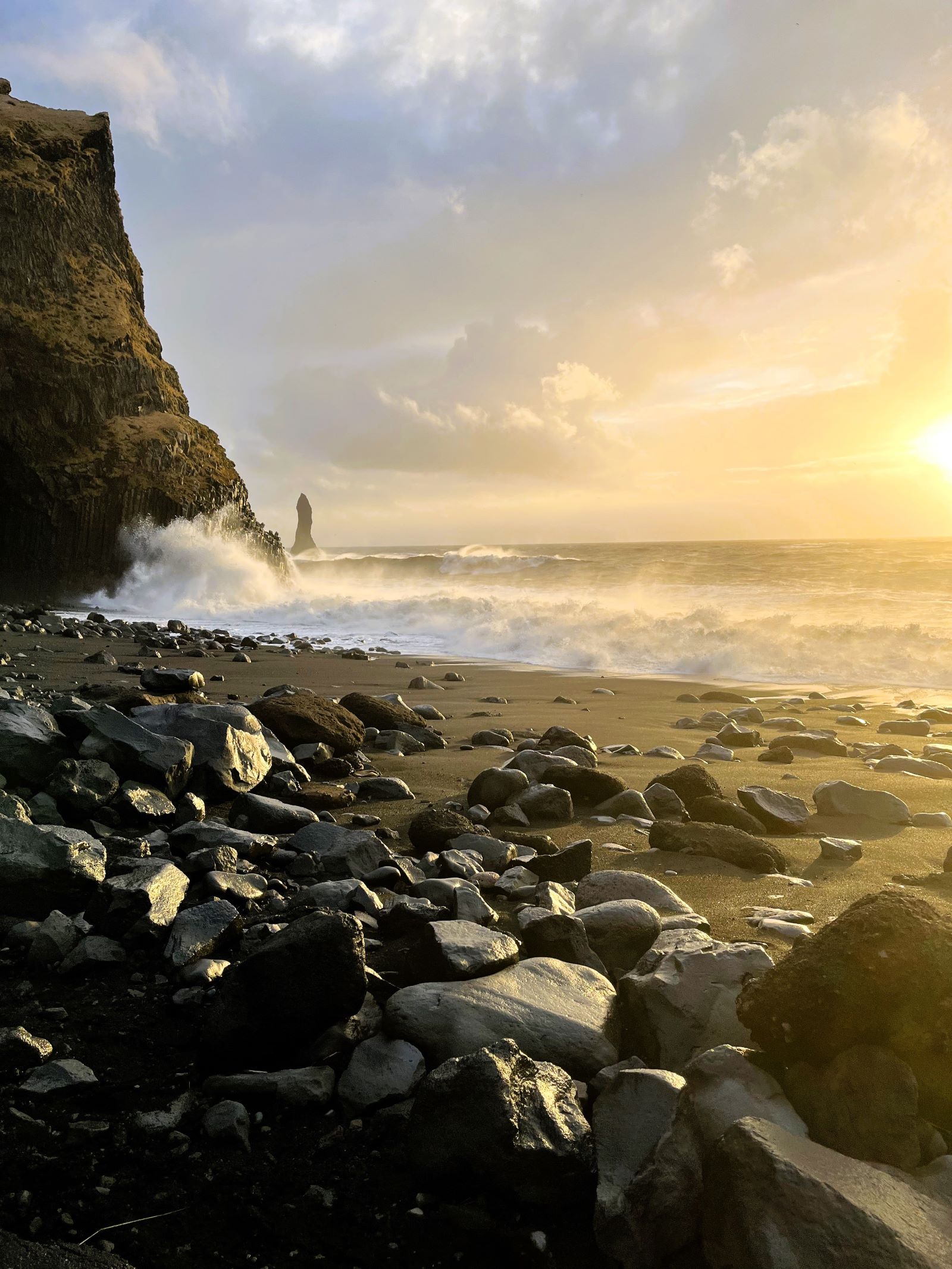
When travelers search for cose da fare in Islanda, few images are as iconic or hauntingly beautiful as Spiaggia di sabbia nera di Reynisfjara. Located on the South Coast of Iceland, just a short drive from the village of Vík, this stretch of volcanic sand is often cited as one of the most beautiful non-tropical beaches in the world. With its jet-black basalt sands, towering hexagonal columns, roaring Atlantic waves, and the legendary Reynisdrangar sea stacks, Reynisfjara offers a landscape that feels otherworldly.
However, beneath its breathtaking beauty lies a raw and untamed power that demands respect. This comprehensive guide will walk you through everything you need to know about visiting Spiaggia di Reynisfjara, from the geology behind the black sand and the folklore of the trolls to critical safety warnings about “sneaker waves,” photography tips, and nearby attractions. Whether you are an adventurer, a photographer, or a family traveler, this post will ensure you experience Reynisfjara safely and memorably.
What Makes Reynisfjara Unique?
Reynisfjara is not your typical beach destination. Unlike the golden sands of the Caribbean or the Mediterranean, Reynisfjara is composed entirely of fine, black volcanic sand. This sand was created over thousands of years as lava flows from nearby volcanoes met the cold ocean water, shattering into tiny fragments that were then ground down by the relentless action of the waves and wind.
The beach stretches for several kilometers along the North Atlantic Ocean, backed by the dramatic Reynisfjall Mountain. The contrast between the dark sand, the white foam of the crashing waves, and the gray-blue sky creates a monochromatic palette that is strikingly photogenic.
The Key Features
- Black Basalt Sand: The defining characteristic of the beach, giving it a surreal, alien appearance.
- Reynisdrangar Sea Stacks: Three massive rock pillars rising out of the ocean just off the shore.
- Basalt Columns: Geometric hexagonal rock formations lining the cliffs and forming a natural cave.
- Garoðshellir Cave: A large cave formed within the basalt columns, accessible (with caution) at low tide.
- Dyrhólaey Arch: A massive stone arch visible in the distance to the east.
The Geology and Folklore of Reynisfjara
To truly appreciate Spiaggia di sabbia nera di Reynisfjara, it helps to understand the stories—both scientific and mythical—that surround it.
The Science: Volcanic Origins
The South Coast of Iceland is geologically active. The black sand is essentially pulverized basalt, a type of volcanic rock rich in iron and magnesium. When lava erupts and hits the ocean, it cools instantly, creating glass-like shards. Over time, erosion breaks these shards down into the fine, velvety sand you see today.
IL basalt columns are a result of cooling lava contracting and cracking into hexagonal shapes. This phenomenon, known as columnar jointing, is rare and visually stunning. You can see similar formations at the Giant’s Causeway in Northern Ireland, but the scale and setting at Reynisfjara are unique.
The Legend: The Trolls Turned to Stone
Icelandic folklore adds a layer of magic to the landscape. According to local legend, the Reynisdrangar sea stacks were once two trolls who attempted to drag a three-masted ship to shore during the night. However, they were caught by the sunrise before they could complete their task. As the sun rose, the trolls were turned to stone, forever frozen in the ocean. Their skeletal remains are said to be the rocks you see today.
Another story suggests that the trolls were a husband and wife who tried to cross the ocean to reach each other but were petrified by the morning light. These tales reflect the Icelandic tradition of explaining natural wonders through mythology, adding a sense of mystery to your visit.
Critical Safety Warning: Sneaker Waves
Before discussing the beauty of Reynisfjara, we must address the most important aspect of visiting: Sicurezza. Reynisfjara is consistently ranked as one of the most dangerous beaches in the world due to a phenomenon known as sneaker waves.
What Are Sneaker Waves?
Sneaker waves are unusually large, powerful waves that surge much further up the beach than the previous waves, often without warning. They can appear suddenly, even when the ocean looks calm. These waves carry immense force and can knock visitors off their feet, dragging them into the freezing Atlantic Ocean.
Why It Is Dangerous
- Cold Water Shock: The water temperature is near freezing year-round. Falling in can cause immediate shock, making it impossible to swim or save yourself.
- Strong Currents: The undertow at Reynisfjara is incredibly strong. Once dragged out, rescue is extremely difficult.
- Slippery Sand: The wet black sand is like quicksand; it makes it hard to regain your footing if you fall.
- No Barriers: There are no fences or barriers stopping people from getting too close to the water.
Safety Rules to Follow
- Never Turn Your Back on the Ocean: Always keep an eye on the waves.
- Stay Far from the Water’s Edge: Do not stand where the waves are breaking. Stay well back on the dry sand.
- Do Not Climb on Rocks: The rocks near the water can be slippery and unstable. Climbing the basalt columns near the surf zone is extremely risky.
- Heed Warning Signs: There are signs at the beach entrance warning of dangerous waves. Take them seriously.
- Supervise Children Closely: Hold children’s hands at all times.
- Respect the Power of Nature: No photo opportunity is worth your life. If a wave looks big, move back immediately.
Note: Several tourists have lost their lives at Reynisfjara due to ignoring these warnings. Please prioritize safety above all else.
Top Things to See and Do at Reynisfjara
Despite the dangers, Reynisfjara offers unforgettable experiences for those who respect the environment. Here are the highlights you shouldn’t miss.
1. Walk Among the Basalt Columns
On the eastern side of the beach, near the parking area, you will find a wall of hexagonal basalt columns rising vertically from the cliff face. These columns form a natural amphitheater and are a photographer’s dream.
- What to do: Walk along the base of the columns to appreciate their geometric perfection. Look up to see how the patterns continue into the cliff.
- Photo Tip: Use a wide-angle lens to capture the scale of the columns against the sky.
2. Visit Garoðshellir Cave
Tucked within the basalt columns is Garoðshellir, a large cave that opens directly onto the beach.
- Accesso: You can walk into the cave, but be extremely cautious. The floor can be uneven, and waves can sometimes surge inside during high tide or storms.
- Esperienza: Standing inside the cave looking out at the ocean provides a framed view of the Reynisdrangar stacks. The acoustics inside are also fascinating.
- Warning: Never enter the cave if the tide is coming in or if the sea is rough.
3. Photograph the Reynisdrangar Sea Stacks
The three prominent sea stacks standing offshore are the stars of the show. They create a dramatic focal point for any composition.
- Best View: From the beach itself, walking towards the western end gives you a clear line of sight.
- Tempistiche: Sunset is magical here, as the low light illuminates the texture of the rocks and the sand. However, visibility can be lower, so be extra careful with sneaker waves.
4. Spot Dyrhólaey Arch
Looking eastward from Reynisfjara, you can see the massive stone arch of Dyrhólaey jutting out into the sea. This natural arch is part of a larger headland that serves as a nature reserve.
- Wildlife: During summer (May to August), thousands of puffins nest on the cliffs of Dyrhólaey. While you can’t climb the cliffs from the beach, you can spot the birds flying around the arch with binoculars.
5. Explore the Black Sand Dunes
Further inland, away from the water, the wind has formed dunes of black sand. Walking here feels like traversing a lunar landscape. It is a great spot for photos that emphasize the texture and color of the sand without the distraction of the ocean.
Best Time to Visit Reynisfjara
The experience at Spiaggia di sabbia nera di Reynisfjara changes drastically depending on the season and time of day.
Estate (da giugno ad agosto)
- Vantaggi: Midnight Sun means you can visit late at night with plenty of light. Warmer temperatures make the walk more comfortable. Puffins are nesting at nearby Dyrhólaey. Roads are clear of ice.
- Svantaggi: Peak tourist season means crowds. Parking lots can fill up quickly. Midges (small flies) can be annoying near the river mouth.
- Ideale per: Families, first-time visitors, and those wanting to combine the beach with puffin watching.
Inverno (da novembre a marzo)
- Vantaggi: Dramatic, moody atmosphere with stormy seas and snow-dusted sand. Fewer crowds. Potential to see the Northern Lights dancing over the ocean at night. Massive waves create spectacular (but dangerous) scenes.
- Svantaggi: Very short daylight hours. Extremely cold and windy. Roads can be icy or closed due to storms. Sneaker waves are even more unpredictable in winter storms.
- Ideale per: Photographers seeking dramatic shots and adventurous travelers comfortable with harsh conditions.
Stagione intermedia (aprile, maggio, settembre, ottobre)
- Vantaggi: A balance of decent weather and fewer crowds. Good lighting for photography.
- Svantaggi: Weather can be unpredictable with rain and wind.
- Ideale per: Travelers who want to avoid peak prices and crowds but still want reasonable daylight.
Ora del giorno
- Sunrise/Sunset: The “Golden Hour” provides the best light, casting warm hues on the black sand and highlighting the textures of the rocks.
- Midday: Often the busiest time with tour buses. The overhead sun can flatten the image, making photography less dynamic.
- Ora blu: Just after sunset, the sky turns a deep blue, contrasting beautifully with the white foam of the waves.
Photography Guide: Capturing the Drama
Reynisfjara is one of the most photographed locations in Iceland. To get the best shots, consider these tips.
Essential Gear
- Treppiedi: Essential for long exposures to smooth out the water.
- Obiettivo grandangolare: Perfect for capturing the vastness of the beach and the height of the basalt columns.
- Filtri ND: Neutral Density filters allow you to use slow shutter speeds even in bright daylight, creating a silky effect on the waves.
- Panno per lenti a contatto: The sea spray is constant; keep your lens clean.
- Borsa impermeabile: Protect your camera gear from sand and salt water.
Composition Ideas
- Linee principali: Use the shoreline or the rows of basalt columns to lead the viewer’s eye toward the sea stacks.
- Riflessioni: After a wave recedes, the wet black sand acts as a mirror. Capture the reflection of the sea stacks or the sky.
- Scala: Include a person in the distance to show the massive size of the basalt columns and sea stacks.
- Motion Blur: Use a shutter speed of 0.5 to 2 seconds to blur the motion of the crashing waves, creating a dreamy, ethereal look.
- Details: Zoom in on the hexagonal patterns of the basalt or the texture of the wet sand.
Safety While Shooting
Photographers often get so focused on the shot that they forget about the waves. Never turn your back on the ocean to set up your tripod. Always position yourself so you can see the waves approaching. If a large wave comes, abandon the shot and move to safety immediately.
How to Get to Reynisfjara
Reynisfjara is easily accessible and is a standard stop on the South Coast route.
In auto
- Posizione: About 180 km (112 miles) southeast of Reykjavik.
- Itinerario: Drive along Route 1 (the Ring Road). Turn off onto Route 215 just before reaching the village of Vík. Follow the signs to the parking lot.
- Tempo di percorrenza: Approximately 2.5 hours from Reykjavik without stops.
- Parcheggio: There is a large paid parking lot right next to the beach entrance. Facilities include restrooms and a small cafe.
In autobus turistico
Many guided tours from Reykjavik include Reynisfjara as a key stop on their South Coast itineraries. This is a convenient option if you don’t want to drive in unfamiliar conditions or deal with parking. Look for tours that specifically mention “South Coast” or “Vík.”
Public Transport
Public bus options are limited. While some seasonal buses run along the South Coast, they may not stop directly at the beach entrance. Renting a car or joining a tour is highly recommended for flexibility and ease.
Attrazioni nelle vicinanze da abbinare alla vostra visita
Since Reynisfjara is located near the village of Vík, you can easily combine your visit with other incredible South Coast attractions.
1. Vík Village
Just a 5-minute drive from the beach, Vík is the southernmost village in Iceland.
- Red Roof Church: The iconic church with a red roof stands on a hill overlooking the town and the ocean. It is a perfect photo subject.
- Shopping: Local shops sell wool sweaters, souvenirs, and local food products.
- Dining: Several restaurants offer fresh seafood and traditional Icelandic dishes.
2. Dyrhólaey Peninsula
Located just east of Reynisfjara, this massive promontory features a natural stone arch and steep cliffs.
- Puffin Watching: In summer, this is one of the best places to see puffins up close.
- Lighthouse: A historic lighthouse sits atop the cliffs, offering panoramic views.
- Viewpoint: You can drive up to the top for a bird’s-eye view of Reynisfjara and the sea stacks.
3. Skógafoss Waterfall
About 30 minutes east of Vík, Skógafoss is one of Iceland’s largest and most famous waterfalls.
- Caratteristiche: A massive curtain of water dropping 60 meters. You can walk right up to the base and feel the mist.
- Stairs: A staircase on the side allows you to climb to the top for a different perspective.
4. Seljalandsfoss Waterfall
Located another 10 minutes east of Skógafoss, this waterfall is unique because you can walk behind the falling water.
- Esperienza: Walking behind the cascade offers a unique vantage point, though you will get very wet.
- Gljúfrabúi: A hidden waterfall located in a canyon right next to Seljalandsfoss, accessible via a narrow path.
5. Sólheimasandur Plane Wreck
About 20 minutes east of Vík, the wreckage of a US Navy DC-3 plane sits on the black sand desert.
- Accesso: Requires a 4km hike (one way) from the parking lot, or you can take a shuttle bus.
- Atmosphere: Surreal and eerie, especially at sunset.
Practical Tips for Visitors
To ensure a smooth and enjoyable visit to Reynisfjara, keep these practical tips in mind.
Cosa indossare
- Waterproof Jacket and Pants: The wind carries spray, and the weather can change instantly. Rain gear is essential.
- Stivali robusti: The sand can be wet and slippery. Hiking boots with good grip are better than sneakers.
- Strati caldi: Even in summer, the wind chill near the ocean can be cold. Wear fleece or wool layers.
- Cappello e guanti: Essential in winter; recommended in summer evenings.
Strutture
- Servizi igienici: Clean public restrooms are available at the main parking lot.
- Caffè: Un piccolo bar vicino al parcheggio serve caffè, snack e pasti leggeri.
- Negozio di articoli da regalo: Sono disponibili souvenir e prodotti di artigianato locale.
- Wifi: Disponibilità limitata; scaricate le mappe offline prima dell'arrivo.
Parking
- Costo: There is a fee for parking (usually around 1,000 ISK). Payment machines accept cards and cash.
- Capacity: The lot is large but can fill up during peak summer hours. Arrive early or late to secure a spot.
Accessibilità
- Beach Access: The path from the parking lot to the beach is relatively flat and paved, making it accessible for wheelchairs and strollers.
- Sand: Once on the beach, the soft sand can be difficult for wheelchairs.
- Cave/Climbs: The basalt columns and cave involve uneven terrain and are not wheelchair accessible.
Domande frequenti (FAQ)
Q: Is Reynisfjara safe to visit? A: Yes, if you follow safety guidelines. The primary danger is sneaker waves. Never turn your back on the ocean, stay far from the water’s edge, and heed all warning signs.
Q: Can I swim at Reynisfjara? A: Swimming is strictly prohibited and extremely dangerous due to the freezing water, strong currents, and unpredictable waves.
Q: Is there an entrance fee? A: There is no fee to enter the beach itself. However, there is a fee for parking at the official lot.
Q: How long should I spend at Reynisfjara? A: Most visitors spend 45 minutes to 1.5 hours exploring the beach, taking photos, and visiting the cave.
Q: Can I visit in winter? A: Yes, the beach is open year-round. Winter offers dramatic scenery but requires extra caution due to ice, snow, and stronger waves.
Q: Are there puffins at Reynisfjara? A: Puffins do not nest directly on the beach, but they nest on the nearby cliffs of Dyrhólaey, which are visible from the beach. You can see them flying around the sea stacks in summer.
Q: Is the sand really black? A: Yes, the sand is naturally black due to its volcanic basalt origin. It is fine and soft but can stain light clothing.
Q: Can I bring my dog? A: Dogs are allowed but must be kept on a leash. Be mindful of wildlife, especially nesting birds in summer.
Q: What is the best time for photography? A: Sunrise and sunset offer the best light. Overcast days provide soft, even lighting that enhances the mood of the black sand.
Q: Are there toilets at the beach? A: Yes, modern restrooms are located at the parking area.
Q: Can I fly a drone at Reynisfjara? A: In Islanda, le normative sui droni sono severe. In generale, è vietato far volare i droni in prossimità di luoghi affollati o senza un'autorizzazione specifica. Prima di far volare un drone, verifica le normative vigenti presso l'Autorità islandese dei trasporti.
Conclusion: A Must-See Wonder of Nature
Spiaggia di sabbia nera di Reynisfjara is a testament to the raw power and beauty of Iceland’s nature. Its dramatic landscapes, rooted in volcanic activity and shaped by the relentless Atlantic Ocean, offer an experience that is both humbling and awe-inspiring. From the geometric perfection of the basalt columns to the mysterious legends of the trolls, every element of this beach tells a story.
While the allure of the black sand and the sea stacks is undeniable, it is crucial to remember that nature here is wild and untamed. Respecting the power of the ocean and adhering to safety guidelines is the only way to enjoy this wonder responsibly.
Quando pianifichi il tuo cose da fare in Islanda, make sure Reynisfjara is at the top of your list. Whether you are chasing the perfect photograph, seeking a moment of solitude, or simply marveling at the forces of the Earth, this beach will leave an indelible mark on your memory. Pack your waterproof gear, charge your camera, and prepare to witness one of the most spectacular coastlines on the planet.
Quick Checklist for Your Visit
Before you head to Reynisfjara, ensure you have:
- Checked the weather forecast and road conditions.
- Packed waterproof clothing and sturdy boots.
- Reviewed safety rules regarding sneaker waves.
- Downloaded offline maps.
- Brought cash/card for parking fees.
- Charged your camera batteries and brought spare SD cards.
- Planned nearby stops like Vík or Skógafoss.
- Arrived early to avoid peak crowds (if visiting in summer).
Safe travels and enjoy the magic of the black sand!
