









From the south-coast mainland, the Vestmannaeyjar look like a row of dark teeth on the horizon: roughly 15 islands rising out of the North Atlantic, with a single inhabited one at the center. Heimaey is home to around 4,500 people, a working fishing harbor, a golf course laid out across solidified lava, and a volcano that is younger than many of the town’s grandparents. Our team rates it the best day trip in south Iceland — close enough for an easy crossing, different enough to feel like a second country.
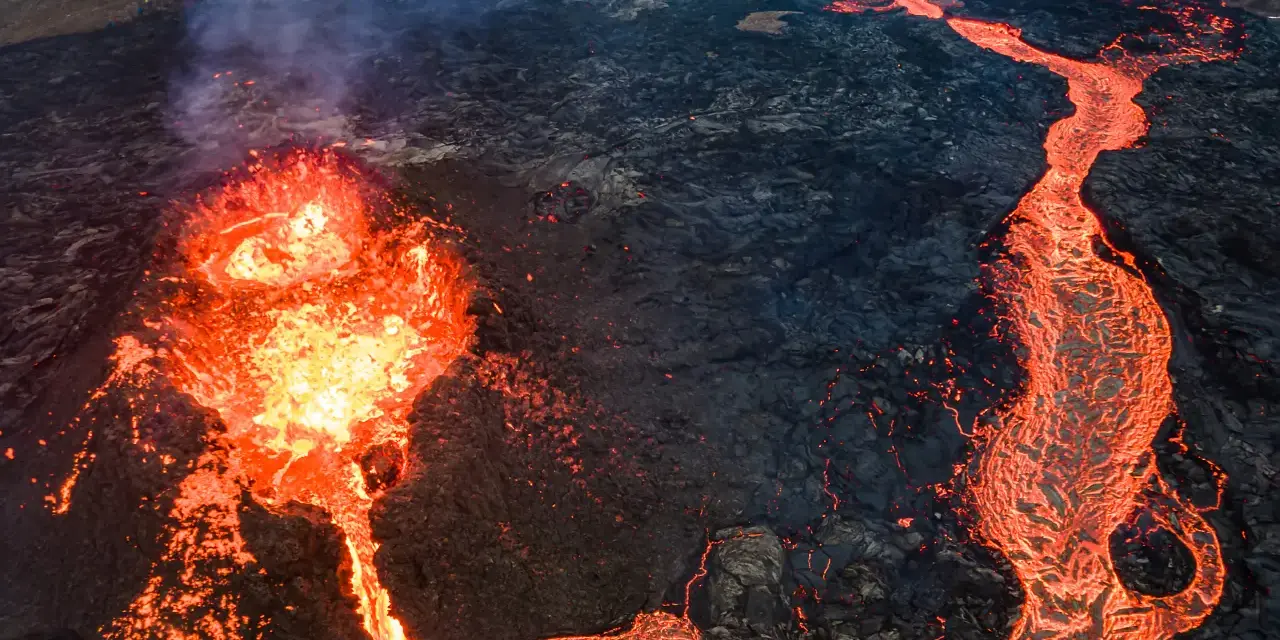
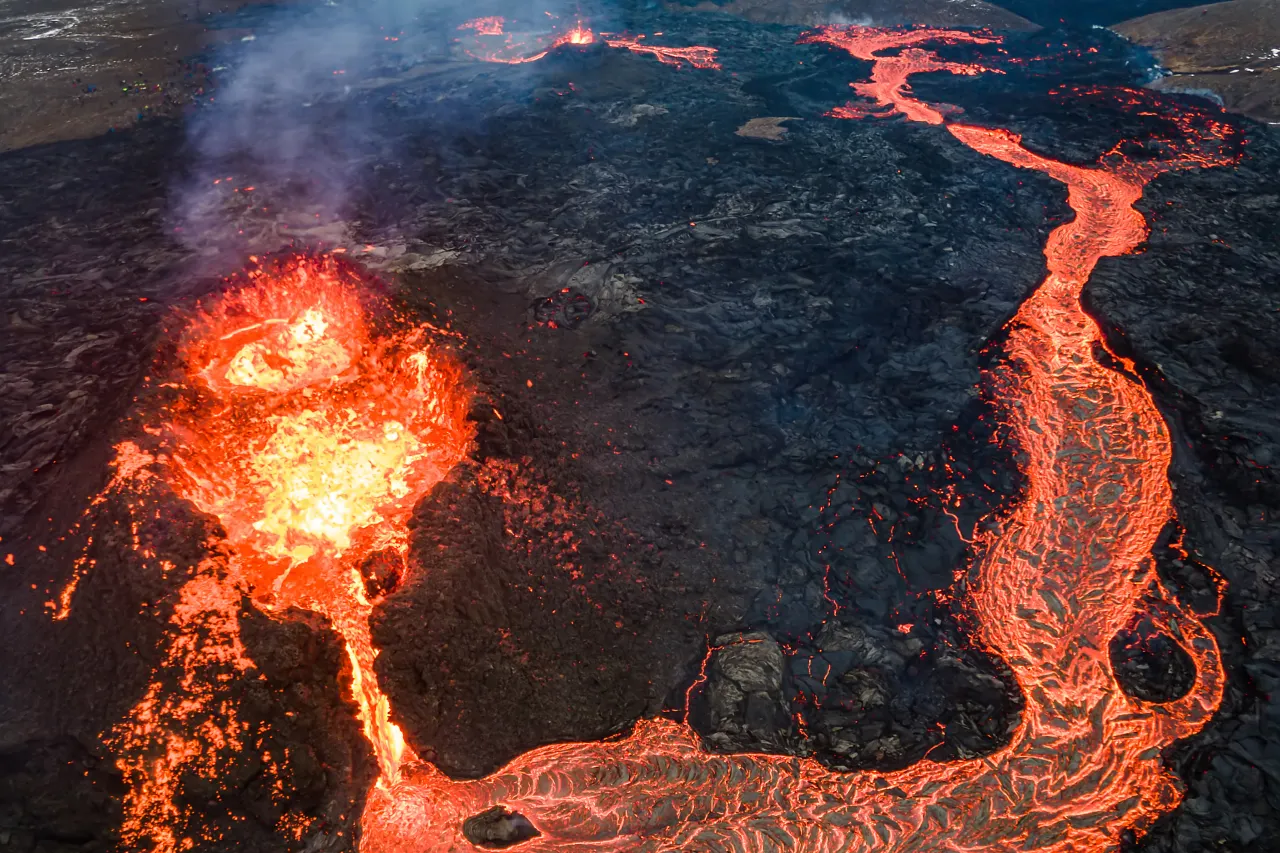
That difference has a date attached. In January 1973, a fissure opened alarmingly close to town, and the entire population was evacuated within hours — by the fishing fleet, which happened to be in harbor that night. Lava and ash then worked through the eastern district for months; roughly 400 buildings ended up buried, and a brand-new mountain, Eldfell, rose about 200 metres over the rooftops. The harbor, the island’s whole livelihood, was famously saved by pumping seawater onto the advancing lava front — and, in a twist geologists still admire, the cooled lava actually extended and sheltered it.
This guide collects everything we wish we had known before our first crossing: how the ferry and flights actually work, what the Eldheimar museum is really like inside, how to combine the crater walk with puffins and a boat tour, what the wind does at Stórhöfði, and why the first weekend of August turns the entire island into one enormous campsite.
Key takeaways
- A town buried in one night: the January 1973 Eldfell eruption emptied Heimaey within hours via the fishing fleet, and roughly 400 buildings ended up under lava and ash.
- A new mountain, a saved harbor: Eldfell rose to about 200 metres, and months of seawater pumping on the lava front protected — and actually improved — the harbor.
- Pompeii of the North: the Eldheimar museum preserves excavated houses with interiors paused exactly where the ash found them in 1973.
- Easier to reach than you think: the summer ferry from Landeyjahöfn takes roughly 30–40 minutes; flights from Reykjavik take about 25 minutes.
- Puffins, sea cliffs and serious wind: summer boat tours pass Elephant Rock and the sea caves, while Stórhöfði ranks among the windiest measured places on Earth.
Quick answer: give Heimaey one full day — Eldheimar in the morning, the Eldfell crater rim at midday, a boat tour and the puffin cliffs in the afternoon. Take the summer ferry from Landeyjahöfn as a foot passenger (the essentials are walkable) or book vehicle space well ahead. In winter, check the sailing route before you commit: the short crossing is seasonal and the weather calls the shots.
A town buried overnight: the 1973 eruption
Vestmannaeyjar is one of the few places on Earth where you can watch a community absorb a natural disaster and then build a museum inside it. In January 1973, without meaningful warning, a fissure opened at the edge of Heimaey. The fishing fleet was in harbor — by luck as much as anything — and over the following hours it ferried nearly the entire population to the mainland. Lava and ash then worked through the eastern district for months: roughly 400 buildings disappeared under the flow, ash weighted down roofs across the rest of town, and the island’s map was redrawn in real time.
The eruption built Eldfell — “Fire Mountain” — a scoria cone about 200 metres high, and pushed the coastline outward. The existential question was the harbor: if lava closed the channel, the fishing town lost its reason to exist. The response became textbook geology in action. Months of pumping cold seawater over the lava front slowed it, hardened it and steered it away from the channel entrance; the harbor survived, and the new lava arms actually widened and sheltered it. Sail in today and the channel’s odd geometry is the eruption’s signature.
Worth knowing: the eruption is not ancient history here. The ground on parts of Eldfell still feels warm after rain, and excavation work in the buried district keeps surfacing 1973 interiors — which is exactly how the Eldheimar museum began. Treat the lava field east of town as the open-air annex of everything you’ll read indoors.
Getting there: ferry or flight
There are two ways onto the island, and both are more weather-dependent than mainland travelers expect — which is why the first rule of Vestmannaeyjar planning is to leave slack in the schedule.
- The ferry (Herjólfur): in summer the fast crossing runs from Landeyjahöfn, a small harbor east of Hvolsvöllur, and takes roughly 30–40 minutes. Foot passengers are simple; vehicle space is limited and books out on fine summer weekends. When conditions or the calendar dictate, the sailing shifts to the longer route from Þorlákshöfn — budget around 3 hours.
- The flight: about 25 minutes from Reykjavik’s domestic terminal. It is the weather-permitting shortcut that turns the islands into a half-day trip even on a short itinerary, and the views on approach are a bonus in themselves.
- Status checks: the approach road to Landeyjahöfn and the sailings themselves move with wind and swell. Check road.is for the road and the operator’s live schedule before you build the day around it — and keep a mainland plan B ready.
Our honest advice: go as a foot passenger. Heimaey’s essentials — the museum, the harbor, the Eldfell climb, the coastal viewpoints — cluster within walking distance of the quay, and the boat tours depart close by. A car adds little unless you are staying overnight with camping gear or traveling with small children who negotiate distances poorly.
From real trips: the crossing can be lumpy even on a blue-sky day — swell in the channel is not the same as wind in town. If you are prone to seasickness, take the morning sailing (usually calmer), sit low, or fly instead. And never chain a same-day Ring Road deadline onto an afternoon return ferry; give the timetable room to slip.
Eldheimar & the Pompeii of the North
Eldheimar is the reason many visitors turn a day trip into an overnight. The museum is built around houses excavated from the ash — interiors paused mid-life in 1973 and carefully uncovered decades later. The centerpiece is a home opened up like a cross-section, one wall stripped away so you look straight into rooms abandoned in the middle of ordinary life. The exhibition moves from the eruption itself through the evacuation, the seawater battle and the long excavation years, and it does something rare: it tells the story through the people who lived it.
Give it a solid 90 minutes to two hours. What stays with our team is the ordinariness of what the ash preserved — wallpaper, furniture, the geometry of a staircase. Volcanic disasters usually arrive as statistics; here they arrive as a kitchen. If you visit before climbing Eldfell, the crater walk afterwards becomes something more than exercise: you are standing inside the story you just walked through.
Walking Heimaey: crater rim, coast & history
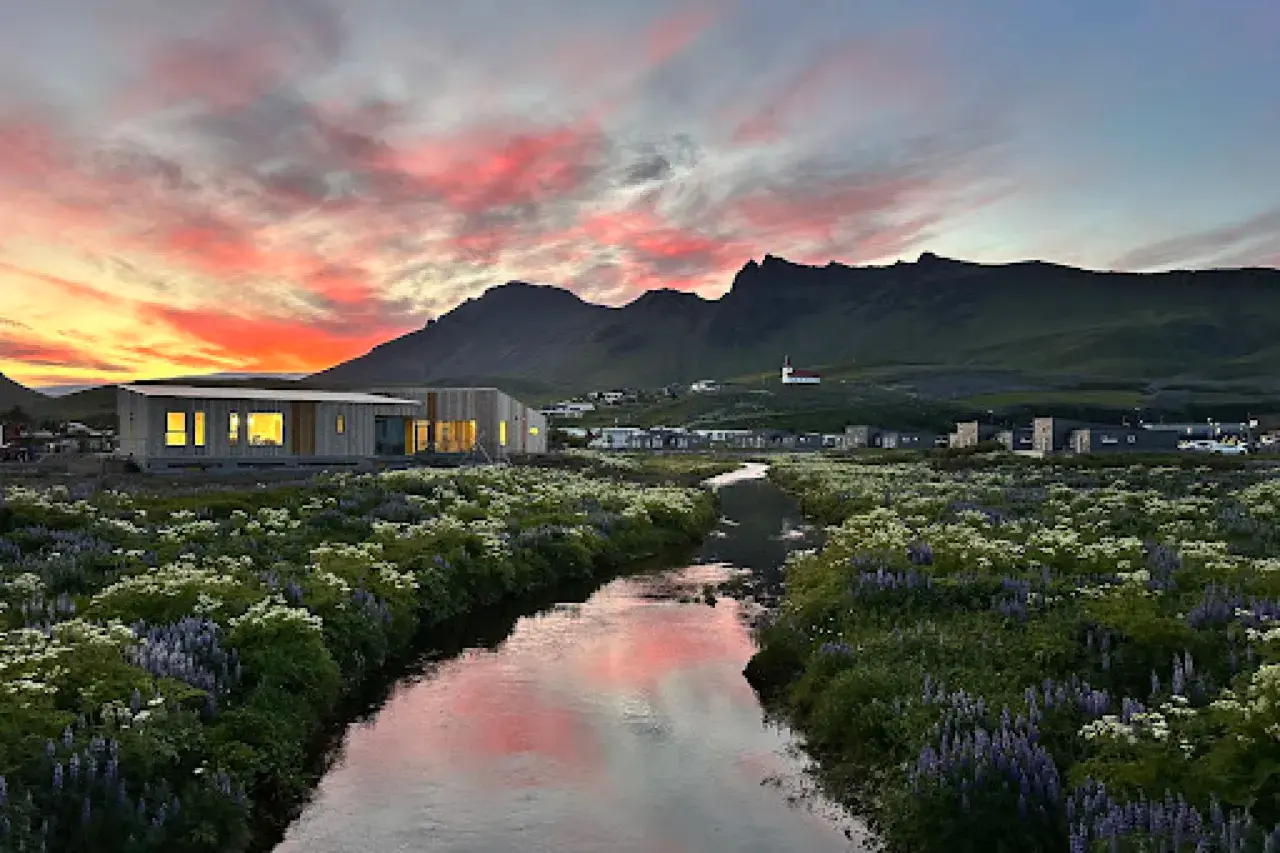
The island is a compact outdoor museum, and the classic half-day loop strings it together. Start at the harbor, work along the edges of the buried district, then climb Eldfell’s rim: red scoria underfoot, the 1973 lava field spread out below, the mainland a thin line across the water. On a calm day the ascent is family-friendly and takes well under an hour; in real wind it becomes a two-handed walk, which is part of the education too.
Drop down toward Skansinn, the old fortification at the harbor mouth, and notice the details that make Heimaey unlike anywhere else: a golf course played across solidified lava, houses with a 200-metre volcano in the back garden, and lava walls reused as boundary fences. Hold on to the hat for the walk out toward Stórhöfði — the headland has a legitimate claim to being one of the windiest measured places on the planet, and the local birds treat the gale as a mild inconvenience.
Puffins & boat tours
In summer, Heimaey’s clifftops fill with one of Iceland’s great puffin colonies — burrows in the grass, birds shuttling between nest and sea with the businesslike urgency of commuters. Timing matters: the birds are a summer-only attraction, and by late August the season is winding down. Our puffins in Iceland guide breaks down where and when the odds are best, and Heimaey sits firmly on that map.
The boat tour is the other half of the marine experience and worth the ticket in any season that allows sailings: the route runs past Elephant Rock — a cliff face that genuinely looks like a drinking elephant — into sea caves and along the smaller islands that most visitors never see from land. If the swell is kind, the perspective from the water reframes everything you walked earlier in the day.
Wind, weather & when to go
Everything about planning the Westman Islands is really planning around wind. Stórhöfði’s gust records are the stuff of legend, and even the town feels breezy by mainland standards. The practical consequences: sailings cancel, flights divert, and a summit walk can go from pleasant to punishing in an afternoon. Keep the forecast in your pocket — the Icelandic Met Office’s en.vedur.is and the Veður app are what locals check — and let the weather window, not the calendar, pick your day.
Summer (June–August) is the classic: puffins, midnight-sun evenings, the short ferry route and the festival. Shoulders (May, September) bring thinner crowds and honest weather windows. Winter is a different proposition — stormy seas and the longer Þorlákshöfn sailing — but Eldheimar anchors a genuinely good off-season visit, and the island under storm light is a photographer’s trade. Full seasonal strategy lives in our weather & wind planning guide.
Þjóðhátíð: the island’s biggest weekend
On the first weekend of August, Þjóðhátíð transforms Heimaey: well over 10,000 people camp on the island for days of communal singing, bonfires, fireworks and weather-resistant celebration. Locals treat it as the social peak of the year, and visitors who time their trip right inherit an Icelandic tradition that has no mainland equivalent. The trade-offs are real, though — accommodation disappears months in advance, ferry space tightens dramatically, and anyone seeking a quiet museum day should avoid that weekend entirely. Plan far ahead or plan around it; there is no middle option.
Frequently asked questions
Is Vestmannaeyjar worth a day trip from Reykjavik?
It works, but it is a long day: roughly two and a half hours of driving to Landeyjahöfn each way plus the crossing. It earns its place much better as an overnight on a south-coast itinerary — museum, crater walk and boat tour without the clock pressure, and the island is loveliest in the calm of the evening.
Can you see puffins on Heimaey?
Yes, in summer — the grassy clifftops carry burrows and the birds are visible both on land and from the boat tours. It is one of the most accessible colonies in the country; the season runs through the summer months and winds down by late August, so timing decides everything.
What exactly happened in the 1973 eruption?
A fissure opened near town in January 1973, the fishing fleet evacuated the population within hours, lava and ash buried roughly 400 buildings, and the new mountain Eldfell rose about 200 metres. Months of pumping seawater onto the lava front saved — and arguably improved — the harbor. Eldheimar tells the full story on site.
Do I need a car on Heimaey?
No. The museum, harbor, crater and coastal viewpoints are walkable, and boat tours cover the rest of the archipelago. Vehicle space on the summer ferry is limited and books out, so unless you are camping or traveling with small children, foot passenger is the smarter ticket.
When does the ferry run, and how long does it take?
In summer, the fast sailing runs from Landeyjahöfn in roughly 30–40 minutes. In winter, and when conditions close the short route, sailings operate from Þorlákshöfn and take around 3 hours. Schedules shift with weather and season — verify the operator’s live timetable and road.is for the approach road before you go.
Fit the islands into the bigger route
Heimaey slots neatly into a south-coast loop — our Ring Road guide shows exactly where the detour pays off.
Back on the mainland, the south coast continues the story: walk behind Seljalandsfoss, stand under the thunder of Skógafoss, give the sneaker waves at Reynisfjara the respect they demand, and see how the whole coast is staged to dramatic effect in our photography guide.
Sources & official references
- Official Icelandic services: safetravel.is (coastal and wind safety guidance), road.is (Landeyjahöfn access and winter routes), en.vedur.is (weather forecasts) — checked 2026.
- Herjólfur ferry operator schedules and seasonal route changes (Landeyjahöfn and Þorlákshöfn sailings), as published for 2025–2026.
- Eldheimar museum visitor information: the 1973 eruption exhibition and the ongoing excavation story.
- Trip.com Iceland destination guide (checked 2026): Westman Islands overview, tours and regional itineraries.
- Editorial visits by the Iceland Travel Guides team across seasons, most recently 2025–2026.
