






Iceland is the most photographically cooperative country we have ever worked in — and the most physically punishing for camera gear. The landscapes deliver scale, texture and weather drama that make average photographers look good and good photographers look fictional; the wind, spray and sideways rain, meanwhile, work full-time to soak lenses, topple tripods and drain batteries. Our team has shot these locations across several years of trips, in every season, and the twenty spots in this guide are the ones that consistently earn their place in the itinerary — ranked by reliability, not by hype.
What follows is structured for actual trip planning: the full twenty-spot table with region, best light and a field tip for each, then the regional deep-dives where the small decisions (which shore, which hour, which path) make the difference between a postcard and a portfolio shot. We close with the gear that survives this island and the rules that keep you on the right side of both the law and the landscape. No gear worship, no gatekeeping — just the locations, the light and the honest trade-offs. Every row below now links to its own dedicated field guide with the full on-site workflow.
Key takeaways
- Twenty spots, every region: from Kirkjufell in the west to Dettifoss in the north, plus “aurora anywhere dark” as the wildcard twentieth.
- Light beats gear: knowing each spot’s best hour — dawn for Hverir steam, dusk for Reynisfjara, sunrise for Diamond Beach — outperforms any camera upgrade.
- Wind is the real adversary: anchor the tripod (hang your bag), shield the lens, and treat spray covers as standard kit.
- Drone rules are strict: 120 m maximum altitude, line of sight required, 150 m from public buildings, and no flying in national parks without permits.
- The aurora recipe works anywhere dark: tripod, manual focus, ISO 1600–3200 to start, 8–15 second exposures — and the forecast on en.vedur.is.
Quick answer: if you only have a few days, shoot the southeast triangle — Vestrahorn, Jökulsárlón and Diamond Beach — plus one Golden Circle day. Rent the small car, carry tripod + ND filter + rain covers, and build your days around each spot’s best-light column in the table below. Stay on paths, keep the drone packed unless the rules are clear, and check the aurora forecast every evening from September to March.
Reading Icelandic light
Iceland rewards photographers who plan around weather windows rather than clock hours. The latitude keeps the sun low for most of the day outside midsummer, which means soft, directional light for long stretches — the “golden hours” run six or more hours on either side of the night in summer and compress into a two-hour midday window in winter. The between-seasons sweet spots (April–May, September–October) deliver the best compromise of light, access and thin crowds.
The counterintuitive lesson every team member has learned here: gray days are often better than blue ones. Overcast skies flatten contrast on waterfalls, black-sand coasts and moss fields — exactly the scenes where bright sun blows out highlights and crushes shadows. The spots that genuinely need blue sky are the mirrors (Vestrahorn’s tidal plain, Kirkjufell’s pond) and the aurora; everything else photographs best in moody weather. Watch the forecast on en.vedur.is, hold plans loosely, and let a storm clearing — not a clear day — be the trigger to head out.
One safety note belongs in the light discussion, because the best light is often the dangerous light: dusk and storm edges are when the ocean sends sneaker waves onto black-sand beaches, and when photographers have been swept from the shore at Reynisfjara and Diamond Beach. The camera is never worth the waterline. The safety rules per location are embedded in the table and the sections below.
The twenty spots at a glance
The master list, ordered as our team would drive it into a trip plan. Every row earns its place; the “best light” column is the one to build your day around.
| # | Spot | Region | Best light | Field tip |
|---|---|---|---|---|
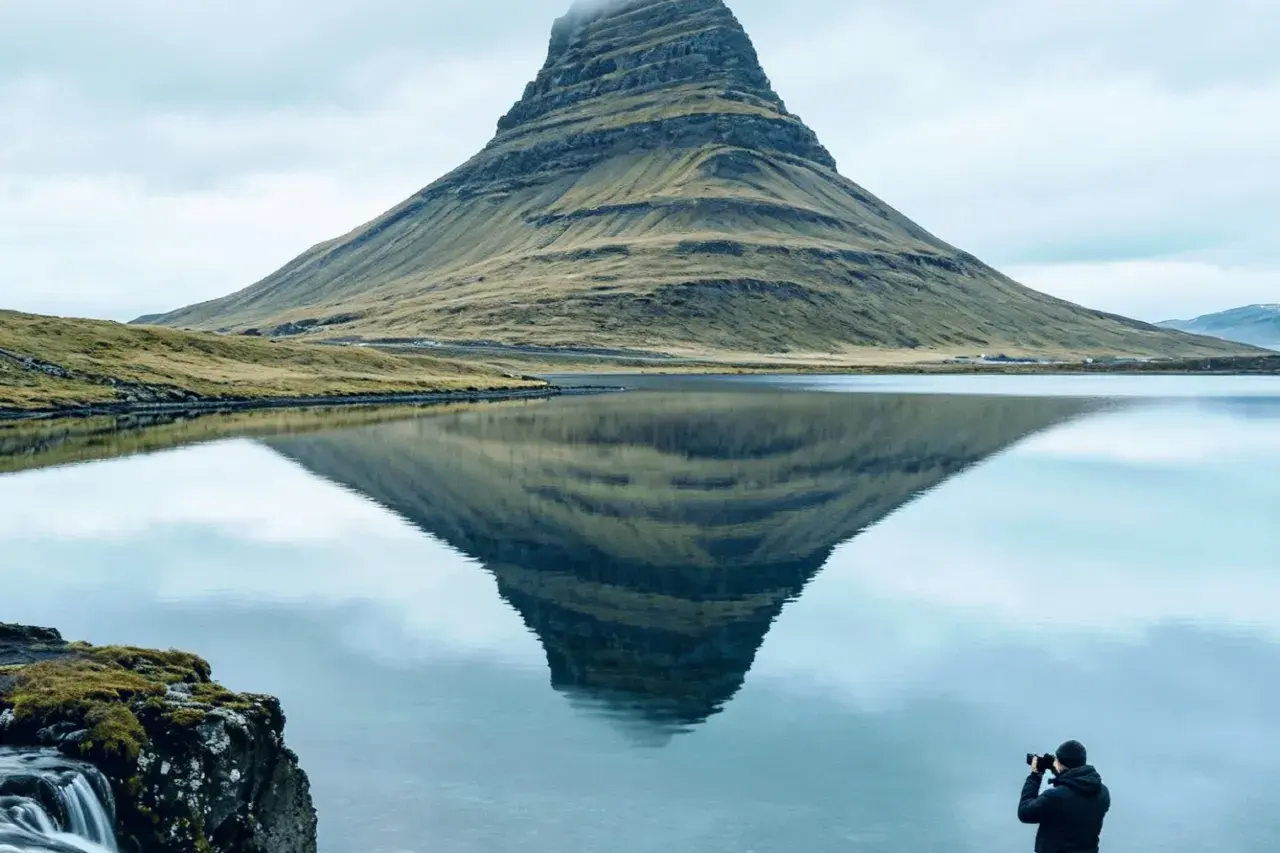
| 1 | Kirkjufell | Snæfellsnes | Sunrise and sunset | Shoot from the pond for the waterfall-plus-reflection classic |
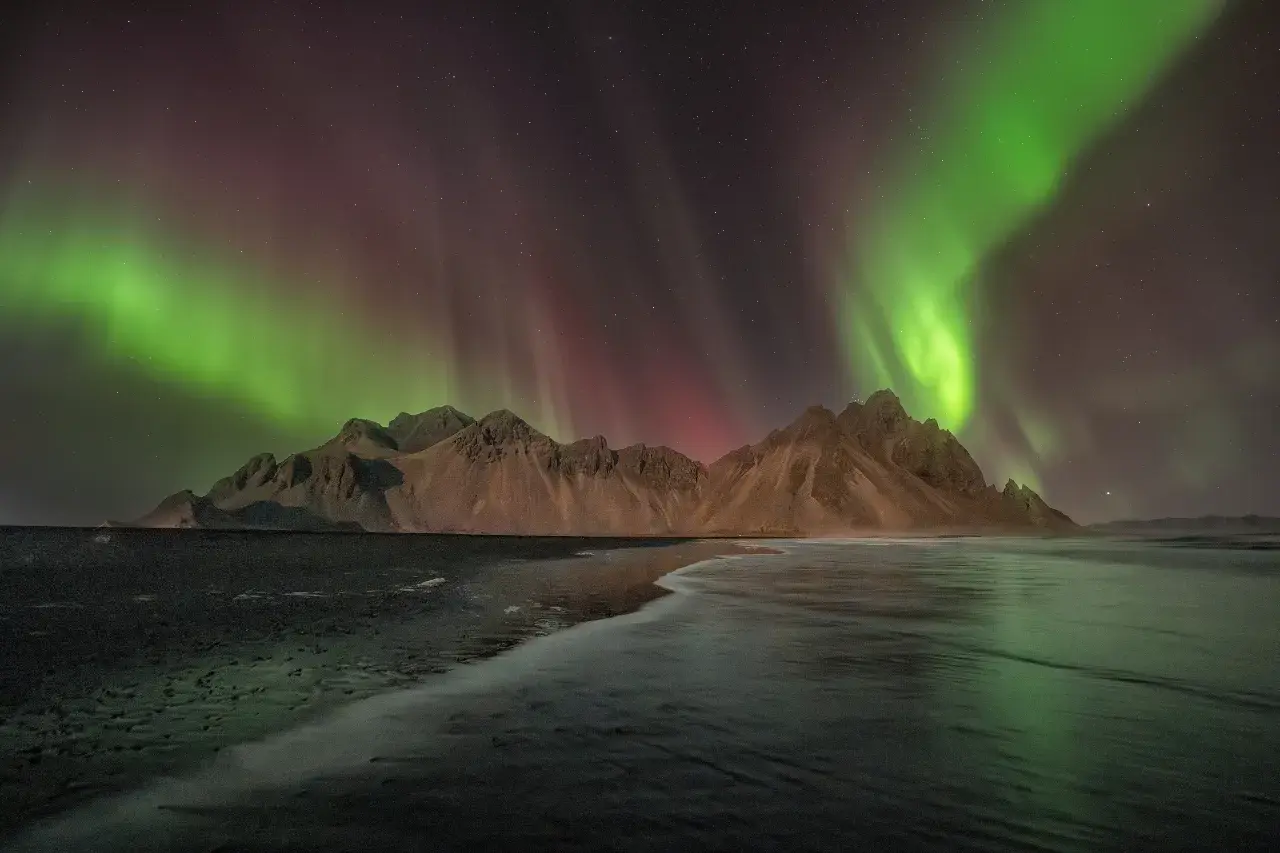
| 2 | Vestrahorn, Stokksnes | Southeast | Mirror-flat mornings and evenings | Parking is paid via the on-site café by the Viking-village film set |
| 3 | Jökulsárlón lagoon | Southeast | Any hour — the ice never stops drifting | Walk both shores; the bridge gives the widest frame |
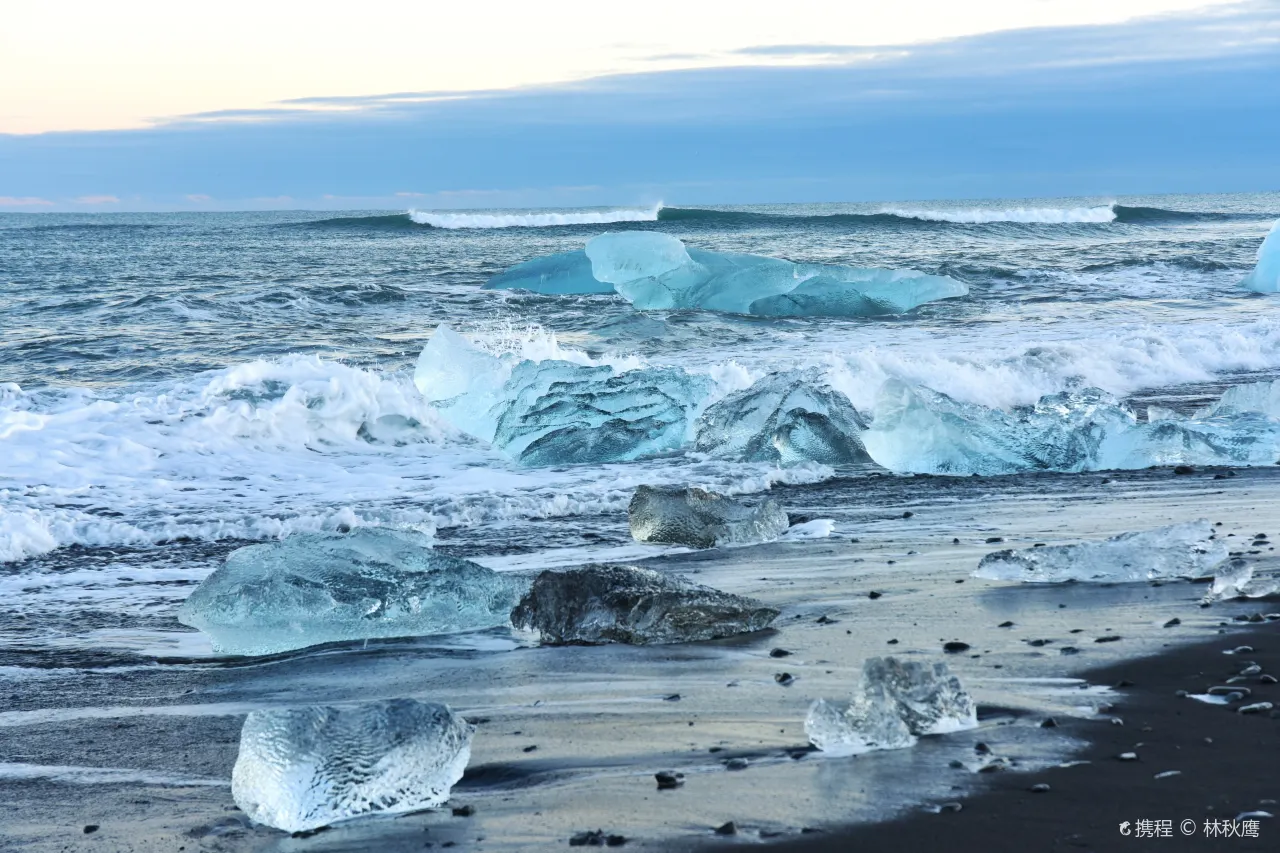
| 4 | Diamond Beach | Southeast | Sunrise sparkle | Long exposure; stay behind the berm — sneaker waves are serious |
| 5 | Reynisfjara basalt columns | South Coast | Dusk | Sneaker waves: never turn your back on the sea |
| 6 | Seljalandsfoss walk-behind | South Coast | Golden hour | Waterproof jacket and lens cloth are mandatory, not optional |
| 7 | Skógafoss | South Coast | Midday sun for rainbows | Drone flights follow the national rules below |
| 8 | Gullfoss | Golden Circle | Afternoon rainbows | Wide lens; the lower path closes when icy |
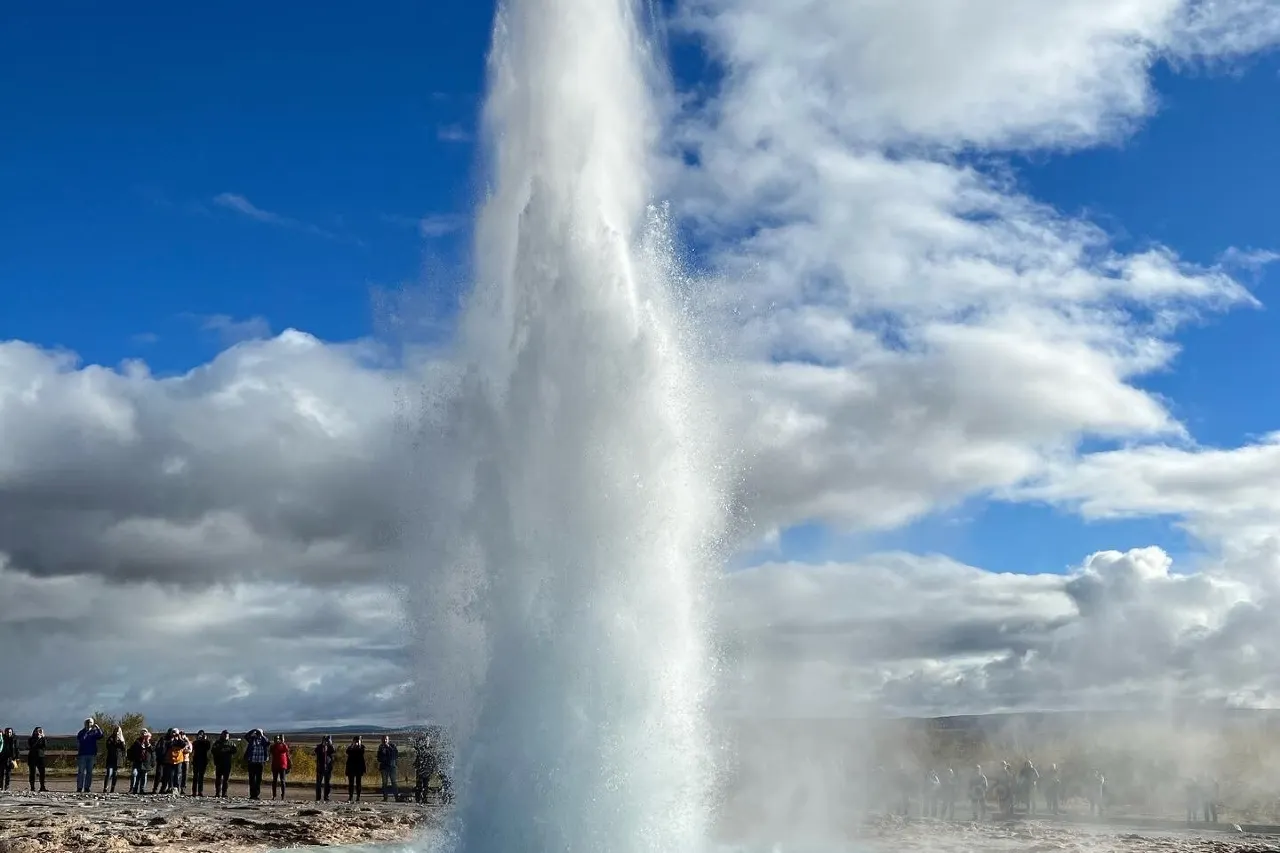
| 9 | Strokkur erupting | Golden Circle | Any eruption | Roughly a 5–10 minute rhythm — fast shutter freezes the column |
| 10 | Þingvellir rift | Golden Circle | Autumn color, clear nights | The Almannagjá walls frame both sunrise and aurora |
| 11 | Dynjandi | Westfjords | Gray day drama | Tiered falls love flat light; the mossy stream pools are the detail shots |
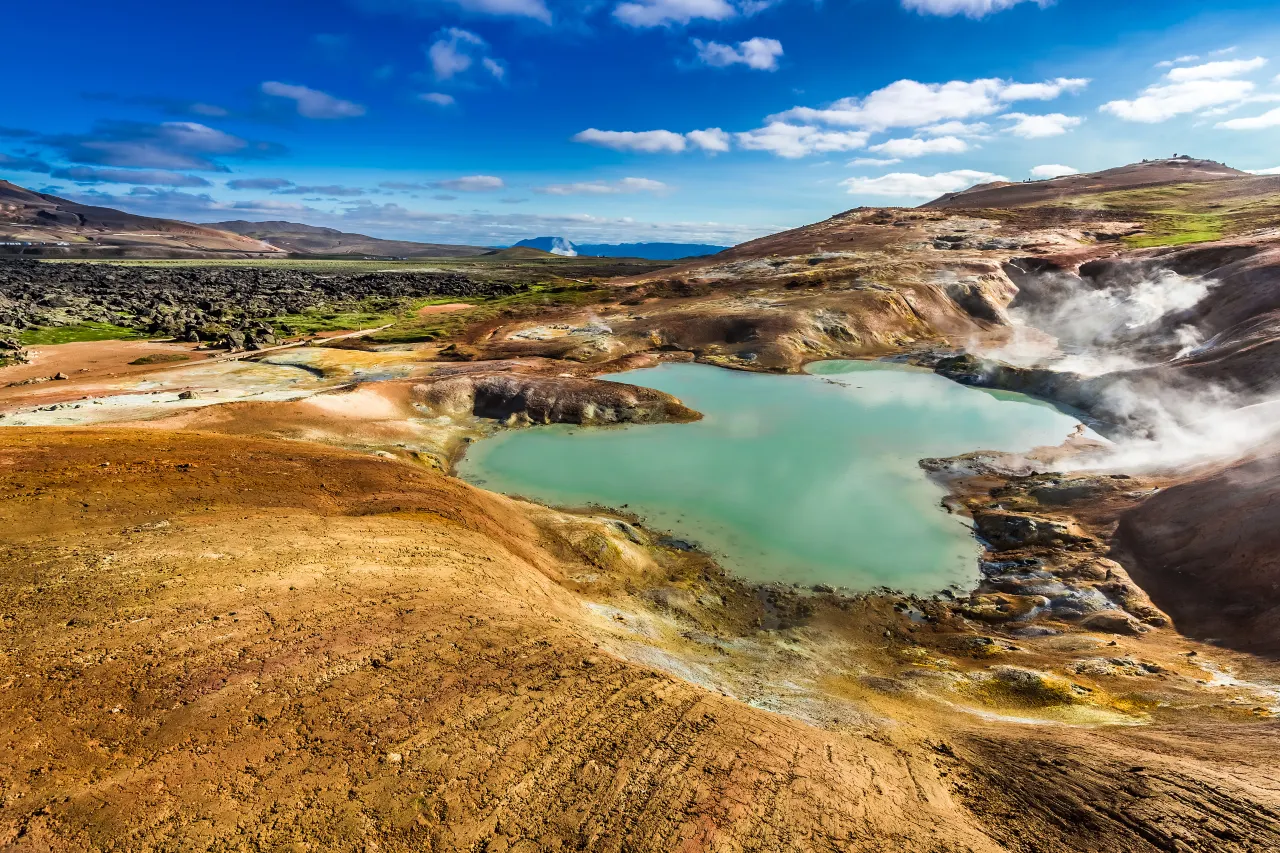
| 12 | Hverir steam fields | North Iceland | Dawn | Low angled light makes the steam read; watch your footing off the paths |
| 13 | Mývatn Nature Baths | North Iceland | Evening steam; magic in winter | Steam over warm blue water — the bathers-in-landscape shot |
| 14 | Dettifoss | North Iceland | Gray-day drama | The wide canyon eats small lenses — bring width, mind the spray |
| 15 | Goðafoss | North Iceland | Winter ice and the horseshoe | The horseshoe edge frames aurora on clear nights |
| 16 | Húsavík harbor | North Iceland | July whale sails | Long lens; boats and breaching whales in the same frame |
| 17 | Landmannalaugar | Highlands | Summer only | Climb Bláhnúkur for the aerial-style overview of the rainbow hills |
| 18 | Fjaðrárgljúfur rim | South Coast | Afternoon side light | The rim walk layers the mossy canyon walls; stay on marked paths |
| 19 | Hallgrímskirkja and Sun Voyager | Reykjavik | Blue hour | Tower view first, waterfront steel sculpture second, café after |
| 20 | Aurora, anywhere dark | Countrywide | Clear, dark nights — Sep–Mar peaks | Tripod, manual focus, ISO 1600–3200, 8–15 s; forecast on en.vedur.is |
Worth knowing: the table’s “best light” column is earned data, not decoration — Reynisfjara genuinely photographs best at dusk, but dusk is also when the surf hazard peaks, so shoot it from well behind the berm. Where safety and light disagree, safety wins; every shot in this guide can be made from marked, safe ground.
The south and southeast classics
The stretch between Reykjavik and the glacier lagoon holds six of the twenty spots, which is why it anchors most photography itineraries. The waterfall pair comes first: Seljalandsfoss, the walk-behind that delivers its signature backlit curtain in golden light (waterproof everything — the spray on the path is constant), and Skógafoss, where midday sun throws reliable rainbows into the mist and the staircase view reveals the river’s braided pattern upstream. Both reward visits inside our dedicated guides — Seljalandsfoss and Skógafoss — for timing and path details.
The coast then turns black: Reynisfjara‘s basalt columns and sea stacks at dusk, with the sneaker-wave rules treated as gospel (full rules in our Reynisfjara guide). Southeast of the glacier country sits the lagoon complex — Jökulsárlón at any hour, and its outlet beach at sunrise. Diamond Beach is a long-exposure playground: grounded ice, moving surf, and 6-stop filters turning the wash into silk. The sunrise “sparkle” in the table is literal — low sun through clear ice is the shot that justifies the early alarm. The safety and composition details are in our Diamond Beach guide.
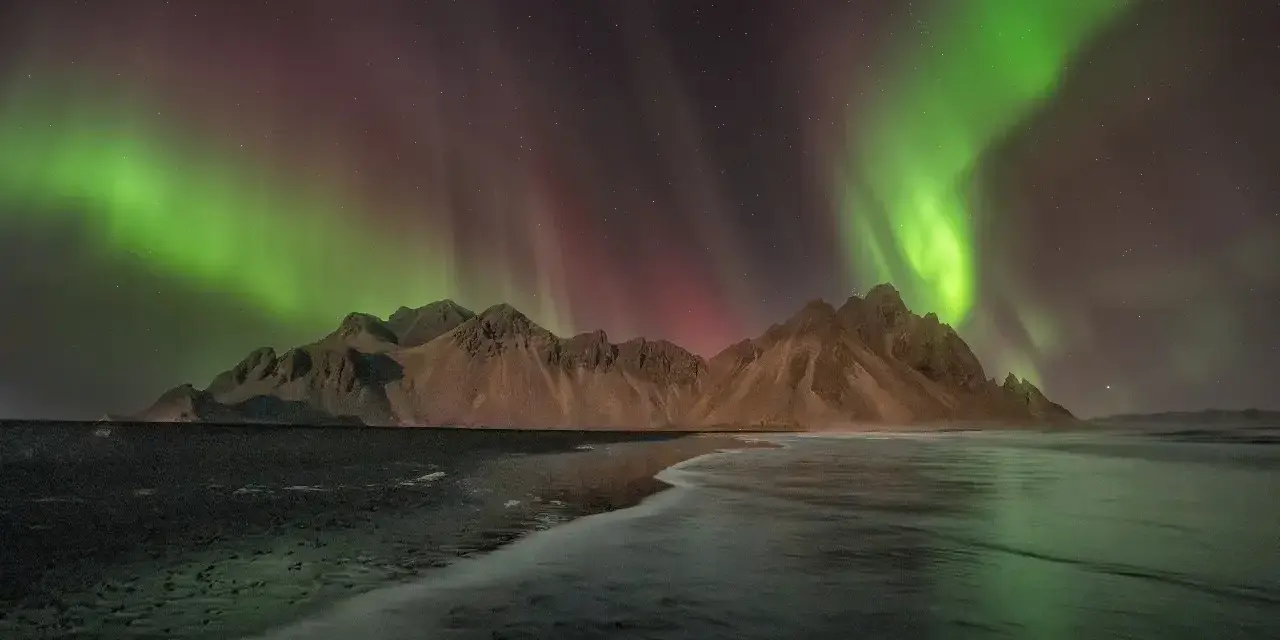
The triangle closes with Vestrahorn at Stokksnes, our team’s single favorite composition station in the country: a horned mountain rising straight from a tidal plain that turns to mirror after weather and at slack water. The access is private but visitor-friendly — parking paid through the small café beside the Viking-village film set — and the black beach plus mountain geometry works in fog, storm light and mirror conditions alike. Give it two visits if the schedule allows; the plain changes personality by the hour.
Kirkjufell and the west and north
Kirkjufell is the most-photographed mountain in Iceland, and the formula exists for good reason: the pointed peak, the three-step Kirkjufellfoss in the foreground, and the pond that doubles the whole composition. Sunrise and sunset are the appointments; the rest of Snæfellsnes — black-pebble coves, lava cliffs, the glacier cone itself — fills the loop, as our Snæfellsnes guide maps out. In the far northwest, Dynjandi is the Westfjords’ masterwork: a bridal-train cascade of stacked falls that loves gray-day flat light, with mossy stream pools below for the detail frames.
The north delivers Iceland’s most elemental photography. Hverir at dawn is a science-fiction set — boiling mud pools and steam vents whose vapor only reads on camera in low angled light — while the neighboring Mývatn Nature Baths put steam clouds over warm blue water for the bathers-in-landscape shot. Dettifoss is Europe’s most powerful waterfall by volume, and its wide gray-walled canyon punishes telephoto thinking; bring the widest glass you carry. Goðafoss offers the horseshoe — and in winter, ice-fringed edges under aurora — while Húsavík‘s harbor supplies the human texture: boats, whale sails and the July long-lens sessions described in our Húsavík guide.
Logistics for the north: the region runs deep roads with thin services, so fuel ahead, check road status like a local, and treat winter versions of these spots as serious undertakings — the same compositions exist in February, but the access is another story entirely.
Geysers, rifts and the Highlands
Strokkur is the most reliable subject in the country: the geyser erupts on a rhythm of roughly every five to ten minutes, which makes it a masterclass in anticipation photography — pre-frame, watch the dome pulse, and fire the fast shutter as the column launches. The spray-free observation area gives clean sightlines; the discipline is waiting through the small eruptions for the big one. Minutes away, Þingvellir photographs its geology: the Almannagjá rift walls frame sunrises, the Öxarárfoss waterfall splits the canyon, and in autumn the birch color plus clear nights make it a two-for-one aurora location.
The Highlands entry is Landmannalaugar — summer-only access over mountain roads, and the single most otherworldly color palette in Iceland: rhyolite hills striped rust, teal and ochre, steam vents in the valleys. The aerial-style shot everyone wants is actually a hike: the short but steep climb up Bláhnúkur delivers the overview of the rainbow hills and the campsite valley. Highland rules apply absolutely: 4×4 only, season only, weather-checked — the access logic is in our Landmannalaugar guide.
Together these three spots make the strongest argument for a shoulder-season visit: September gives you Highland access windows, autumn color at Þingvellir, and the returning dark for aurora — three columns of the table working the same week.
The capital and the aurora wildcard
Reykjavik earns its spot with a single blue-hour circuit: up the Hallgrímskirkja tower for the rooftops-and-harbor panorama (the tower view is the city’s best single vantage), then down to the waterfront for the Sun Voyager steel sculpture against the bay, with Mount Esja as backdrop. Between the two, the city’s corrugated-iron facades and harbor corners supply the texture frames. The timing logic is pure blue hour — the twenty minutes when the window lights balance the sky — and our Hallgrímskirkja guide covers the tower logistics.
Then the wildcard, spot twenty: aurora, anywhere dark. The northern lights outrank every fixed location because they appear over all of them — the best aurora shot of a trip is usually whatever composition you are already standing in when the sky ignites. The recipe from the table is the whole science: solid tripod, manual focus to infinity (set and tape it in daylight), ISO starting 1600–3200, shutter 8–15 seconds depending on the display’s speed, and shoot RAW. The forecast discipline — en.vedur.is for cloud and activity, plus the equinox-peaks pattern — is in our aurora guide.
The honest expectation-setting: aurora work is a probabilities game of clear dark nights, and the winning strategy is repetition, not heroics. Position yourself at a good foreground (the lagoon, the beach, the rift), set the recipe, and let the sky do the casting. When it works, no other twenty spots matter that night.
Gear, drones and trail etiquette
The gear that actually matters here is protective, not premium. The wind is the gear-killer: anchor the tripod with a hanging bag, brace it between exposures, and never leave it standing unattended on a clifftop. Water attacks from every direction — spray at the waterfalls, rain everywhere — so rain covers (a simple shower-cap improvisation works) and lens cloths by the handful are standard kit. ND filters earn their slot for water long exposures; spare batteries ride in inside pockets because the cold drains them fast; and the camera’s weather sealing is reassurance, not permission, to leave the cover off.
Drone rules are strict and enforced: maximum altitude 120 meters, visual line of sight required, 150 meters distance from public buildings, and no flying in national parks without permits. Check local signage per site, respect privacy and wildlife, and treat gusts as the default condition — several of the twenty spots are wind corridors where small drones simply get to make their own way home. For the air-law details, the official Icelandic aviation and park authority pages are the current references; the numbers above are the national baseline.
Etiquette closes the loop: stay on marked paths (the moss regenerates over decades, the safety rules exist because the ocean and the glacier do not negotiate), never climb the ice on beaches or the fence lines at the geothermal fields, and follow safetravel.is guidance when weather turns. The landscape permits the shot; the photographer’s job is to still be able to come back and take it again.
Frequently asked questions
What is the single best photo location in Iceland?
Our team’s vote is Vestrahorn at Stokksnes — the mirror plain, the black beach and the horned mountain give it more compositions per hour than anywhere else, and it works in gray weather. Kirkjufell is the most iconic, Jökulsárlón the most versatile; the southeast triangle overall is the highest-yield day of photography in the country.
When is the best season for photography in Iceland?
September is our pick: Highland access windows, autumn color at Þingvellir and Fjaðrárgljúfur, thinning crowds, and the return of dark nights for aurora. Winter adds ice and blue-hour light but complicates access; summer gives endless light and green moss but flattens the night sky entirely.
What camera settings do I need for the northern lights?
Tripod, manual focus to infinity, ISO starting around 1600–3200, shutter 8–15 seconds, RAW format — then tune to the display’s speed: faster-moving aurora takes shorter exposures to keep structure. Check the cloud and activity forecast on en.vedur.is before heading out; clear sky matters more than settings.
Can I fly my drone at the waterfalls and in the parks?
Under the national rules — 120 m maximum altitude, line of sight, 150 m from public buildings — drones are permitted in many open areas, but national parks require permits and some sites restrict flying entirely. Check signage per location and the official aviation-authority pages before launching; the restrictions at the busiest waterfalls are real.
How do I keep my gear safe in the wind and rain?
Anchor the tripod (hang your bag from it), use rain covers at every waterfall, carry twice the lens cloths you think you need, and keep spare batteries warm in an inside pocket. The bigger safety discipline is positional: stay behind the berm on beaches, on the paths everywhere, and never trade a composition for a waterline.
Plan the route around the light
Most of these twenty spots string along the Ring Road — our driving guide sequences them into a working loop.
Go deeper on the classics: the Skógafoss guide and the aurora guide cover the two most-photographed subjects on the list, and the blog carries our team’s location reports from every region — including the storms that taught us the gray-day rule.
Sources & official references
- Drone rules: national baseline of 120 m maximum altitude, line-of-sight requirement, 150 m from public buildings, and national-park permit requirements — per the Icelandic aviation authority and park regulations (checked 2026).
- Aurora season and forecast: en.vedur.is (Icelandic Meteorological Office) cloud and aurora outlooks; equinox-peaks pattern per published aurora science summaries.
- Location safety: sneaker-wave guidance at Reynisfjara and Diamond Beach per safetravel.is and site signage.
- Spot access notes (Stokksnes café parking, Landmannalaugar seasonal roads, Bláhnúkur trail) per local operator and park information; verify current conditions per road.is and safetravel.is.
- Trip.com Iceland destination guide (checked 2026): photography locations and regional itineraries.
- Editorial photography trips across seasons 2022–2026 by the Iceland Travel Guides team.
