




Stand at the cliff edge of Almannagjá in Þingvellir and you are standing in the room where a nation was invented. Around the year 930, the settlers of this empty volcanic island walked here — from every corner of the country, on foot and on horseback, some riding for weeks — to attend an open-air assembly called the Althing. Laws were recited from a rock, disputes were settled, marriages were arranged, and once every year the island’s entire political world fit inside one rift valley. Very few countries can point at a physical spot and say “democracy started here”; Iceland can, and the site is an easy day trip from Reykjavik.
The deeper reason to care about Iceland’s Viking history is literary. Within a few centuries of settlement, these farmers and chieftains produced the sagas — prose masterpieces of feud, law, love and stubborn honor that scholars rank among the great works of medieval Europe and that Icelanders still read, quote and argue about today. and this guide compresses the essentials — settlement, Althing, old gods, sagas and the places where you can stand inside that world yourself.
Key takeaways
- Settlement came fast: Norse settlers occupied the island roughly 870–930 AD, with Ingólfr Arnarson traditionally the first settler at Reykjavik in 874.
- The Althing was founded around 930 at Þingvellir — commonly cited as the world’s oldest surviving parliament, meeting at the Law Rock (Lögberg).
- The year 1000 was a hinge: Iceland adopted Christianity by consensus at the Althing, and about the same years Leif Eriksson sailed to Vinland in North America.
- The sagas were written in the 12th–14th centuries: Njáls saga, Egils saga and Laxdæla saga turn family feuds into world literature.
- Horned helmets are a myth — a 19th-century stage costume, not archaeology. The real Viking world is better than the costume.
Quick answer: give the Viking age two half-days. Day one, Þingvellir: the Althing site, the Law Rock and the rift itself. Day two, Reykjavik’s museums — the National Museum of Iceland for artifacts and the Settlement Exhibition for the excavated 9th-century longhouse downtown. If you are driving west, add the living-history turf farm of Eiríksstaðir. Then read one saga before or after the trip; Njáls saga is the masterpiece.
The settlement of Iceland
The settlement (the Icelanders call it the landnám, the land-taking) happened with astonishing speed for an island at the edge of the known world: from roughly 870 to 930 AD, Norwegian and Norse-influenced settlers from the British Isles claimed and farm-built essentially the entire habitable coastline. Why they came is a mix of the usual forces — political consolidation back in Norway, the pull of open land, and the simple momentum of a seafaring age that had already mapped the Faroes and was working its way across the North Atlantic.
The founding story Icelanders themselves tell features Ingólfr Arnarson, traditionally the first permanent settler, who arrived around 874. Following his own ritual — he threw his high-seat pillars overboard and vowed to settle where the gods drove them ashore — he raised his farm on a bay where steam rose from the ground. He named it Reykjavik, “Smoky Bay”, and the same geothermal steam heats the city today. Archaeology backs the story’s bones: excavations beneath downtown Reykjavik uncovered a longhouse dating to the settlement years, now enclosed by the city’s Settlement Exhibition.
Two practical facts shaped everything that followed. First, the island had no Indigenous population to displace — the settlers started from zero. Second, the environment demanded a specific economy: sheep, horses, fishing and hay. That pastoral package, and the independent-farmer culture built around it, is the connective tissue between the Viking age and the Iceland you will drive through.
The Althing: democracy at the Law Rock
Around 930, the settlers did something remarkable: they created a common assembly for the whole island, meeting at a site chosen for its central position and dramatic setting — Þingvellir, the “assembly fields”. The Althing that met there each summer is commonly cited as the world’s oldest surviving parliament, a direct institutional ancestor of today’s national legislature. Chieftains and farmers gathered in tents and temporary booths on the plain, and the business of the nation — laws, judgments, feuds, marriages, alliances — happened in the open air.
At the center of the site stands the Lögberg, the Law Rock, from which the Lawspeaker recited the laws of the island from memory — there was no written law code in the early decades, so a trained reciter carried the entire legal system in his head. Decisions of collective weight were declared from the rock to the assembled crowd, which is exactly what happened in the year 1000, when Iceland faced a choice between the old gods and the new. According to the account, the chieftain Þorgeirr, asked to arbitrate, lay under a cloak for a day and night and returned with the answer: the island would adopt Christianity, with private pagan practice quietly tolerated. Per the famous legend, on his ride home he threw his old idols into a waterfall — which has borne the name Goðafoss, “waterfall of the gods”, ever since.
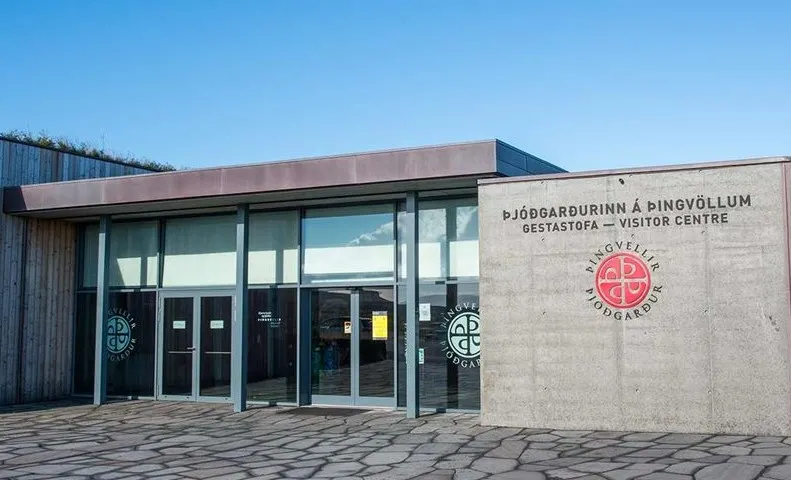
For a visitor, Þingvellir compresses all of this into one walkable site: the rift walls, the flagged approach, the rock where laws were spoken, and a visitor centre that explains the geology underneath the history. Our full Þingvellir guide covers the practicalities; come here knowing the story and the plain field in front of you becomes a stage set.
Óðinn, Þórr and Freyja: the old gods
The settlers carried the Norse pantheon with them: Óðinn, the one-eyed seeker of wisdom, god of poetry and of the chosen slain; Þórr, the hammer-wielding protector of farmers, sworn enemy of giants and by far the most popular god among working households; and Freyja, the powerful goddess of love, fertility and battle. Around them stood a full cast — Loki the trickster, Freyr the harvest god, Heimdallr the watchman — and a cosmos held together by Yggdrasill, the world-tree, with everything due to end and renew itself at Ragnarök.
What makes Iceland special for this mythology is that the stories survive here in written form. The great poetic and prose collections preserving Norse myth were written down by Icelandic scribes centuries after the conversion — which is why modern editions of the myths, and most retellings worldwide, trace back to Icelandic manuscripts. The gods also stayed on in the landscape’s name after the 1000 conversion, most famously at Goðafoss; and their afterlife continues in something close to living practice, with the old faith formally re-established as a recognized religion in modern Iceland.
The mythology also explains the settlement’s psychology. These were people who named volcanoes and glaciers as living powers, read omens in weather, and built their law and literature on the premise that deeds outlive the doer. You do not need to believe any of it to feel the worldview everywhere on the island — in the sagas’ fatalism, in the farm names, and in the fact that the country’s most spectacular waterfalls still carry the stories of gods and trolls without embarrassment.
The sagas: Iceland’s medieval masterpieces
Between the 12th and 14th centuries, Icelanders did something no other medieval society managed: they wrote the history and legend of their own founding age as realistic prose about ordinary people. The family sagas — dozens of them — recount the generations from roughly the 9th to the 11th century: farmers, poets, feuding neighbors, strong women, litigious men, and the law that both binds and fails them. The prose is famously spare — actions, dialogue, consequences — and the effect is startlingly modern.
Three titles carry the canon. Njáls saga is the summit: a sweeping tale of law, honor and revenge centered on the sage Njáll and the burning that ends him, dense with legal drama and widely read as the masterpiece of the tradition. Egils saga follows Egill Skallagrímsson — farmer, warrior and one of the great poets of the age — across a ferocious, funny, melancholy life. Laxdæla saga is the great tragic romance, with Guðrún Ósvífursdóttir at its heart and one of literature’s most quoted dying lines about what she saw last. None of these are adventure pulp; they are studies in how honor economies work and fail, written by the descendants of the people involved.
The manuscripts behind this literature are a story of their own: gathered by the collector Árni Magnússon in the 17th century and cared for today by the institute that bears his name in Reykjavik, they are among the nation’s most treasured possessions. And the language has moved so slowly that the sagas remain readable in the original with training — a point our Icelandic language guide touches on. For the traveler, the payoff is atmosphere: read a few chapters before visiting the landscape they describe, and the farms and headlands start speaking first person.
Leif Eriksson and Vinland
While Europe was still mapping its own margins, Icelanders were already looking west. Around the year 1000 — the same decade as the conversion — Leif Eriksson sailed from the Norse settlements in Greenland to a shore he called Vinland, the first European landing in the Americas, half a millennium before Columbus. The Vinland voyages are recorded in the sagas themselves, and archaeological work at L’Anse aux Meadows in Newfoundland confirmed a Norse site on the continent, making the saga account one of the best-corroborated stories in medieval literature.
The family behind the voyage ran its business from Iceland’s orbit: Leif’s father was Erik the Red, the exiled Icelander who founded the Greenland colony. West Iceland keeps the connection alive at Eiríksstaðir, the reconstructed turf farm where Erik and Leif are said to have lived — a living-history site where costumed interpreters spin wool, forge iron and tell the Vinland story around the hearth fire. It is the rare hands-on museum where the history you hear is the history of one stubborn family, and it pairs naturally with a Snaefellsnes or Westfjords route.
Worth knowing: the horned-helmet Viking is pure 19th-century theater — a costume invention that spread through opera and art and stuck. Real Norse helmets found in archaeology are plain iron. At every reconstruction site in Iceland the guides delight in debunking it; you can save them the trouble by never repeating it.
How the Viking age shapes Iceland today
The Viking age is not a heritage display here; it is operating infrastructure. The Althing continuity claim — from the field at Þingvellir in 930 to the parliament in Reykjavik — sits at the center of the national story and of the independence narrative that carried the country through its centuries under foreign rule. The sheep-and-hay economy the settlers built still runs the highlands and flavors every menu. And the naming culture is actively legislated: a national naming committee approves given names against an official registry, so that personal names fit the language’s grammar and spelling — parents consult the list before registering a newborn, and novel names must petition for entry.
The sagas remain a present-tense institution: taught in every school, quoted in political debate, mapped onto the landscape so precisely that saga farms have GPS coordinates. Place names keep the founding vocabulary — every -vík, -dalur and -staðir on the road signs is a settlement-era word doing its original job. Even the national symbolism leans on the era: the horse breeds the settlers brought, the turf-building tradition, and the stubborn self-image of a small nation that wrote its own literature from the start.
For a visitor, the practical translation is simple: the history you came for is not confined to museums. It is why the farms look the way they do, why the literature shelves overflow, and why a waterfall can be named for the gods without anyone finding it quaint.
Where to see it: museums and sites
The Viking age is well-signposted on the ground, and the best sites divide cleanly by region:
- Þingvellir National Park — the Althing site itself: the Law Rock, the assembly plain, the rift walls and the visitor centre. The essential half-day; pair it with the rest of the Golden Circle.
- National Museum of Iceland (Reykjavik) — the core artifact collection from settlement to Reformation, including the famous carved door and everyday objects of the farming centuries. The one-stop orientation before anything else.
- Settlement Exhibition (downtown Reykjavik) — a excavated Viking-age longhouse preserved under glass in the city center, built around the 871±2 dated wall of the earliest farm. The most atmospheric indoor site in the country.
- Eiríksstaðir (West Iceland) — the living-history recreation of Erik the Red’s and Leif Eriksson’s turf farm, with costumed interpretation and hands-on demonstrations.
- Reconstructed farms and folk museums — the saga-era farmhouse rebuilt at Þjóðveldisbærinn, and the folk museum at Skógar with its turf church and farm buildings, for the architecture of the centuries that followed.
A sensible cultural loop: Þingvellir and the Golden Circle on day one, the two Reykjavik museums on day two, Eiríksstaðir if your route runs west. Read one saga — or one good saga summary — either side of the trip, and the sites stop being scenery and start being evidence.
Frequently asked questions
Did Vikings really wear horned helmets?
No. Horned and winged helmets are a 19th-century artistic invention — popularized through opera productions and Romantic painting — with no basis in archaeology. Genuine Norse helmets that survive are plain iron construction. The myth is so entrenched that Icelandic museums address it directly in their exhibits.
Is the Althing really the world’s oldest parliament?
The claim is commonly cited and defensible with caveats: the Althing was founded around 930 and has continued, with interruptions across the centuries of foreign rule, into the modern legislature. A few other assemblies are older in origin; none combines that age with a continuous national parliamentary tradition the way Iceland argues it does. Stand at the Law Rock and enjoy the claim — it is a good one.
Which saga should I read first?
Njáls saga is the acknowledged masterpiece — law, feud and one of literature’s great endings — but it is long. For a first taste, Egils saga offers a vivid protagonist and a plot you can follow on a map, and Hrafnkels saga (shorter still) is often recommended as the compact entry point. Good modern translations are widely available; read before your trip for maximum effect.
Can I see real Viking-age artifacts in Iceland?
Yes. The National Museum of Iceland in Reykjavik holds the principal collection of settlement-era objects, and the Settlement Exhibition preserves an excavated longhouse in situ beneath the city center. Smaller regional museums add local finds. Between the two Reykjavik institutions you get the full arc from arrival to established medieval society.
What does the name Reykjavik mean?
“Smoky Bay” — named by Ingólfr Arnarson for the steam rising from the geothermal springs around the bay where he settled around 874. The “smoke” is steam, not fire, and it is the same geothermal energy that heats the city’s homes and pools today.
Walk the saga landscapes yourself
Þingvellir anchors any culture-focused itinerary — our park guide and capital guide connect the dots between the Law Rock and the museum cases.
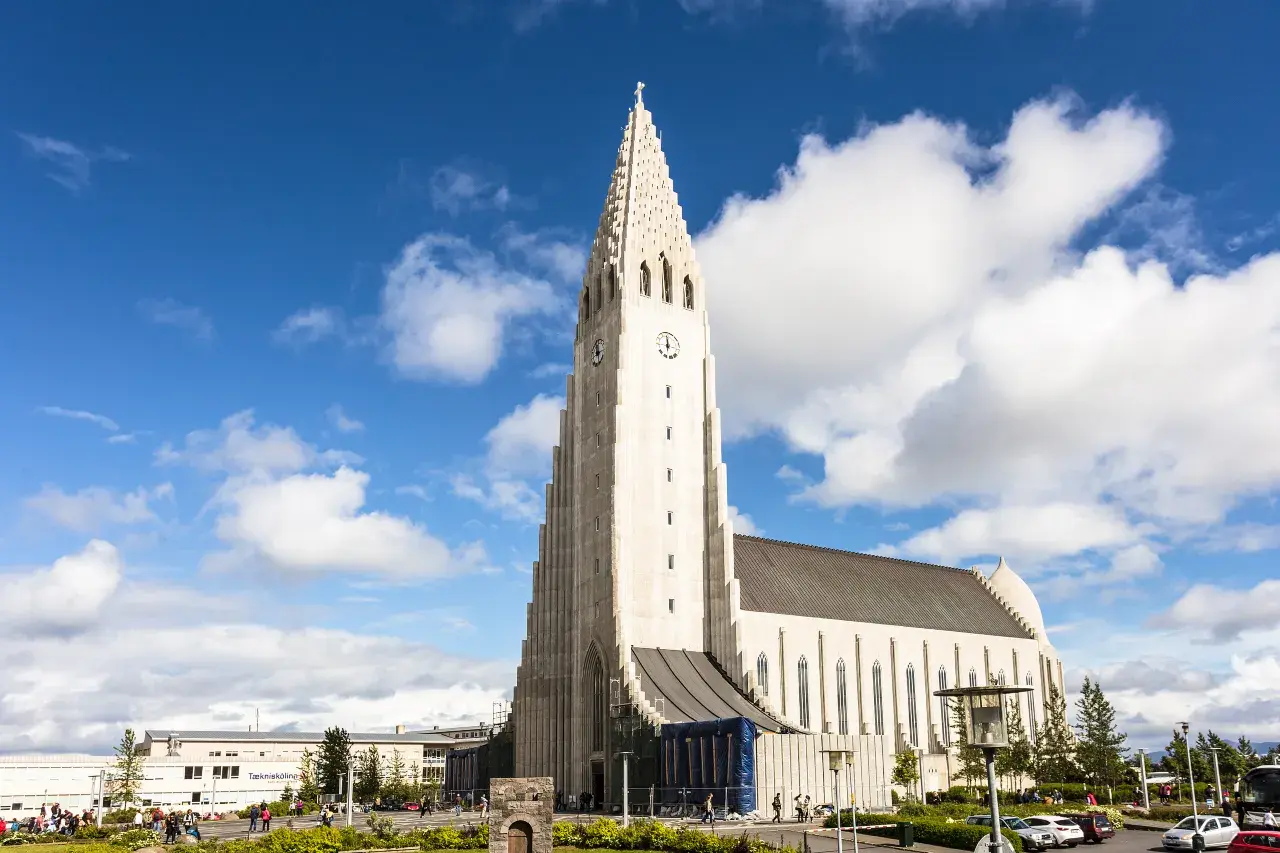
Round out the cultural thread: the Hallgrímskirkja guide covers the national church that grew out of the 1000 conversion, the language guide explains why the sagas are still readable in the original, and the Golden Circle route puts Þingvellir into an easy day drive. More cultural field notes live on the blog.
Sources & official references
- Settlement chronology (landnám ~870–930, Ingólfr Arnarson ~874) and Althing founding (~930) per the National Museum of Iceland and Þingvellir National Park visitor materials.
- The 1000 conversion decision at the Law Rock and the Goðafoss naming legend per standard Icelandic historical accounts (legend identified as such in the text).
- Saga corpus and dating (12th–14th centuries): Njáls saga, Egils saga, Laxdæla saga; Árni Magnússon manuscript collection, the institute in Reykjavik.
- Vinland voyage (~1000 AD) and Norse presence at L’Anse aux Meadows per published archaeological summaries; Eiríksstaðir living-history site information.
- Trip.com Iceland destination guide (checked 2026): cultural sites and museum listings.
- Editorial visits to Þingvellir, Reykjavik museums and West Iceland sites 2024–2026 by the Iceland Travel Guides team.
