








Winter is when Iceland stops performing and starts being itself. The crowds drain away, the waterfalls shed their summer softness, the light goes long and low — four to five hours of it in December, each one amber — and the sky turns into the main attraction: green curtains of aurora over black landscapes, ice caves opening inside the glaciers, hot pools steaming under snowfall. Our team considers the winter months the country’s most underrated season, and also its most demanding: storms close roads without apology, daylight is precious, and a trip built without slack becomes a trip built without margin.
This is the complete playbook for getting winter right: the seasonal rhythms and blue-hour light, the aurora window and how to forecast it, the guided ice-cave season, the winter driving reality (including the daily road-check habit that separates smooth trips from stranded ones), the South Coast and Golden Circle route spine, the hot-pool-in-the-snow rituals, and the packing that keeps the wind from winning. Everything here comes from our own winter drives and the official services we check every single morning of every winter trip.
Key takeaways
- The aurora window runs September to March with peaks around the equinoxes — winter’s long dark nights are the season’s headline act.
- Ice caves open roughly November to March, guided only — glacier travel is certified-guides territory, booked ahead.
- December daylight is four to five hours — plan two outdoor blocks per day and let the blue hour do the sightseeing.
- Storms close roads: check road.is and en.vedur.is every morning; rental fleets run legal winter tires, F-roads close for the whole season.
- The South Coast and Golden Circle are the winter spine — the reliable, ploughed, high-reward routes when the Highlands are shut.
Quick answer: base yourself in fewer places, drive less per day than summer logic suggests, and book the ice cave and any aurora-critical nights ahead. Keep one slack day for every three planned, check road and weather status every morning before leaving, and treat a storm day as a feature — hot pools, museums and long lunches are the winter plan, not the consolation prize.
What winter actually feels like
First, the headline numbers: in December, Reykjavik gets roughly four to five hours of usable daylight, with the sun arcing low across the southern sky like a permanent late afternoon. January brings gradual improvement; by March the days are stretching fast. Temperatures in the populated south and southwest hover milder than visitors expect — the coast is moderated by the sea — while the north and interior run properly cold. The variable that actually shapes a winter trip is wind: a midwinter storm can close roads, ground tours and rearrange your week in a single morning.
The compensation is the light, and it is not a small one. The low sun stretches golden hour into a permanent condition, and the hours on either side of daylight become the blue hour — a deep, luminous twilight in which snowfields glow faintly, every farmhouse window lights up, and the landscapes take on the soft-edged look that photographers chase in other countries for weeks. Our team’s favorite winter photographs all come from these in-between hours, not from daylight itself.
The honest emotional framing: winter Iceland rewards travelers who like atmosphere more than it rewards itinerary-maximizers. The trip runs on shorter days, slower mornings, earlier dinners and flexible plans — travelers who fight that rhythm have a harder time; travelers who adopt it report the best trips of their travels anywhere.
The aurora window and the forecast routine
The northern lights season runs from September to March, with activity traditionally strongest around the equinoxes. Winter’s long dark nights give you maximum hours of potential display — the flip side of the short daylight days — and the aurora needs exactly one ingredient beyond darkness: clear sky. Cloud cover, not geomagnetic activity, is what usually defeats the winter aurora hunter, which is why the forecast routine matters more than luck.
The routine is simple and worth institutionalizing on day one: check the sky and aurora outlook on en.vedur.is each afternoon, note the cloud gaps, and be ready to drive out of a city on any clear evening — even a short hop from Reykjavik’s light dome transforms the view. The details of that system, plus the photography settings that actually capture the display, are in our aurora chasing guide, with the city-specific dark-sky spots covered in our Reykjavik aurora guide.
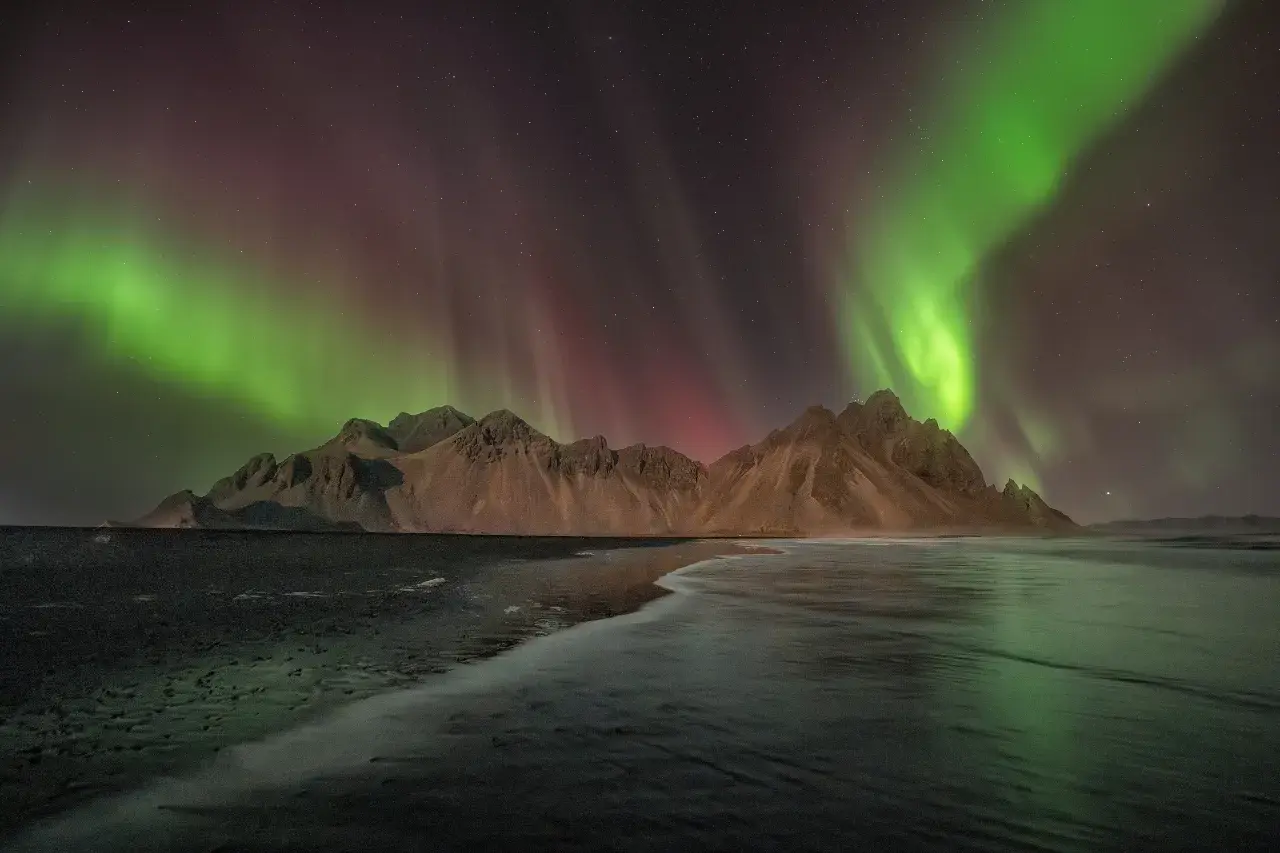
Set expectations fairly: the aurora is a probabilities game even in season. Multiple clear-night attempts across a week give good odds; a single night is a lottery ticket. The consolation structure of a winter trip matters for exactly this reason — build evenings that are enjoyable even without aurora (pools, restaurants, bonfires) and treat any display as the bonus it genuinely is.
Ice caves: the winter-only thrill
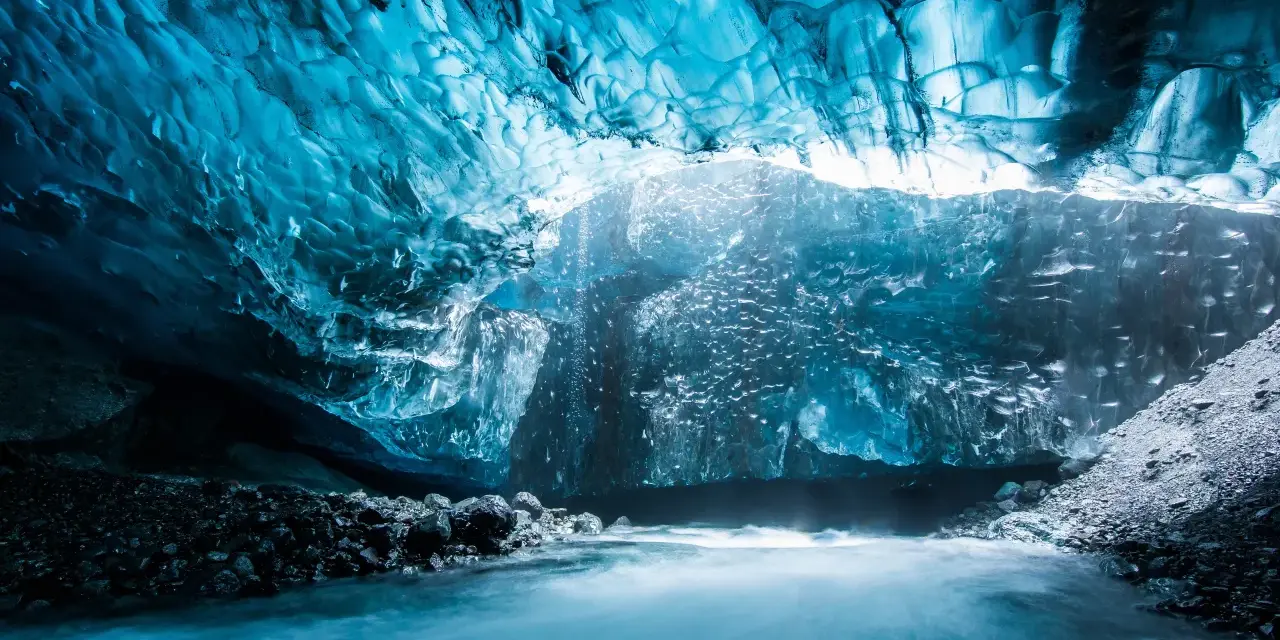
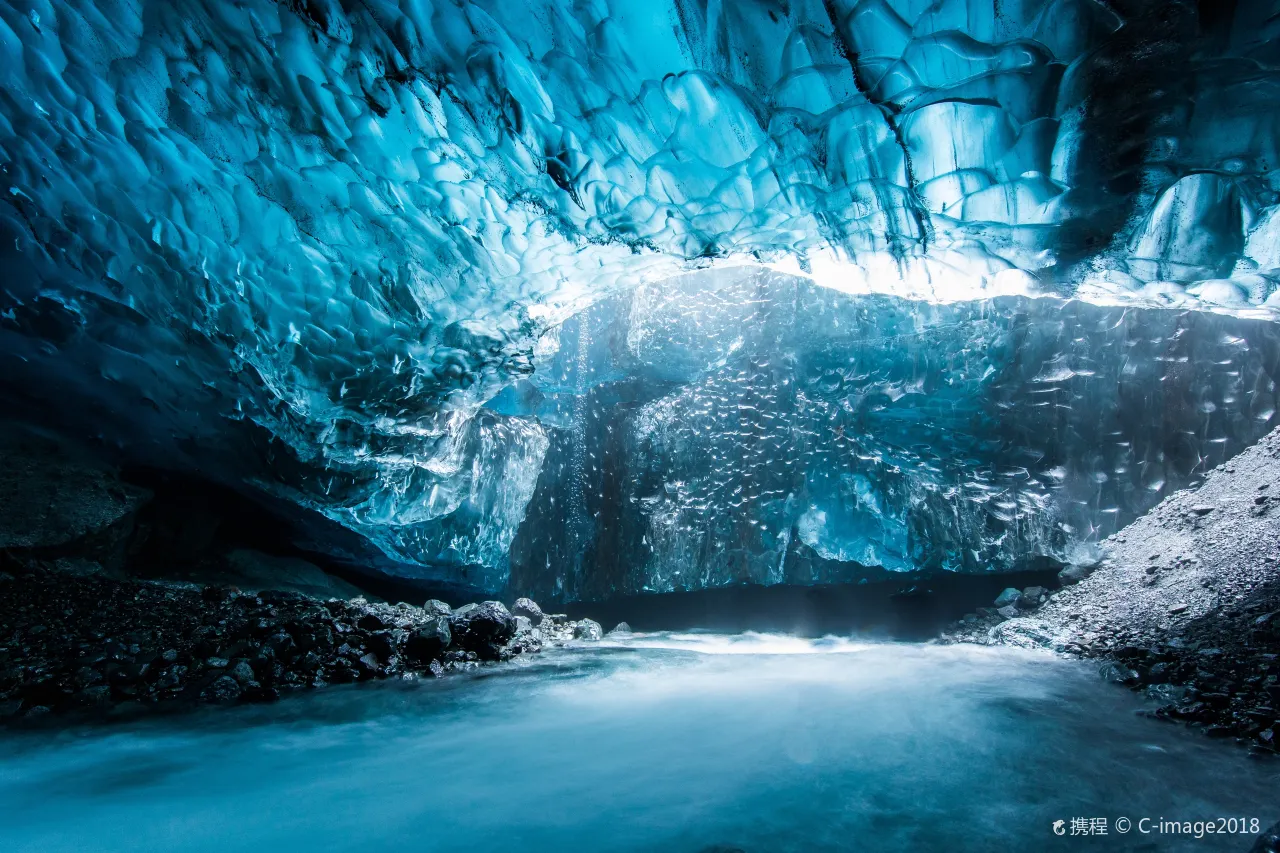
The ice caves are winter’s signature experience and its clearest rule-bound one: the caves open roughly November to March, and access is exclusively with certified guides — glacier travel is certified-guides-only territory, full stop. The classic destinations sit in the Vatnajökull region in the southeast, where meltwater caves under the glacier tongue flood and refreeze across the seasons, leaving stable winter passages of impossible blue.
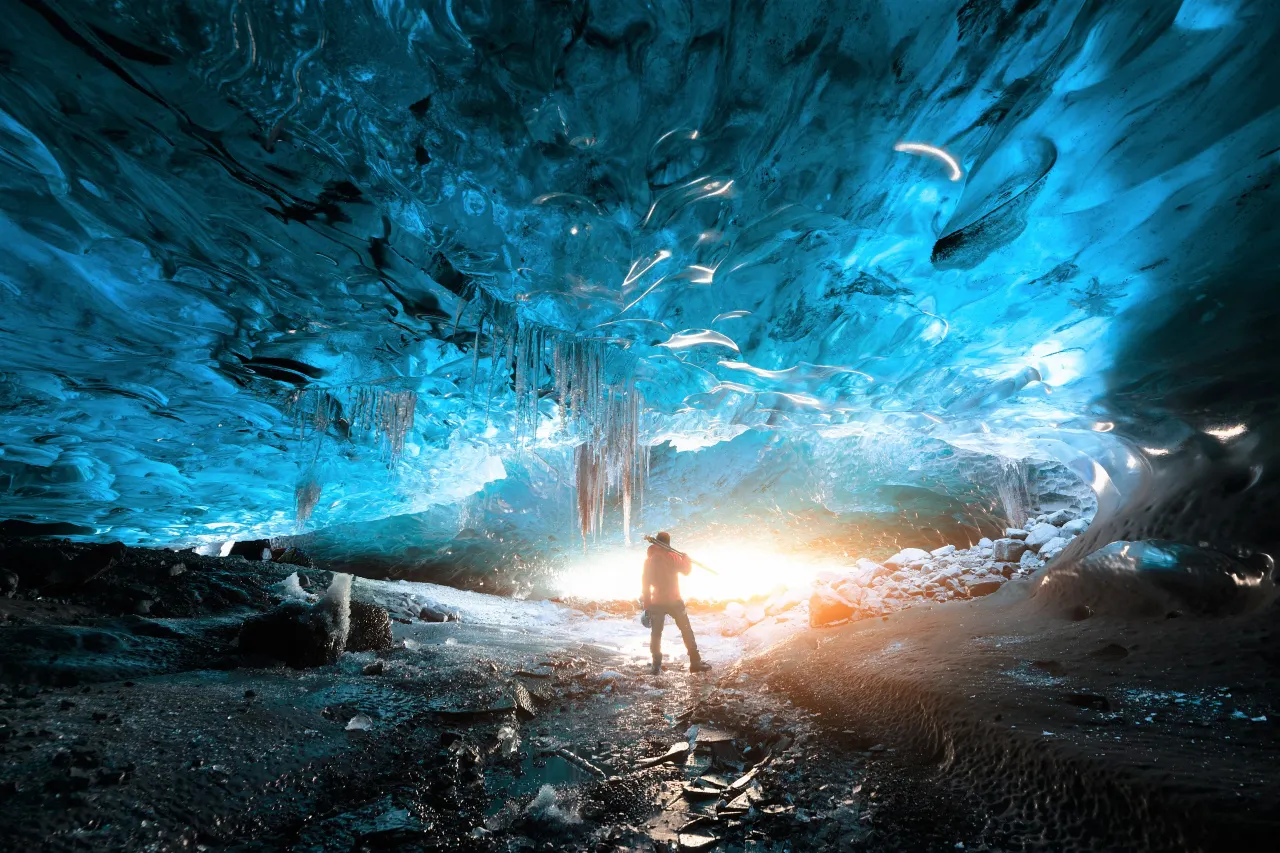
Practical booking logic: the popular Vatnajökull blue-ice-cave tours sell out far ahead in the December-to-February core, and per Trip.com listings, blue ice cave tours start from roughly US$158 per person (rated around 4.6 out of 5 by travelers in its listing) — treat pricing as indicative and current when booking. Tours involve a super-jeep transfer and a walk on glacier terrain; they run in most weather but pause in severe conditions, so keep schedule slack around your booked date. The full context — where the caves are, what the tours include, how they compare to the summer glacier walks — lives in our glaciers & ice caves guide.
Worth knowing: ice caves are geology in motion — the cave you see in January is not the cave anyone saw last winter. That is the magic and the reason for the guide-only rule: routes are assessed fresh every season. Book early, keep the date flexible, and never enter an unguided cave mouth, whatever the photo captions imply.
Winter driving: the morning checklist
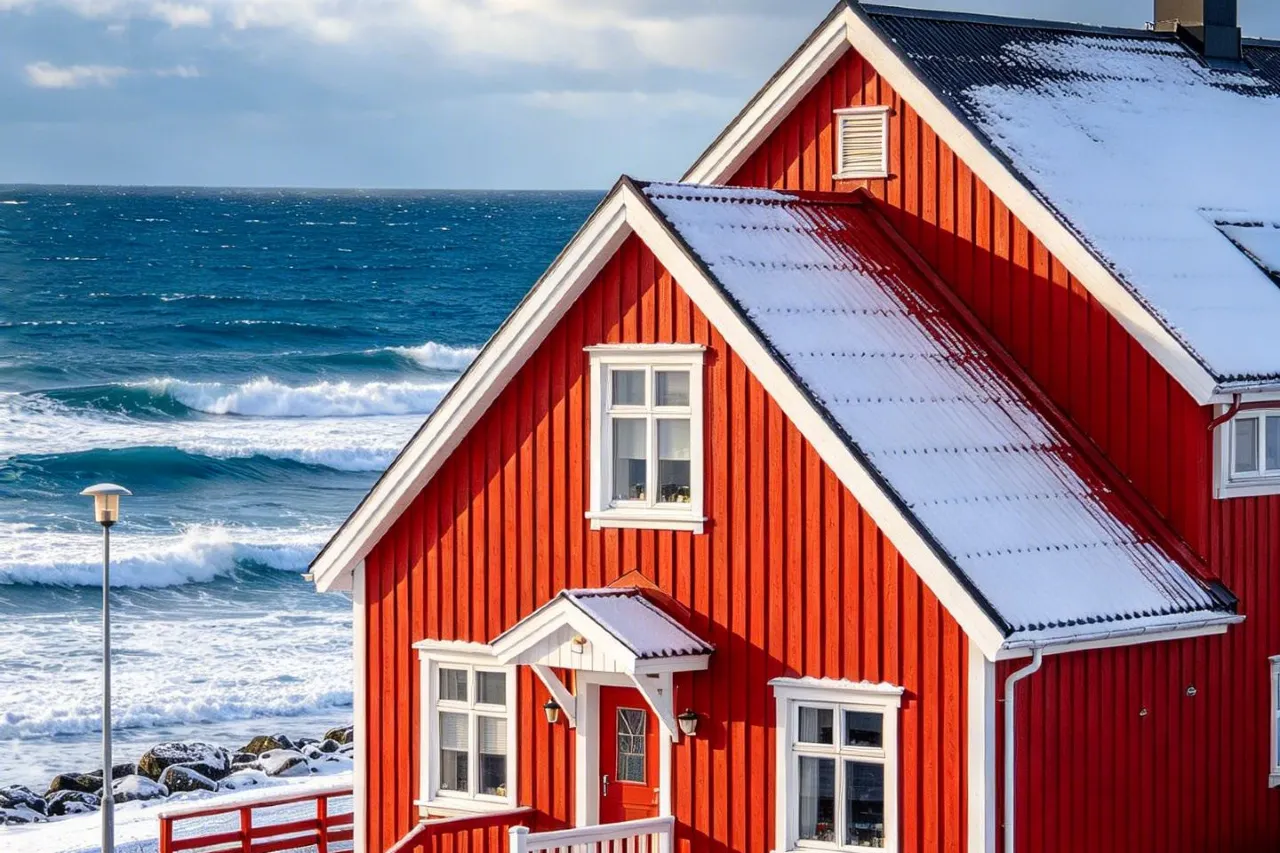
Winter driving in Iceland is an institutional habit more than a skill. The habit: before every driving day — every single one — check road status on road.is and the forecast on en.vedur.is. Storms close sections of the Ring Road regularly between November and March, sometimes for hours, occasionally for days, and the closures are announced on exactly those two services rather than discovered at the closed gate. Build the check into breakfast; it takes five minutes and it is the difference between a reroute and a white-knuckle improvisation.
The machinery side: rental fleets switch to legal winter tires for the season, and a 4×4 is the sensible winter choice beyond the capital’s immediate radius. The highland F-roads close entirely for winter — they are summer-only roads by design — and even the ploughed main routes narrow to winter profiles with snow banks as lane markers. Wind is the underrated hazard: gusts are strong enough to affect vehicle handling, especially on exposed stretches and for high-sided vehicles, so reduce speed when the forecast flag is up, and park facing the wind where advised.
Our full Ring Road driving guide covers the year-round routines; the winter additions are the morning checks, the storm-day flexibility and a simple rule of ratio: plan roughly one slack day for every three planned days, because in winter Iceland the storm day is a statistical certainty, not a possibility.
The winter spine: South Coast and Golden Circle
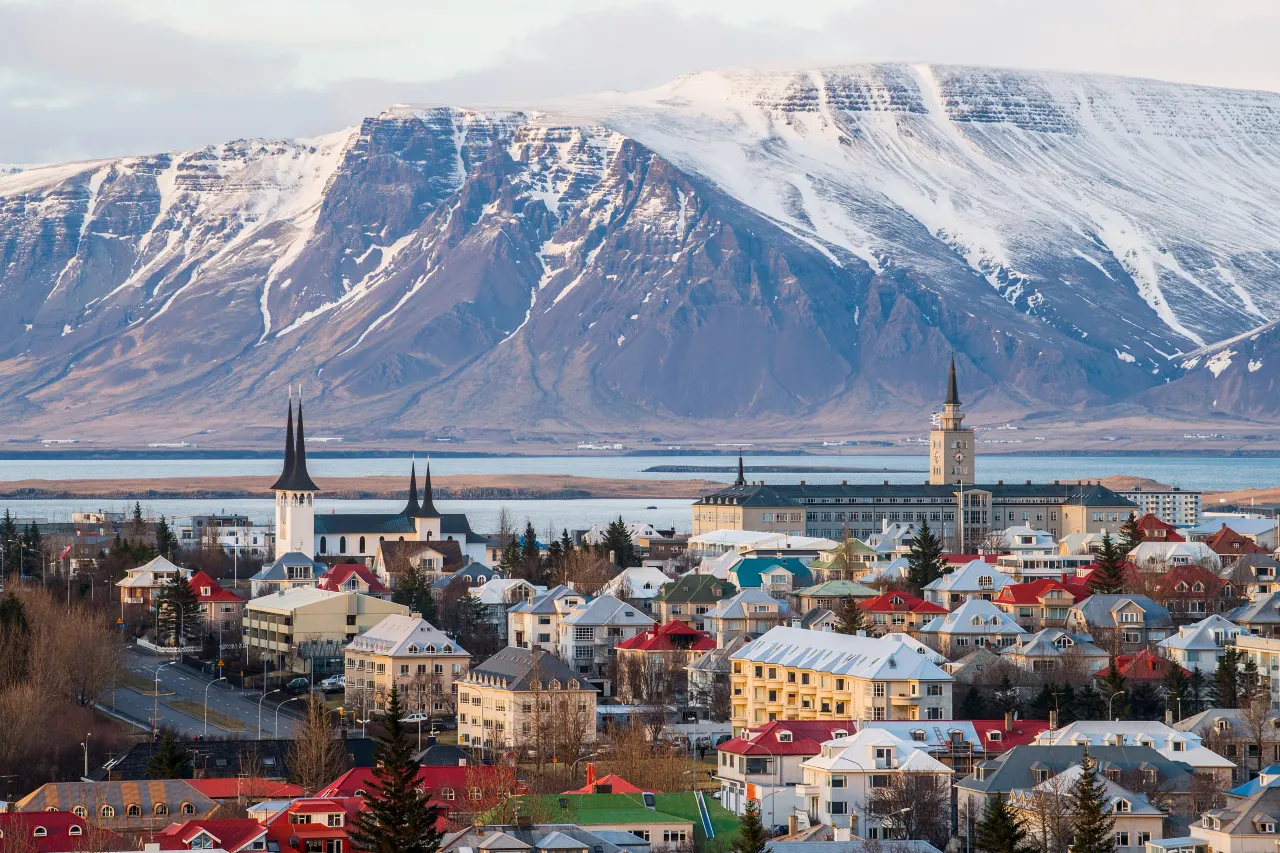
When the Highlands shut for the season, the winter itinerary runs on two ploughed, reliable, high-reward corridors. The first is the South Coast: Seljalandsfoss and Skógafoss, the black-sand drama of Reynisfjara, the canyon of Fjaðrárgljúfur, and the glacier country around Skaftafell and Jökulsárlón — all reachable on the Ring Road, all magnificent under snow, and all with the ice-cave tours of the southeast attached. The second is the Golden Circle: Þingvellir’s rift valley, the Geysir field and Gullfoss, each transfigured by frost and snow, and each an easy winter day from the capital (the full loop is covered in our Golden Circle guide).
Both corridors work in winter precisely because infrastructure stays ahead of the weather — ploughing, lighting, open facilities — while the experience stays wild. The rhythm we recommend: two-night bases, short daylight drives, and the famous stops either early-morning or in the blue hour when tour-bus traffic thins. The Christmas and New Year stretch adds the season’s festivals and folklore — our Christmas & New Year guide covers the Yule Lads, the Book Flood and the bonfire nights.
If your winter trip has extra days, the north earns them: Akureyri runs a full winter calendar under reliable snow, and the Mývatn geothermal corridor pairs steaming lagoons with waterfall ice. The honest winter skip-list: the Westfjords and the far east ring — remote, beautiful, and in winter a storm-closure coin flip not worth a fixed itinerary.
Hot pools in the snow
The geothermal pool is the winter’s perfect activity: warm water, cold air, steam rising into blue twilight, and snow falling on your face while your body disagrees with the weather entirely. This is a year-round Icelandic institution that becomes transcendent in winter, and the options spread across the whole island: the historic Secret Lagoon at Flúðir under its steam clouds, the lakeside Fontana baths with their steaming view across the water, and up north the Mývatn Nature Baths, where the mineral-blue water steams against a snow-dusted volcanic horizon. The capital’s own pools carry on as unbothered daily life — locals swimming laps in near-darkness at seven in the morning.
The etiquette is the same all year and worth knowing before the first visit: shower thoroughly without a swimsuit before entering (it is enforced social law), keep voices moderate, and respect the pool as daily life rather than spectacle. Beyond the famous names, our guide to the lesser-known hot springs covers the wilder soaks, including the hot river hikes where a winter dip becomes an expedition story.
The natural-springs footnote for winter: geothermal source water runs at 80–100°C — far hotter than bathing temperature — so the swimming-pool pools are tempered and the natural soak sites are guide-checked or locally signed. In winter, stick to the managed pools and the marked hot rivers; the random steaming ditch is a decision the season does not forgive.
Packing, photography and safety
Winter packing is a layering problem with a wind tax. The core system: a thermal base layer (merino or synthetic), an insulating mid-layer — this is where the lopapeysa sweater earns its reputation — and a genuinely waterproof, windproof shell on top. Add insulated gloves, a proper hat, and the item winter veterans consider non-negotiable: traction grips that strap over your boots. Pavement, car parks and waterfall paths ice over hard, and the grips turn cautious shuffling back into walking.
For the aurora photographers, the winter starter settings are established by experience: tripod, manual focus set to infinity (test it in daylight), ISO starting around 1600–3200, and shutter speeds in the 8–15 second range, tuned to the display’s movement. Spare batteries live in an inside pocket — cold drains them fast — and the wind-anchor habits from our photography guide apply doubly in winter. The full settings playbook is in the aurora guide.
| Decision | Self-drive winter | Guided winter tours |
|---|---|---|
| Flexibility | Total — chase weather windows and aurora gaps on your own clock | Fixed schedules; operators monitor conditions for you |
| Storm resilience | Your responsibility — daily road.is and en.vedur.is checks are mandatory habits | High — cancellations and reroutes are handled professionally |
| Ice caves and glaciers | Drive yourself there; the caves remain certified-guide-only regardless | Bundled — transport and guiding in one booking |
| Cost picture | Rental plus fuel splits well for groups; solo travelers pay more | Per-person pricing; often better value for solo winter visitors |
Safety closes the loop: save the emergency number 112 with the 112 Iceland app installed before your first drive, check safetravel.is for advisories, and register your travel plan there if you are heading into remote areas. The deeper protocol — what to do in a storm, how closures actually work — is in our safety guide.
Frequently asked questions
Is winter a good time to visit Iceland at all?
For atmosphere, aurora, ice caves, lower crowds and the country’s most photogenic light — genuinely yes. The trade is logistical: short days, storm risk and a tighter margin for error. Travelers who want hiking freedom and long driving days should wait for summer; travelers who want the Iceland of postcards at its most dramatic should come now.
Do I need a 4×4 in winter?
For the South Coast, Golden Circle and capital region in normal conditions, a standard car on the fleet’s legal winter tires manages — but a 4×4 is the sensible choice for confidence, clearance and the north. The F-roads are closed for everyone regardless; no rental vehicle changes that in winter.
How do ice cave visits actually work?
You book a guided tour — certified guides only — typically with a super-jeep transfer from the Vatnajökull area and a walk onto glacier terrain. The season runs roughly November to March, popular dates sell out well ahead, and tours pause in severe weather, so keep slack around your booking. Entry without a guide is not a thing; the glacier does not negotiate.
What happens if a storm closes the roads?
You wait, comfortably. Closures are posted on road.is and usually clear within hours; this is exactly why winter itineraries carry slack days. The storm-day protocol: don’t drive into a yellow-or-worse warning, enjoy the pool-museum-lunch trinity, and re-check before moving. The country has done winter for a thousand years — the systems work when you use them.
How much daylight should I plan around?
Roughly four to five hours in December in the southwest, rising through February and March. Structure days as two outdoor blocks — a morning block and a blue-hour block — with indoor anchors between. By March the balance shifts fast, and late-winter trips start feeling almost springlike by afternoon.
The winter pair: aurora and ice
The two headline experiences each get a dedicated guide — the forecast routine and the cave logistics, both field-tested.
Finish the winter plan: the packing guide turns the layering system into a checklist, the safety guide covers the storm protocol end to end, and the blog holds our team’s winter trip reports — storm days included, because those are the ones that taught us the slack-day rule.
Sources & official references
- Official Icelandic services: road.is (road status and winter closures), en.vedur.is (weather and aurora forecasts), safetravel.is (advisories and travel plans) — checked 2026.
- Emergency number 112 and the 112 Iceland app per the Icelandic National Commissioner’s emergency services information.
- Ice-cave season and guide-only glacier access per Vatnajökull National Park guidance; blue ice cave tour pricing from roughly US$158 and rating (~4.6/5) per Trip.com listing (checked 2026) — indicative, verify when booking.
- Winter tire requirements per Icelandic road-traffic regulations; rental fleets switch to legal winter tires for the season.
- Trip.com Iceland destination guide (checked 2026): winter itineraries and seasonal highlights.
- Editorial winter visits 2022–2026 by the Iceland Travel Guides team.
