


The Blue Lagoon is Iceland’s bathing postcard, and it deserves the fame — but it is one entry in a nationwide bathing culture that runs from million-gallon flagship lagoons to village pools where schoolchildren do their homework in hot tubs. Our team has soaked in all of them, from the 1891 pool at Flúðir to floating platforms on an East-Iceland lake, and this guide is the honest ranking: which lagoons justify their tickets, which public pools deliver the real culture for pocket change, and how the etiquette works so you never look like the visitor the lifeguards talk about.
The geography works in your favor too. Whatever route you drive, there is a soak within reach — a fjord-edge pool near the capital, a historic pond on the Golden Circle, milky lagoons in the north, forest and lake baths in the east. Below, we go region by region, put the prices and vibes side by side in one table, and end with the free wild options — because the ultimate Icelandic bath costs nothing but a hike.
Key takeaways
- Sky Lagoon (Kópavogur, next to Reykjavik): a seven-step Icelandic bathing ritual and an infinity edge over the North Atlantic; Trip.com listed it from approximately US$113 with a strong traveler rating.
- Secret Lagoon (Flúðir, Golden Circle): a working pool since 1891 — rustic, historic and comparatively affordable, listed from approximately US$36.
- The north and east carry a full circuit: Mývatn Nature Baths, Geosea in Húsavík (from approximately US$57), the Forest Lagoon in Akureyri (opened 2022) and Vök Baths (opened 2019).
- The local cheat code: Reykjavik’s public pools — Laugardalslaug at around $8 — deliver the genuine bathing culture at a fraction of the tourist-tier price.
- Etiquette is non-negotiable: shower thoroughly without swimwear before entering, keep voices low, rent or bring a towel — and pre-book the Blue Lagoon with its one-hour arrival window.
Quick answer: build your trip around one signature soak and one public pool. For the signature, choose Sky Lagoon if you are capital-based, the Secret Lagoon if you are running the Golden Circle, and Mývatn or Geosea if the north is on your route. Add Laugardalslaug for the real culture, and keep the Blue Lagoon for a pre-flight slot — booked ahead, with the one-hour arrival window respected.
First, the Blue Lagoon: how to do it right
The Blue Lagoon earns its reputation: an enormous milky-sapphire pool on a lava field, silica mud masks included, unmistakably otherworldly. Two pieces of advice determine whether your visit is magic or expensive queuing. First, pre-book — the lagoon manages capacity with timed entry, and walk-up availability on peak days ranges from slim to nonexistent. Second, respect the one-hour arrival window on your ticket: arrive inside it, because entry is managed to those slots and the schedule is part of the product.
Our honest take on the trade-off: the Blue Lagoon is a spectacle with premium pricing, best slotted either as a grand arrival day after Keflavík or as a pre-flight soak on departure day — the lagoon sits conveniently close to the airport and manages luggage logistics for guests. If you want the bathing culture rather than the icon, the rest of this guide costs less and delivers more local texture. Our dedicated Blue Lagoon guide covers the booking mechanics in detail.
Around the capital: Sky Lagoon & Hvammsvík
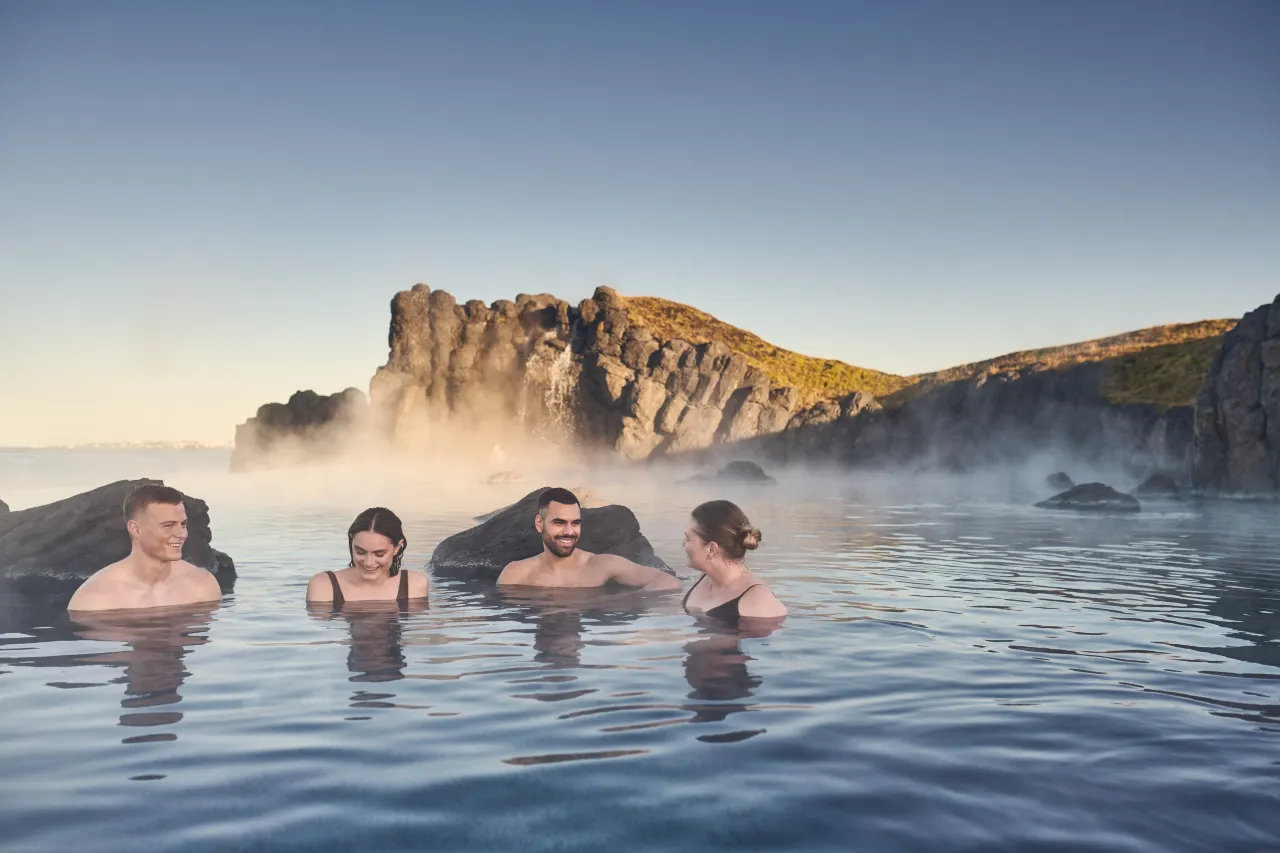
Sky Lagoon, on the Kópavogur headland minutes from central Reykjavik, is the Blue Lagoon’s stylish coastal rival. Its signature is the infinity edge that dissolves into the North Atlantic, and its product is the seven-step Icelandic bathing ritual — cold plunge, sauna, exfoliation and friends — that structures your visit into something closer to a spa ceremony than a swim. Trip.com listed entry from approximately US$113 with a strong traveler rating, which places it firmly in the premium tier; our view is that the ritual justifies it once per trip, ideally at sunset when the horizon does half the design work. The full mechanics live in our Sky Lagoon guide.
Hvammsvík, about 45 minutes from Reykjavik on the Hvalfjörður fjord, is the quieter sibling: stone-rimmed pools stepping down to the fjord itself, a historical estate setting, and a vibe closer to a farmhouse soak than a design hotel. In wind, the fjord pools feel gloriously elemental; on calm evenings, the water mirrors the mountains. It is the capital-area soak we recommend to travelers who found the big lagoons too choreographed.
Golden Circle soaks: Secret Lagoon & Fontana
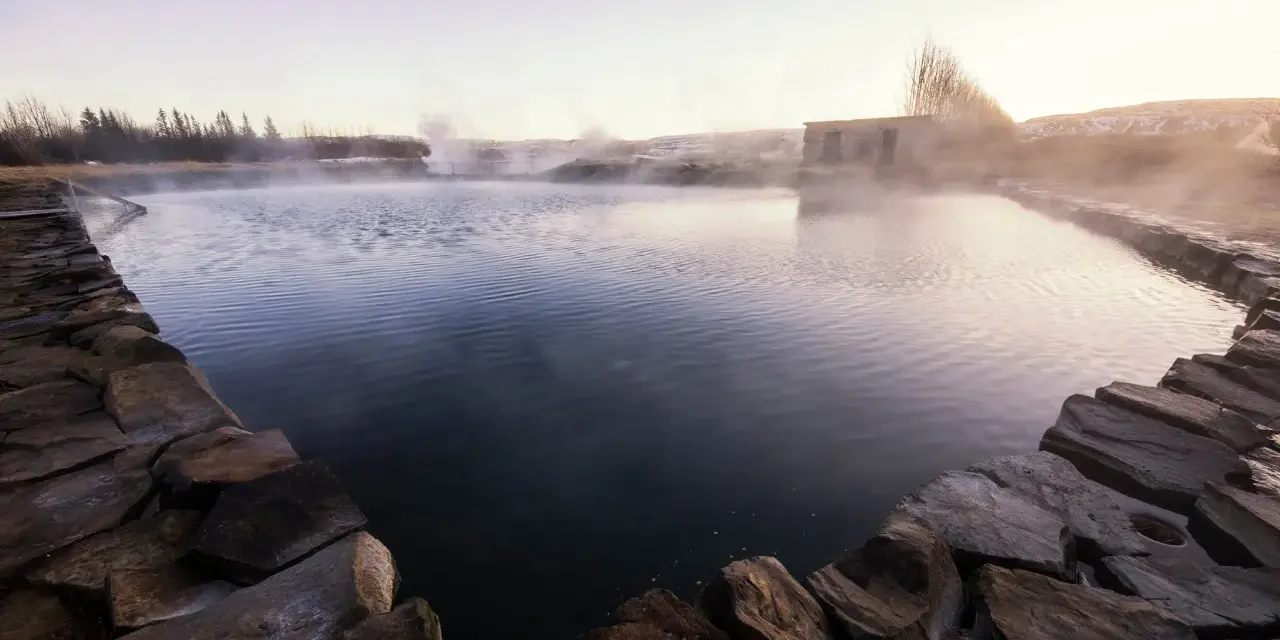
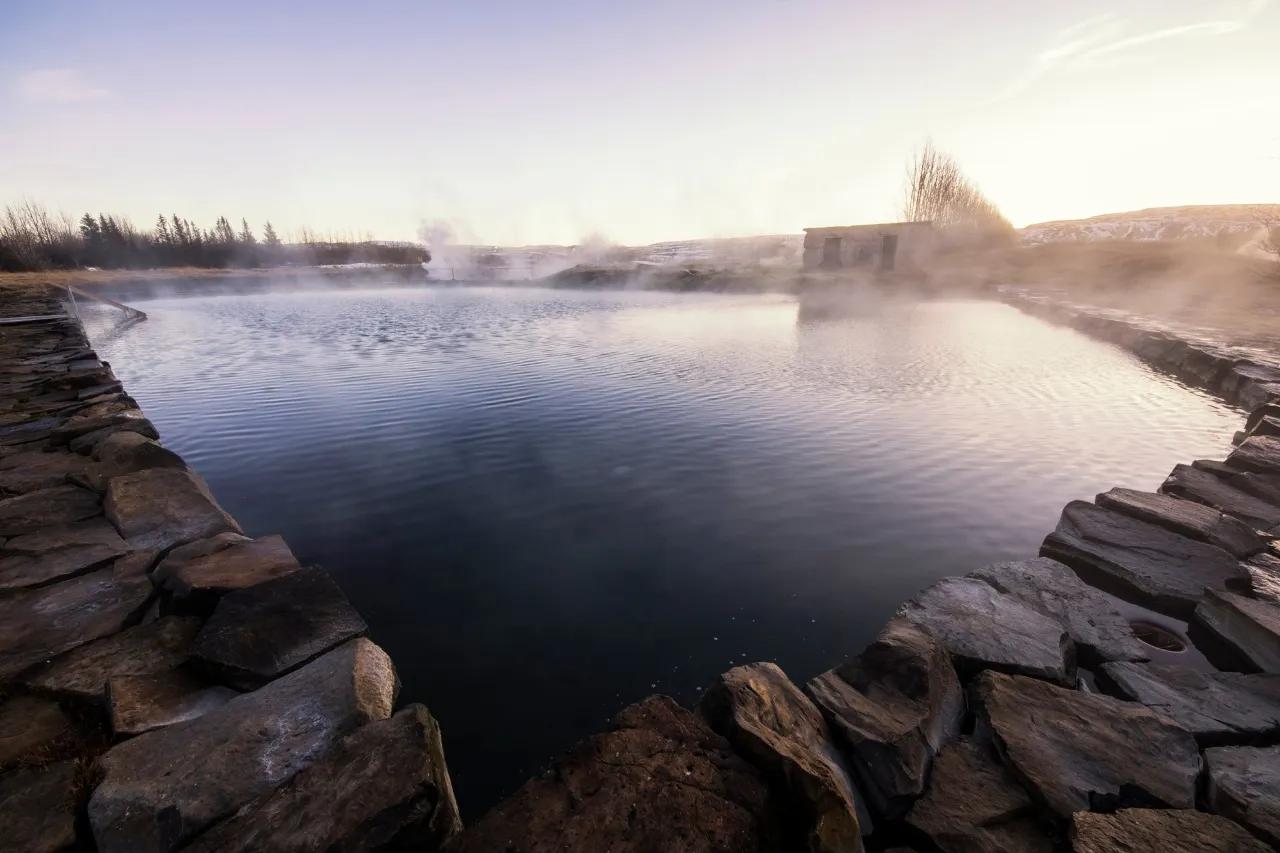
The Secret Lagoon at Flúðir is the oldest working pool in the country — opened in 1891 and still fed by the same hot spring, with steam rising off the surrounding ground and the old changing house giving it a time-capsule charm. It is the least polished lagoon in this guide and better for it: fewer frills, honest temperature zones, and a price band starting from approximately US$36 that undercuts every premium rival. Pair it with a Golden Circle day — the geysers and Gullfoss are close neighbors — and let the soak replace the crowded midday slot. Trip.com traveler ratings put it on par with its far pricier capital rival, which tells you something about where the value sits.
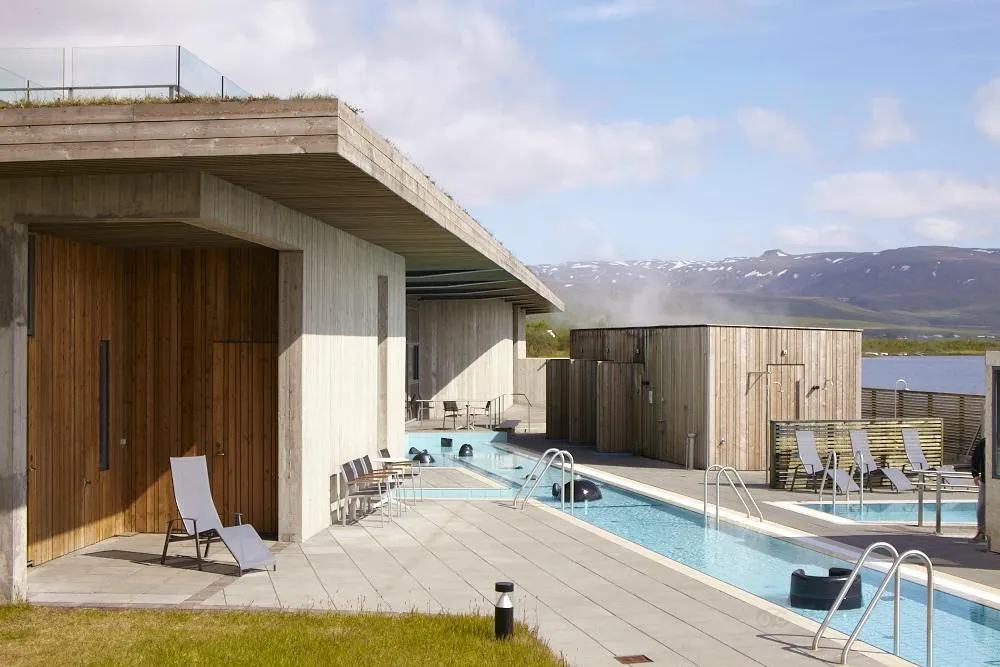
Laugarvatn Fontana, on the lake of the same name, adds a party trick: geothermal rye bread baked in the hot black sand by the shore, dug up and served with butter as part of the visit. The lakeside baths and saunas make a relaxed family stop on the Golden Circle loop — less iconic than the Secret Lagoon, more playful, and an easy combined ticket with the bakery demo if you time it right.
The north and east: Mývatn, Geosea, Forest Lagoon, Vök
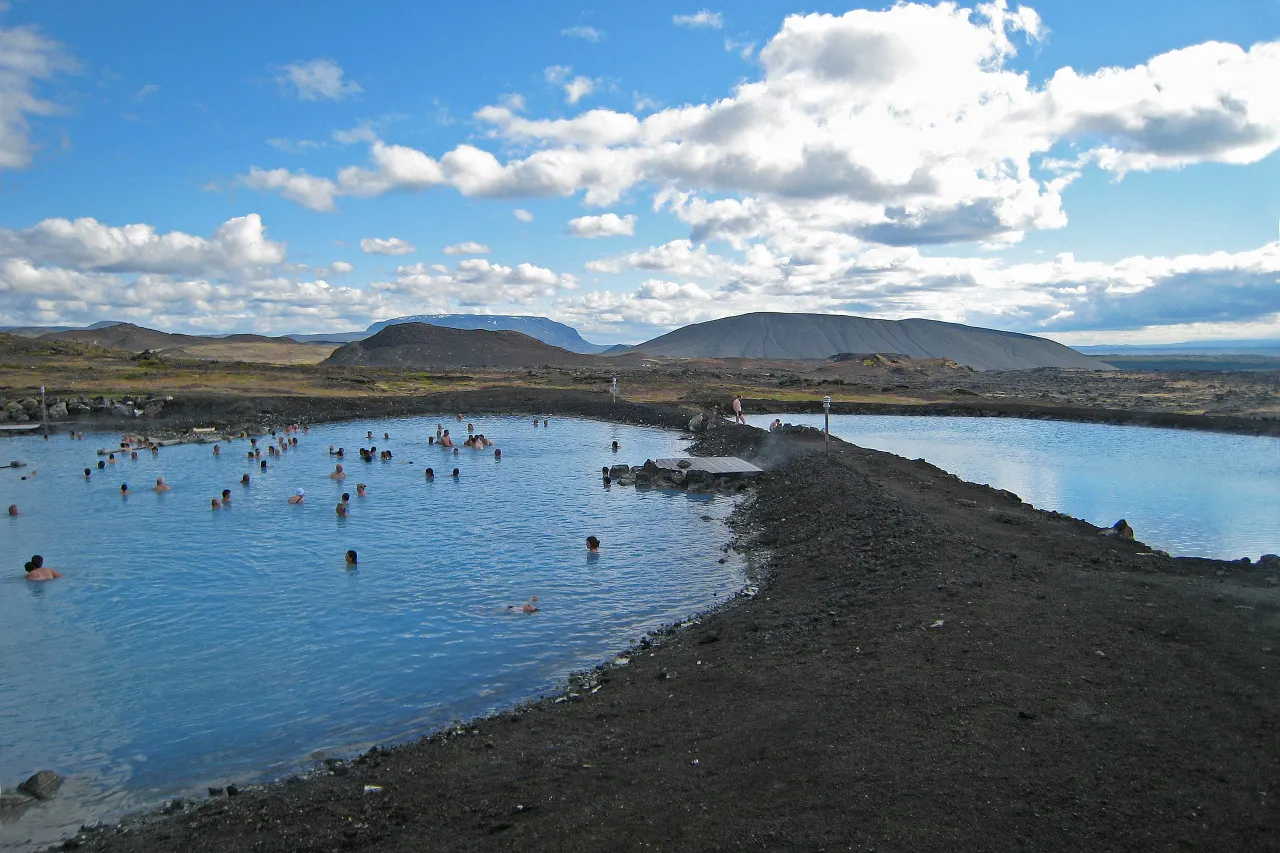
The north’s classic is the Mývatn Nature Baths: a milky, mineral-rich lagoon on the edge of one of Iceland’s great geothermal landscapes, ringed by the region’s pseudocraters and steaming fields. It delivers the Blue Lagoon’s core experience — silica-smooth water, wide horizons — in a wilder setting, and Trip.com travelers rate it at the top of the lagoon tier. Pair it with a Mývatn day and the surrounding geothermal sights; our dedicated Mývatn geothermal guide maps the region in full.
Two newer northern experiences round out the circuit. Geosea in Húsavík stacks infinity pools above Skjálfandi bay — geothermal water with a whale-watching town’s harbor view, listed from approximately US$57 — and the Forest Lagoon in Akureyri, opened in 2022, tucks its pools into the birch-wooded slopes of Vaðlaskógur, making it the greenest soak in the country and a natural evening after an Akureyri day. In the east, Vök Baths floats its geothermal pools on Lake Urriðavatn near Egilsstaðir — opened in 2019, with floating platforms that give you the odd sensation of bathing in the middle of a lake.
The local way: public pools & Laugardalslaug
Here is the guide’s best-kept open secret: Iceland’s true bathing culture is municipal, not commercial. Almost every town runs a heated pool complex — hot tubs at graduated temperatures, lap pools, waterslides — where locals gather daily, news travels, and the price is pocket change. Reykjavik’s flagship, Laugardalslaug, costs around $8, holds its own against the tourist lagoons for sheer local color, and traveler reviews on Trip.com put it solidly mid-to-high despite the tiny price. One visit explains Iceland faster than most museums: children doing homework in a hot tub, teenagers debating football, pensioners solving the country’s problems one soak at a time.
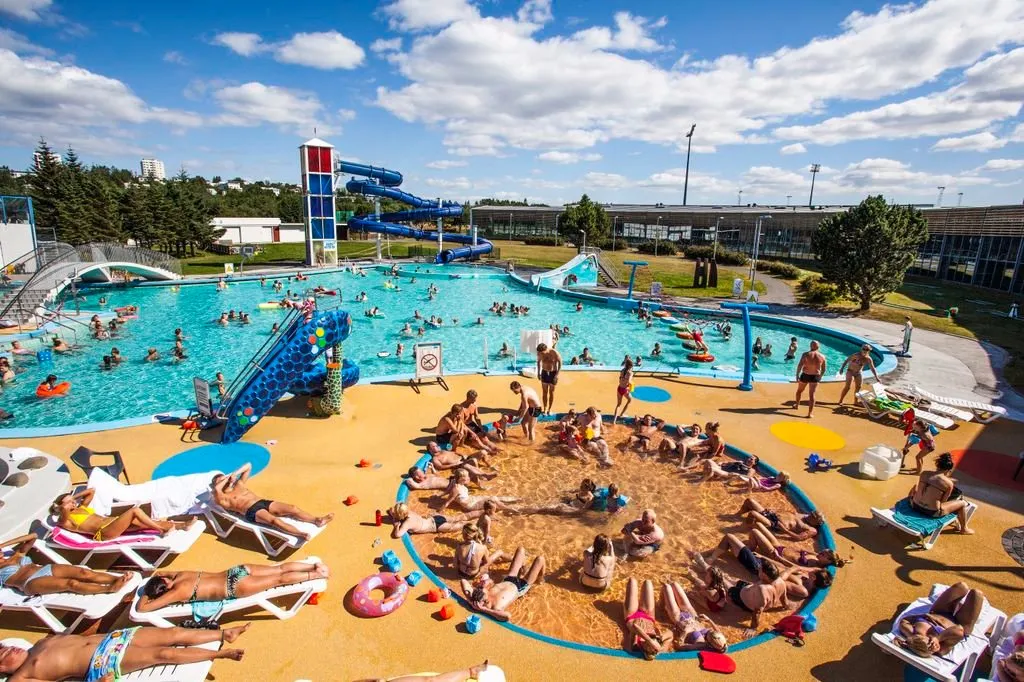
The etiquette, which applies everywhere and is enforced with genuine seriousness: shower thoroughly before entering — without swimwear, as the signs say, and locals watch for it — keep your voice low (the pools are social clubs with library acoustics), dry off properly, and either bring a towel or rent one. Towel rental is standard across lagoons and pools alike. Follow those three rules and you are, functionally, Icelandic for the afternoon. The savings angle gets its own chapter in our budget travel guide — public pools are the country’s great travel-cost escape valve.
The free wild soaks
The wildest option is also the cheapest: hike up from Hveragerði to the Reykjadalur valley, where a warm river runs through a steaming valley and you bathe for free at the end of a moderate trail. It is the experience that divides tourists from converts — no walls, no lockers, just a river whose temperature changes stretch by stretch as hot springs feed in. The full trail breakdown — route, timing, wind-chill math — lives in our dedicated Reykjadalur guide.
A word of caution that applies to every natural pool in the country: geothermal water emerges at 80–100°C at source, and hot-spring margins can scald before they look dangerous. Bathe where temperature is manageable and flow is clear, keep children within arm’s reach, and treat steam-vented ground as fragile crust. The safety basics — forecast checks on en.vedur.is, trip plans on safetravel.is — apply as much to a free river as to a guided hike.
Choosing your soak: the comparison
| Soak | Region | Vibe | Price indication |
|---|---|---|---|
| Blue Lagoon | Keflavík / capital corridor | The icon — vast, milky, lava-field drama | Premium tier; pre-book with 1-hour arrival window |
| Sky Lagoon | Kópavogur (Reykjavik) | Seven-step ritual, infinity edge over the sea | Premium — from approx. US$113 |
| Secret Lagoon | Flúðir (Golden Circle) | Historic 1891 rustic charm, honest heat | From approx. US$36 |
| Laugarvatn Fontana | Laugarvatn (Golden Circle) | Lakeside, family-friendly, rye-bread demo | Moderate |
| Hvammsvík | Hvalfjörður (~45 min from Reykjavik) | Stone-rimmed fjord pools, elemental | Moderate |
| Mývatn Nature Baths | North (Mývatn) | Milky lagoon in geothermal wilderness | Moderate; top-rated by Trip.com travelers |
| Geosea | Húsavík (north) | Sea-view infinity over the bay | From approx. US$57 |
| Forest Lagoon | Akureyri (north) | Birch-forest setting, opened 2022 | Moderate |
| Vök Baths | East (Lake Urriðavatn) | Floating pools on a lake, opened 2019 | Moderate |
| Laugardalslaug | Reykjavik | The real local pool culture | ~$8 |
From real trips: our standard recipe for a ten-day trip is one premium lagoon (Sky Lagoon or the Blue Lagoon), one regional lagoon matched to the route (Mývatn if the north is on the plan), and as many public pools as the schedule allows. That mix delivers the postcard, the landscape and the culture — for roughly the price of two premium tickets alone.
Frequently asked questions
Is the Blue Lagoon worth it compared to the alternatives?
Once, yes — it is a genuine spectacle. But travelers on tighter budgets or seeking local culture get more from Sky Lagoon’s ritual, the Secret Lagoon’s history, or a public pool at a fraction of the cost. The strongest plan is one premium lagoon plus public pools, rather than two premium visits.
Do I need to pre-book the lagoons?
The Blue Lagoon effectively requires pre-booking with a one-hour arrival window. The other lagoons manage capacity with timed tickets too, and summer weekends sell out — book online a day or more ahead everywhere, and treat walk-up availability as a bonus, not a plan.
Can children visit the lagoons and pools?
Public pools welcome children and are genuinely family institutions; commercial lagoons also admit children, with age and supervision rules that vary by operator — check each lagoon’s policy when booking. At any natural pool, keep children within arm’s reach: geothermal water at source runs 80–100°C.
What is the shower etiquette, exactly?
Shower thoroughly before entering any pool or lagoon — without swimwear, as the signs state, and with the seriousness locals expect. It is a hygiene culture, not a suggestion. Also: keep voices low, tie back or rinse long hair around the pools, and use the provided or rented towels.
Are there truly free bathing options?
Yes — the Reykjadalur hot river above Hveragerði is the flagship free soak, reached by a moderate hike, with parking as the only cost. Natural pools elsewhere need local knowledge and temperature caution; the hot river is the reliable, well-marked version of the experience.
Plan the soaks around the route
Match each lagoon to a region with our route guides — and keep one evening free for the wild river.
Finish the bathing map with our Reykjadalur hot-river guide, the northern lagoons in the Mývatn guide and the capital of the north’s own pool in the Akureyri visitor guide — and if the price tags feel steep, the budget travel guide rebalances the whole trip.
Sources & official references
- Official Icelandic services: en.vedur.is (weather for bathing days), safetravel.is (natural-pool safety), road.is (route status to regional lagoons) — checked 2026.
- Operator-published pricing for Sky Lagoon, Secret Lagoon, Geosea and Laugardalslaug as listed on Trip.com (checked 2026, “from” figures; ratings around 4.8–4.9/5 for the headline lagoons and ~4.3/5 for Laugardalslaug).
- Public-pool etiquette and hygiene rules as posted by Icelandic pools nationwide; towel rental available at pools and lagoons.
- Blue Lagoon visitor guidance: pre-booking requirement and one-hour arrival window per the lagoon’s published booking policy.
- Editorial visits by the Iceland Travel Guides team across regions and seasons, most recently 2025–2026.
