









Iceland is one of the safest countries on earth by every human measure — crime, traffic, food, water. The danger lives in the landscape instead: an ocean that surges in sets, ground that boils at 100°C, glaciers that hide crevasses under postcard surfaces, and a wind strong enough to move your car without asking. None of this makes the country risky for the prepared; it makes it unforgiving for the casual. The good news is that Iceland has built one of the world’s best safety systems — a single emergency number, a location-sharing app, a trip-registration service and a professional-plus-volunteer rescue network — and it works brilliantly for visitors who join it.
Our team has hiked, driven and sailed this island for years, and every hazard in this guide is one we have personally stood next to: the berm at black-sand beaches, the steam fields where spray scalds, the canyon edges with no railings. This is the full safety briefing we give friends before their first trip — read it once, install the app, and enjoy the wild parts with the confidence that comes from knowing exactly where the edges are.
Key takeaways
- Emergency number: 112 — police, fire, ambulance and sea/mountain rescue, reachable from any phone, anywhere.
- Install the 112 Iceland app: it sends your GPS position to responders and offers a check-in service for remote travel.
- Register your plan on safetravel.is before hikes and drives — the voyage plan tells rescuers where to look if you go quiet.
- The hazards are environmental: sneaker waves at beaches, 80–100°C geothermal water, crevassed glaciers (certified guides only) and wind.
- Driving has its own rulebook: never enter orange/red warnings, respect single-lane bridges, keep headlights on, never drive off-road.
Quick answer: save 112, install the 112 Iceland app, register your travel plan on safetravel.is, stay behind the berm at beaches, keep to marked paths at geothermal sites, never enter an ice cave without a certified guide, and never drive into orange or red warnings. That is the whole system — follow it and Iceland’s dangers stay on the postcard side of the line.
112 & the 112 Iceland app
Every emergency in Iceland — police, fire, ambulance, and the sea and mountain rescue teams that make this country famous — starts with one number: 112. It works from any phone, with or without a local SIM, and operators speak English. Save it before you land, and teach it to children as the number that summons “the helpers with the helicopters”. When you call, give your location first: road numbers, landmark names, or the GPS dot from your app.
The 112 Iceland app earns its install twice over. First, it sends your GPS position to the emergency centre when you call, which matters enormously in a country where “somewhere past the third river crossing” is a real description. Second, its check-in service lets you log a planned route and an expected return for remote trips — if you fail to check in, the system escalates, and rescuers start with your last known position instead of a needle-in-haystack search. It is the cheapest insurance on the island: free, five minutes to set up.
safetravel.is: register before you go
safetravel.is is the official safety service run by the rescue association, and it serves three jobs. It hosts the travel-plan registration (the “voyage plan”) — fill in your route, group size and timing before any serious hike or highland drive, and the plan sits ready for responders if things go wrong. It publishes current conditions and alerts, from trail closures to storm advisories. And it carries the distilled guidance behind every rule in this guide, written by the people who actually fly the rescues.
Worth knowing: registering a travel plan takes minutes and commits you to nothing except being findable. The rescue teams are not scared of rescuing people — they are worried about looking for people whose whereabouts nobody knows. Leave the breadcrumb; it costs nothing.
Pair safetravel.is with the two daily checks: en.vedur.is for weather warnings and road.is for road status. The three sites together are the entire decision system — green warnings, open roads, plan registered, go.
The coast: sneaker waves
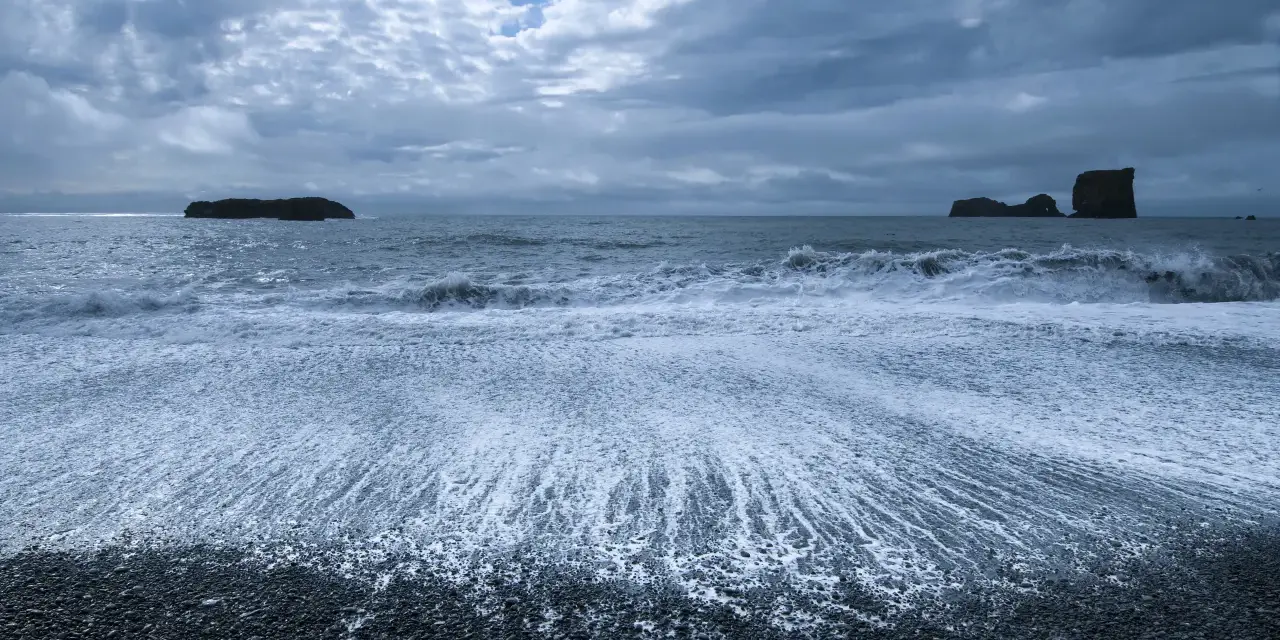
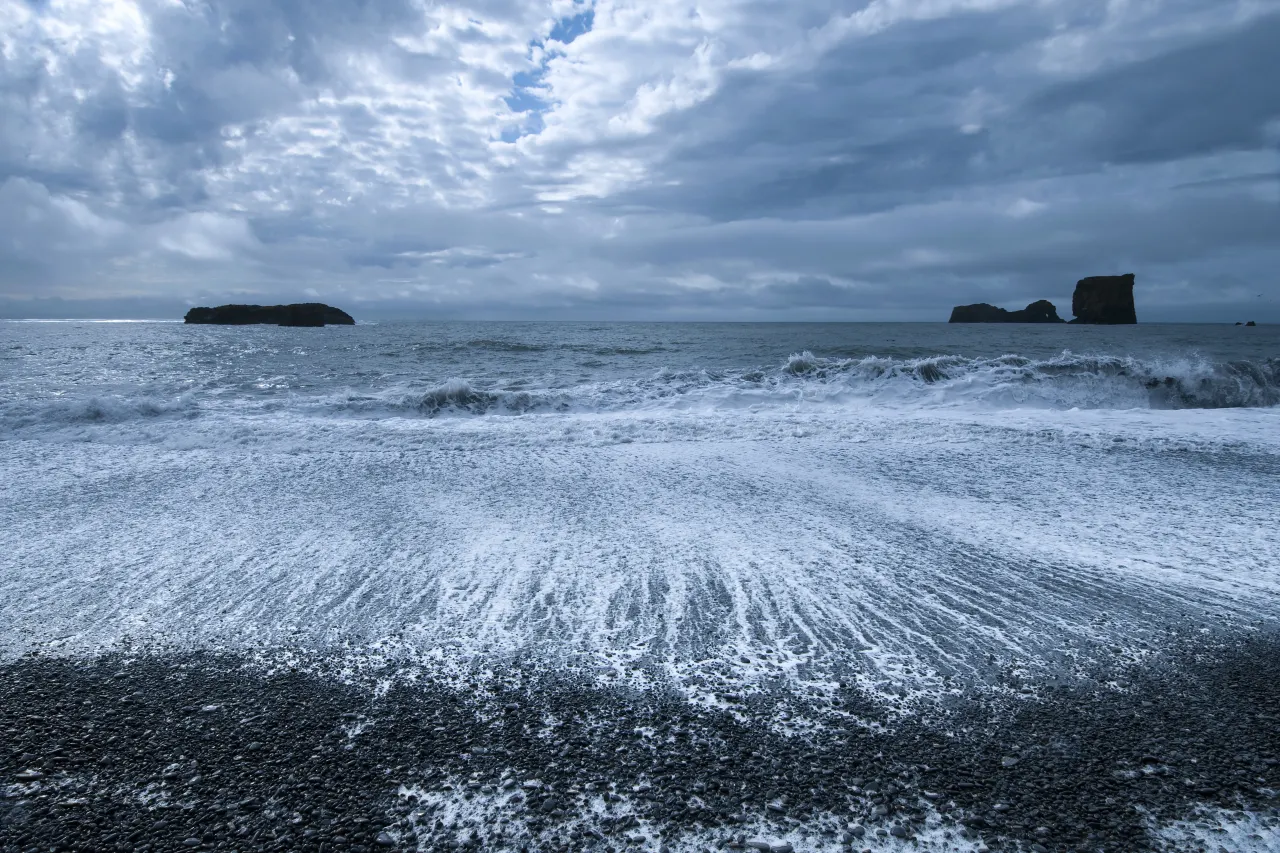
The single most serious hazard a regular visitor is likely to meet is the sneaker wave on black-sand beaches. Iceland’s south-coast surf arrives in sets: calm stretches invite you toward the waterline, then a single wave runs metres up the sand with enough force to knock adults down and drag them seaward. Visitors have died at Reynisfjara and similar beaches doing nothing more reckless than standing where the waves looked pretty. The beach is not a place to relax near the water — it is a place to stand well back and admire.
- Stay behind the berm — the raised sand ridge between you and the ocean is the line, and photos are just as good from behind it.
- Never turn your back on the sea, even on glassy days; the calm waves are the setup, not the punchline.
- Hold children’s hands the entire visit, and keep pets leashed — both behave unpredictably when a set arrives.
- Read the warning sign at beach entrances; the traffic-light system reflects current conditions, and red means actively dangerous.
The same respect applies to clifftops and sea stacks: edges are unfenced, the wind is a shove, and the photos from two steps back are indistinguishable from the ones from one step from eternity. Our Reynisfjara guide walks the beach rules in detail, and the Diamond Beach guide applies them to the iceberg shore.
Geothermal areas & hot springs
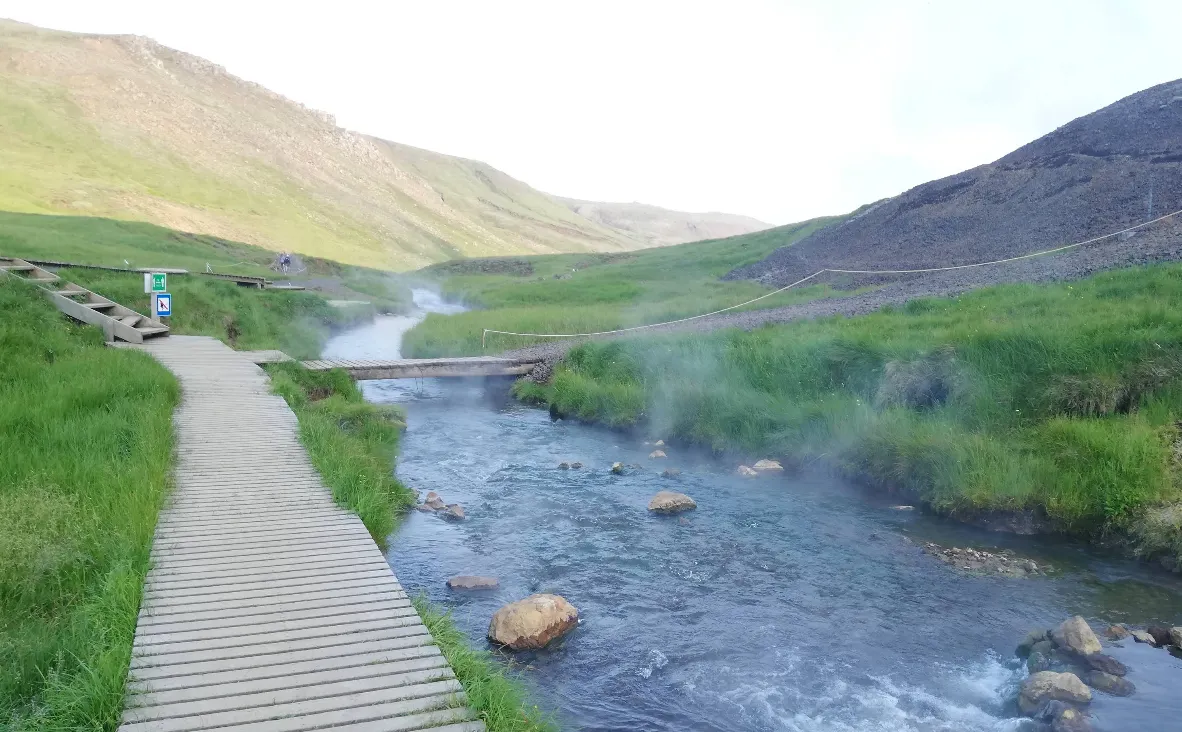
The steam fields are Iceland’s strangest and most beautiful ground, and the water inside them is genuinely industrial: around 80–100°C, enough to cause severe burns in seconds. Boardwalks and marked paths exist for two reasons — to keep you out of thin ground that can crack underfoot, and to keep scalding spray away from the route. Wind is the multiplier: a gust can shift a steam plume or splash a pool edge over the viewing line without warning, so read the wind the way you read traffic.
The rules are short. Stay on paths and platforms even when the ground looks invitingly solid. Keep children and cameras inside the rails. Never touch or lean over pools, mud pots or stream edges, no matter how clear the water looks. And at the safe end of the spectrum — the pools and baths built for bathing — follow the shower-before-swim etiquette, because the geothermal water everyone soaks in is treated with the same respect that keeps the wild versions at arm’s length.
Glaciers, ice caves & hiking
Glaciers are the one environment in Iceland where independent travel simply ends: ice caves and glacier travel belong to certified guides, no exceptions. Crevasses hide under snow bridges, caves form and collapse with the seasons, and the blue cathedral in the photograph exists because a guide checked it that morning — with the kit, the ropes and the training. Book guided tours for any glacier experience, and treat the certificate on the guide’s jacket as the entire safety system working as designed.
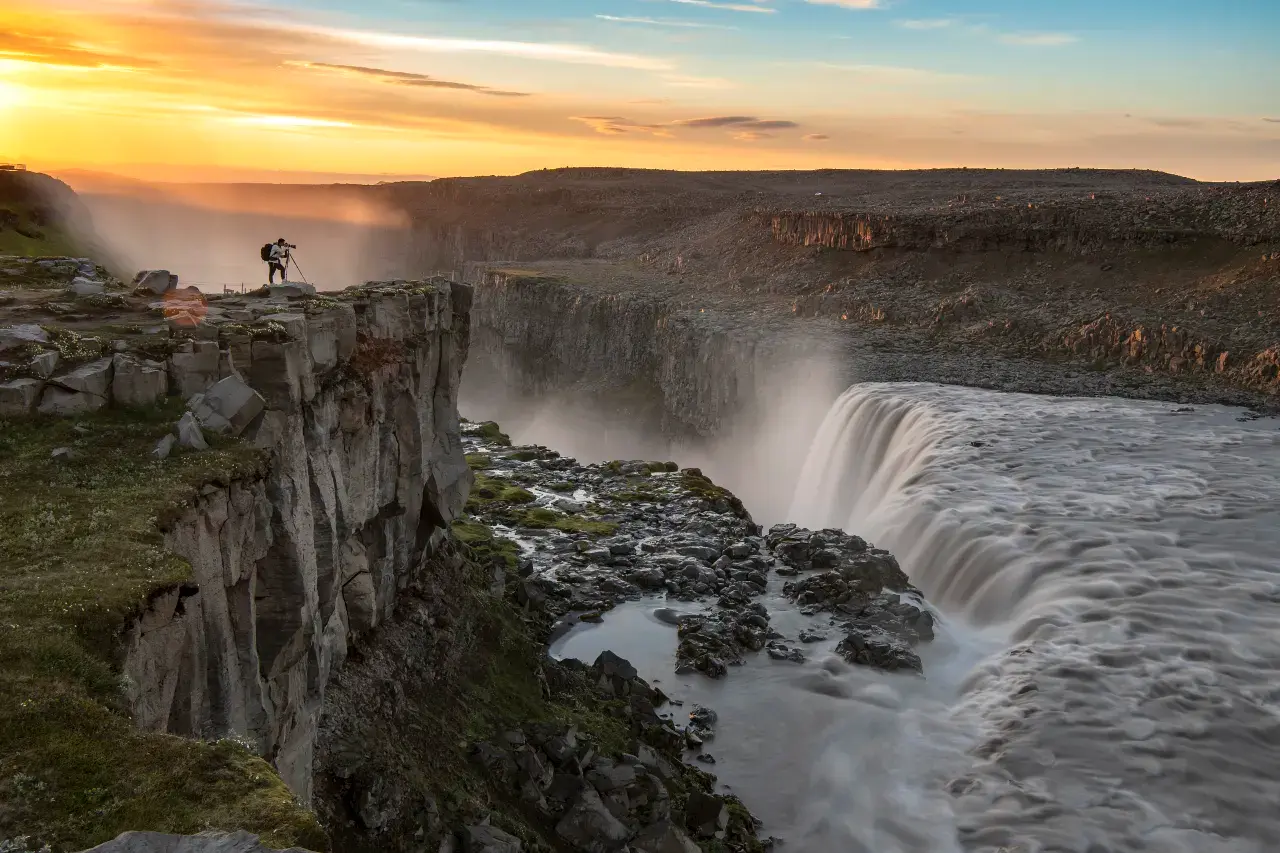
Hiking hazards are quieter: weather turns fast, winter daylight shrinks to around 4–5 hours, and trails that are boardwalk strolls in July become ice rinks in November. Dress in layers, carry more water than feels necessary, turn back when the sky turns businesslike, and tell someone your plan — or better, register it on safetravel.is. The boardwalks on geothermal and canyon trails are not decorative: ゴールデンサークル paths and canyon rims alike keep boots where the ground is proven.
Driving: the long list of little rules
Driving concentrates more small hazards than any other activity here, so run the list. Wind: never enter orange or red warnings, hold car doors firmly, and expect gusts on bridges and open plains. Bridges: many rural bridges are single-lane — whoever is already on the bridge has priority, so slow, look and yield. Gravel: loose-surface roads demand slower speeds and patience, because sliding on gravel is the classic tourist fender-bender. Sheep: in summer, they own the verges and occasionally the road — slow down when they look up. Headlights: on, always, by law, day and night. Off-road: illegal, heavily fined, and an environmental crime, not a parking choice.
Highland F-roads add their own chapter: open only in summer, suitable only for proper 4x4s, and frequently closed by weather even then — river crossings and meltwater changes are real, and rental companies restrict which vehicles may enter. The full road-trip rulebook lives in our Ring Road driving guide; the short version is that the speed limits are lower than they feel, and the emergency phone in the glovebox is the best passenger you will bring.
Drones, coverage & rescue costs
Drones are welcome with discipline: maximum 120 metres altitude, flown within line of sight, kept at least 150 metres from public buildings, and no flying in national parks without permits — plus distance from wildlife, which reacts to drones as predators. Check local signage wherever you fly, because closures and site-specific rules add up, and a drone that spooks a puffin colony is doing environmental damage with its rotors.
Phone coverage is strong along the Ring Road and through the populated west and north, and thin in the highlands and some fjord corners — another reason the 112 app’s GPS feature matters, since it works wherever any signal reaches. As for rescue itself: Iceland’s system mixes professional responders with dedicated volunteer teams, and it is genuinely good. Iceland does not bill individuals for rescue operations; the unwritten exchange is that you follow the rules that keep you out of one, and the travel-plan registration that makes the rescue fast if it ever happens.
Frequently asked questions
What number do I call in an emergency in Iceland?
112 — the single emergency number for police, fire, ambulance and sea and mountain rescue, reachable from any phone. Give your location first, from road signs, landmarks or the GPS position shown by the 112 Iceland app.
Do I have to pay if I need to be rescued?
Iceland does not bill individuals for rescue operations; the system runs on public funding and volunteer dedication. The social contract is to prepare properly — register plans, follow warnings — so the teams rescue accidents, not preventable decisions.
Are ice caves safe to visit?
With certified guides, yes — caves are checked, routes chosen for the season, and gear provided. Independently, no: crevasses, collapse risk and changing ice make glacier travel strictly certified-guide territory, which is why every reputable cave tour sells the guide as the product.
How close can I get to geothermal springs?
As close as the path takes you and no closer. Water runs around 80–100°C, ground outside marked paths can be thin, and wind shifts scalding spray unpredictably. Boardwalks and rails are the safety system — respect them and the steam fields are perfectly safe to enjoy.
Is Reynisfjara really that dangerous?
Yes — it is the textbook sneaker-wave beach, with documented fatalities among visitors who stood too close to the waterline. Stay behind the berm, never turn your back on the sea, hold children’s hands, and treat the warning sign as current data rather than decoration.
Safety is a ten-minute setup
The Trip Planner slots registration, weather checks and slack days into your itinerary, and the weather guide teaches the warning colours in full.
Build the rest of the preparation stack from the winter travel guide, the packing guide and the glaciers & ice caves guide — which explains why the certified-guide rule is a gift rather than a restriction.
Sources & official references
- safetravel.is — official travel-safety service: trip registration, current conditions and alerts (checked 2026).
- 112 Iceland app — official emergency check-in and GPS location service documentation.
- en.vedur.is — Icelandic Met Office warnings; road.is — road status and closures.
- Trip.com Iceland destination guide (checked 2026): hazard guidance including sneaker waves, geothermal safety and driving rules.
- Editorial field experience across seasons 2024–2026 by the Iceland Travel Guides team.
