







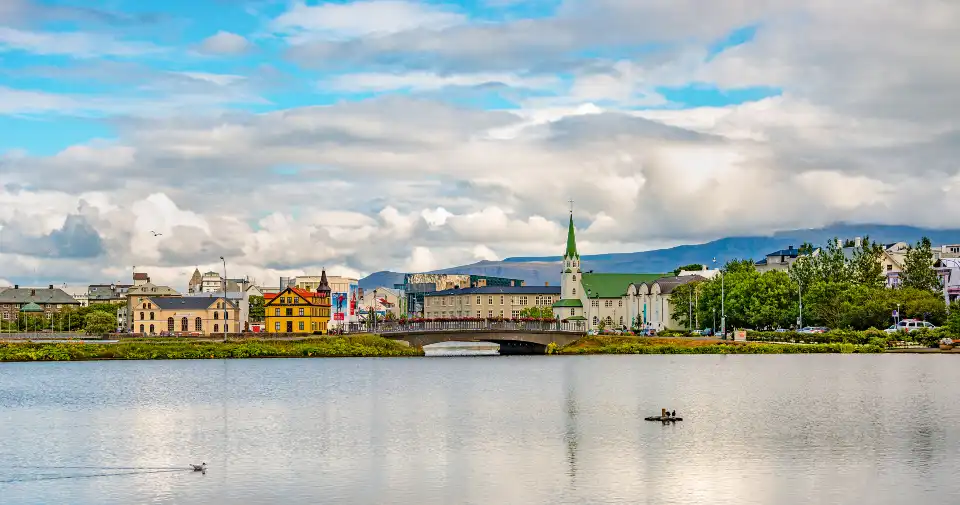
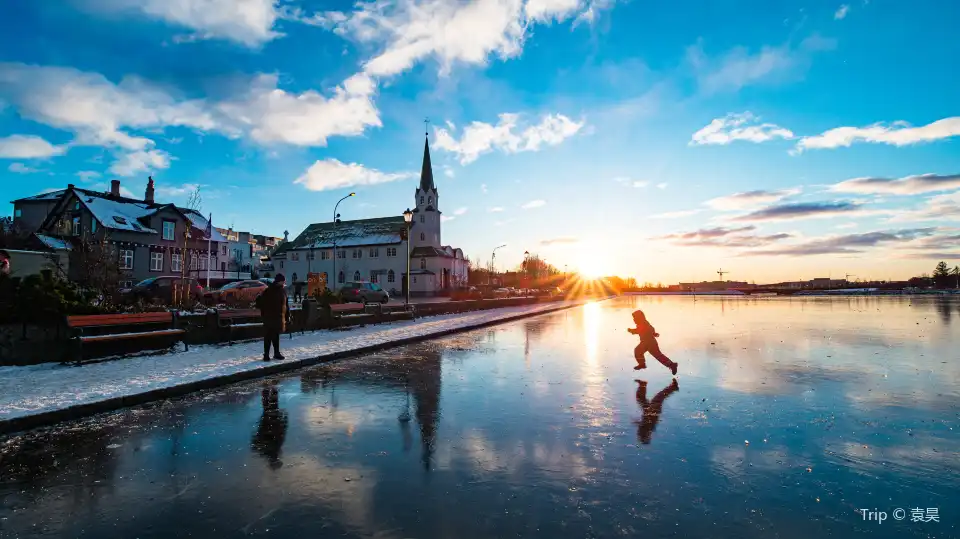
Lake Tjörnin is Reykjavík’s living room: a small tidal lagoon in the city centre where forty-something bird species feed beside the City Hall, office workers lunch on the banks, parents bring the bread ends, and the whole pond freezes into a public skating scene some winters. It is ranked #20 on the national list not for spectacle but for function — it is the stop that makes Reykjavík feel inhabited, and the free half-hour that improves every capital itinerary.
This is #20 of 39 in our Best Things to Do in Iceland guide (4.4/5 from 50 verified reviews). Below: the bird life by season, the City Hall (#33) and museum pairing, the bread tradition, the winter ice version, and the walk loop that ties the capital’s centre together.
Points clés à retenir
- 40+ bird species: whooper swans, geese, ducks and gulls year-round — the pond is a tidal lagoon with real bird traffic.
- City Hall sits on it: the modernist hall (#33) bridges the pond’s north end — the relief-map of Iceland is inside, free.
- The bread tradition: feeding the birds is a Reykjavík institution — bring the bread ends, or watch the professionals work.
- Winter turns it to ice: some winters the pond freezes enough for skating; the aeration system keeps bird channels open.
- Zero cost, zero planning: a free stop in the walkable centre — the loop ties National Museum, City Hall and downtown together.
Réponse rapide : Walk the pond’s east bank from the National Museum (#22), cross to City Hall (#33) for the free relief map of Iceland, feed whatever claims your bread crusts, and continue over the footbridge to the downtown side. Half an hour to an hour, any season — winter ice and the swans-in-steam scene are the photographer’s version.
The pond and its birds
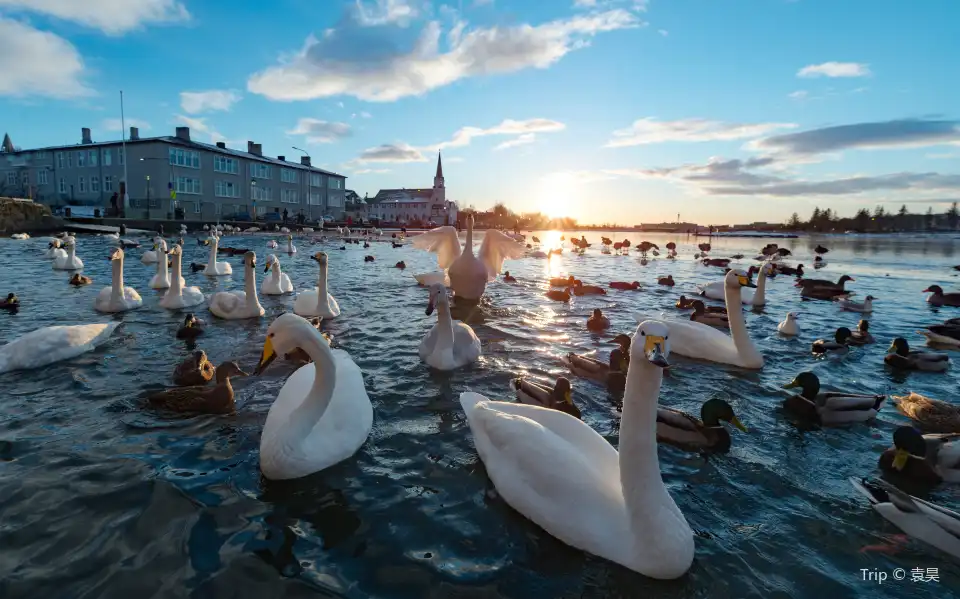
Tjörnin (“the pond”) is a shallow tidal lagoon — 270 metres across — connected to the sea under the footbridge, which is why the bird life works: the tide brings the food, the city brings the quiet banks, and the species stack up. Whooper swans own the year-round marquee; geese and duck flocks rotate seasonally; gulls and terns work the water; the odd cormorant dries its wings on the posts like a bad statue. Winter steam rises off the water in cold snaps — swans drifting through vapor at −10°C is the photo that makes the ranking make sense.
The human layer is the point: the east bank’s lawn fills with lunch crowds in summer, the bird-feeding tradition runs all year (locals bring bread ends; the swans queue), and the pond’s west side hosts the National Museum and the University’s edge. It is a working pond, not a monument — which is exactly the charm.
Feeding rules of thumb: bread ends are traditional and tolerated; the birds prefer grains and greens, and the City Hall side has signage on what actually helps. The swans are tame enough to take from hand — hold firm, they pull harder than expected.
The pairings that make the stop
City Hall (#33) bridges the pond’s north end — the free building holds the giant relief map of Iceland (worth ten minutes before any road trip: you will recognise every place you visit afterward) and a café with pond views. The National Museum of Iceland (#22) sits on the east bank — the Viking-to-modern collection pairs naturally with a pond walk. The downtown side connects to Laugavegur’s shops and the church hill (#9).
The loop that works: National Museum → pond east bank → City Hall (relief map) → footbridge → downtown lunch → Hallgrímskirkja (#9). Two hours covers the capital’s indoor-outdoor centre at a stroll — the pond is the connective tissue.
The winter ice scene
In sustained cold, Tjörnin freezes — partially, then almost fully — and Reykjavík treats it as infrastructure: skaters, walkers on the ice edge, the swans herded into the aeration-maintained open channels (the city keeps water moving for the birds). The scene photographs beautifully: steam, ice, swans in vapor channels, the City Hall reflected in the frozen edge. Only sustained hard freezes close the pond’s water entirely; most winters alternate between ice days and open water.
Summer is the opposite mood: the lawn crowds, the terns diving, the midnight-sun light on the water until late. Between seasons, the pond is simply the capital’s best free walk — the stop that requires nothing and gives the city’s rhythm away.
How it fits an Iceland route
Tjörnin is a capital-morning or capital-evening filler that upgrades the day: pair with the National Museum (#22) and City Hall (#33) indoors, or with the Hallgrímskirkja–Sun Voyager circuit (#9, #21) outdoors. Our Reykjavík city guide sequences the full centre; the pond is the free hinge of it.
Frequently asked questions
Is Lake Tjörnin worth visiting?
Yes — as the free connective stop it is: 30–60 minutes of real city life, the best bird scene in the capital, and the City Hall and National Museum on its banks. It is not a destination; it is the pond that makes the centre feel like a city.
Can you skate on Tjörnin?
Some winters, yes — sustained hard freezes turn it into a public skating surface (the city maintains open bird channels with aeration). Check conditions locally; the ice is never guaranteed.
What birds will I see?
Whooper swans year-round, geese and ducks by season, gulls and terns in summer, the occasional cormorant. The species count across a year runs past forty — the swans are the marquee.
What pairs with a Tjörnin walk?
City Hall (#33, the free relief map) and the National Museum (#22) on the banks; Hallgrímskirkja (#9) and downtown beyond. The pond is the capital walk’s hinge.
Where this ranks — and what is next
Lake Tjornin is #20 of 39 in our Best Things to Do in Iceland guide — the full ranked list, built from Trip.Best traveler data, lives in one place.
Go deeper: Reykjavík — exploring the capital (the full centre walk), Reykjavík City Hall (#33).
Sources & official references
- Trip.com listing for Lake Tjornin: 4.4/5 rating, 50 reviews (checked November 2026).
- Trip.Best ranking data: #20 of 39 (November 2026).
- City of Reykjavík information: pond management, winter aeration (checked 2026).
- Editorial capital walks across seasons, 2023–2026.
