









No trip to Iceland starts at a waterfall; it starts in the arrival hall at Keflavík, slightly jet-lagged and facing a decision you did not research: bus, shuttle or taxi, cash or card, straight to the city or an impulsive lagoon stop. Get the first ninety minutes right and the whole trip opens up — our team has landed at KEF in every season, from calm June midnights to February storms that shut the coast road, and this guide is the arrival-day playbook we wish someone had handed us at baggage claim.
The good news is that KEF is one of the easiest international arrivals in Europe. It is compact, it sits roughly forty-five minutes from Reykjavik, it takes cards at every counter, and the transfer options are simple enough to explain to a tired child. The bad news, sort of: because everything is efficient, most visitors are wheels-up toward the capital before they have thought about what arrival day should actually be — and with a little planning, that first day can hold a soak, a supermarket run and a proper dinner instead of a scramble.
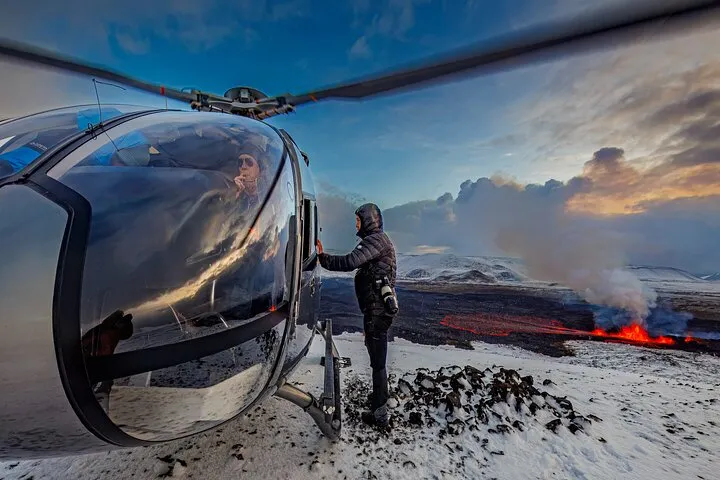
Points clés à retenir
- KEF is close: roughly forty-five minutes from Reykjavik by bus — closer than most capital airports, with no train and no need for one.
- The Flybus meets every arrival and drops at city hotels; luggage storage is available when checkout and departure hours collide.
- Money is optional: cards work everywhere, so skip the exchange counter; prepaid SIMs from Síminn, Vodafone or Nova start from about $13.
- Duty-free on landing is a local ritual — the allowance is generous by European standards and the queues are half residents.
- In winter, storms rewrite the plan: a first night booked in Keflavík town beats a midnight bus ride on a closed road.
Réponse rapide : land, clear the hall, buy a SIM, and ride the Flybus to your hotel — done within the hour most days. If you land in the morning with a friendly forecast, pre-book the Blue Lagoon for the afternoon (it sits about twenty minutes from the airport). If warnings are orange, stop in Keflavík town instead and start fresh tomorrow.
What KEF is (and isn’t)
Keflavík International Airport is the country’s main gateway, and it behaves like a large regional terminal rather than a mega-hub: short walks, fast baggage delivery and a single logical flow from gate to exit. Food options inside are modest by capital-city standards — fine for coffee and a sandwich, not where you want a celebration meal — and when several wide arrivals land within the same half hour, passport and baggage queues stack up quickly. None of it changes the math: most travelers clear the hall within a few minutes of picking up bags.
One thing KEF does not have is a rail link — there is no train, and there will not be one on this trip. Ground transport is buses, rental-car shuttles and taxis, which is why the transfer section below is the only real decision you face. Treat the airport as a fast corridor, not a destination: everything interesting is forty-five minutes northeast.
Flybus, shuttles & taxis
The Flybus is the default for good reason: coaches meet essentially every arrival, timed to landings, and run to major hotels and guesthouses in Reykjavik — buy tickets at the desk inside the hall or online, roll your bags straight from baggage claim, and let someone else handle the wind. If you have hours to fill between checkout and departure, the same operators run luggage storage, which turns a late flight into a free afternoon in the city. Rental cars work differently: most desks in the hall are counters for companies whose vehicles sit in a rental village near the airport, reached by short shuttle transfers — another reason to have booked the car and seats in advance rather than gambling on stock.
| Option | Best for | What to know |
|---|---|---|
| Flybus coach | Most visitors | Meets every arrival, hotel drops across Reykjavik, luggage storage available |
| Rental-car shuttle | Road-trippers | Shuttles run to the rental village; book the car — and car seats — well ahead |
| Taxi | Groups, very late arrivals | Expect roughly $120–160 to Reykjavik (indicative; moves with time of day and traffic) |
Our honest ranking for a first visit: Flybus in, Flybus out, rental car collected on the morning the road trip actually starts. It splits the airport from the driving decisions cleanly, and nobody has to navigate a capital ring road at 22:00 in a rain squall.
SIM, money & plugs: the ten-minute setup
The arrival hall holds kiosks and counters for the Icelandic carriers — Síminn, Vodafone and Nova — and prepaid SIMs start from about $13 for a 3GB package, with eSIM options if your device supports them. Buy in the hall, not in the city: it is the cheapest and quickest point in your trip, and coverage across the island is good wherever there is road. Install the apps that matter the same evening: Veður for weather forecasts, Klappið for bus tickets in Reykjavik, and Parka if you will drive into paid parking zones.
Money is even simpler: skip the exchange counters entirely. Cards are accepted everywhere — buses, hot dog stands, car parks, even some toilets — and a visitor can genuinely spend a week in Iceland without holding a single króna. If you want pocket cash for a farmstead honesty box, an ATM in the city does the job better than any airport desk. And before your devices die in the queue: Iceland runs 230V on plug types C and F, so standard European two-pin chargers fit directly and North American gear needs only a simple adapter, not a converter.
Duty-free & first supplies
The duty-free store on the way out of arrivals deserves its reputation. The allowance is generous by European standards, prices are notably kinder than in the state-run shops in town, and the aisle is famously half-filled with locals stocking up on beer and wine before the weekend — buying on landing is a national ritual, not a tourist trap. If a toast or a cosy-night drink is on your itinerary, the arrival hall is the cheapest place in the country to arrange it.
Worth knowing: everything else is better bought in the city. Skyr, snacks, picnic supplies and even toiletries cost less at a Reykjavik supermarket than at airport retail, so use duty-free for alcohol only and leave the shopping basket for the first grocery run.
Arrival-day plans: Blue Lagoon, Reykjanes or the city
Three blueprints cover nearly every flight. The classic: the Blue Lagoon sits about twenty minutes from the airport on the Reykjanes lava fields, which makes it the perfect bridge between a long flight and the city — pre-book your slot (the ticketing system uses a one-hour arrival window), stash luggage according to the lagoon’s own arrangements, soak, then continue to Reykjavik showered and human.
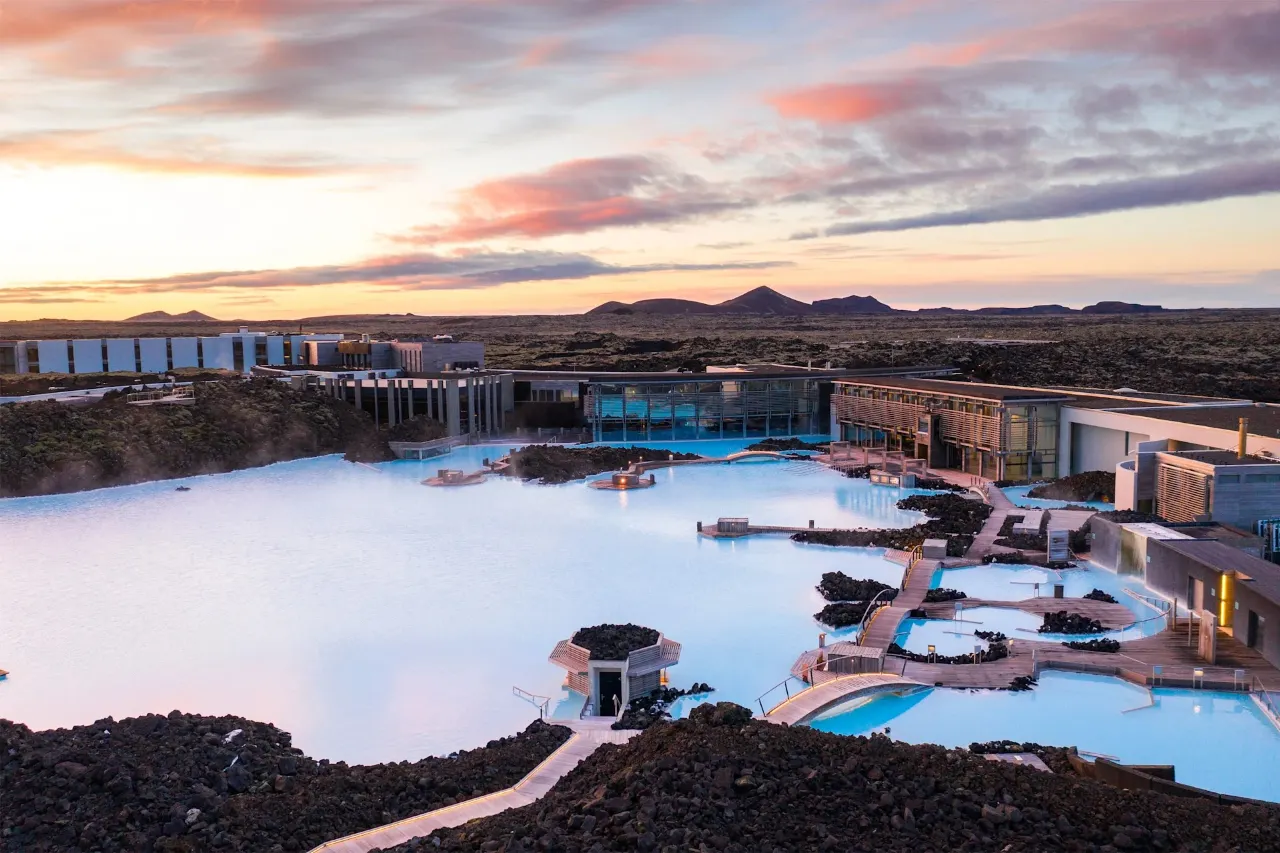
The flexible option is a slow drive across Reykjanes itself: lava fields, coastal viewpoints and the geopark’s stranger landscapes sit between the airport and the capital, and they turn the transfer into a first tour. The simplest option — and our team’s pick after overnight flights — is straight to the city: drop bags, walk the centre, grocery run, early pool or early night.
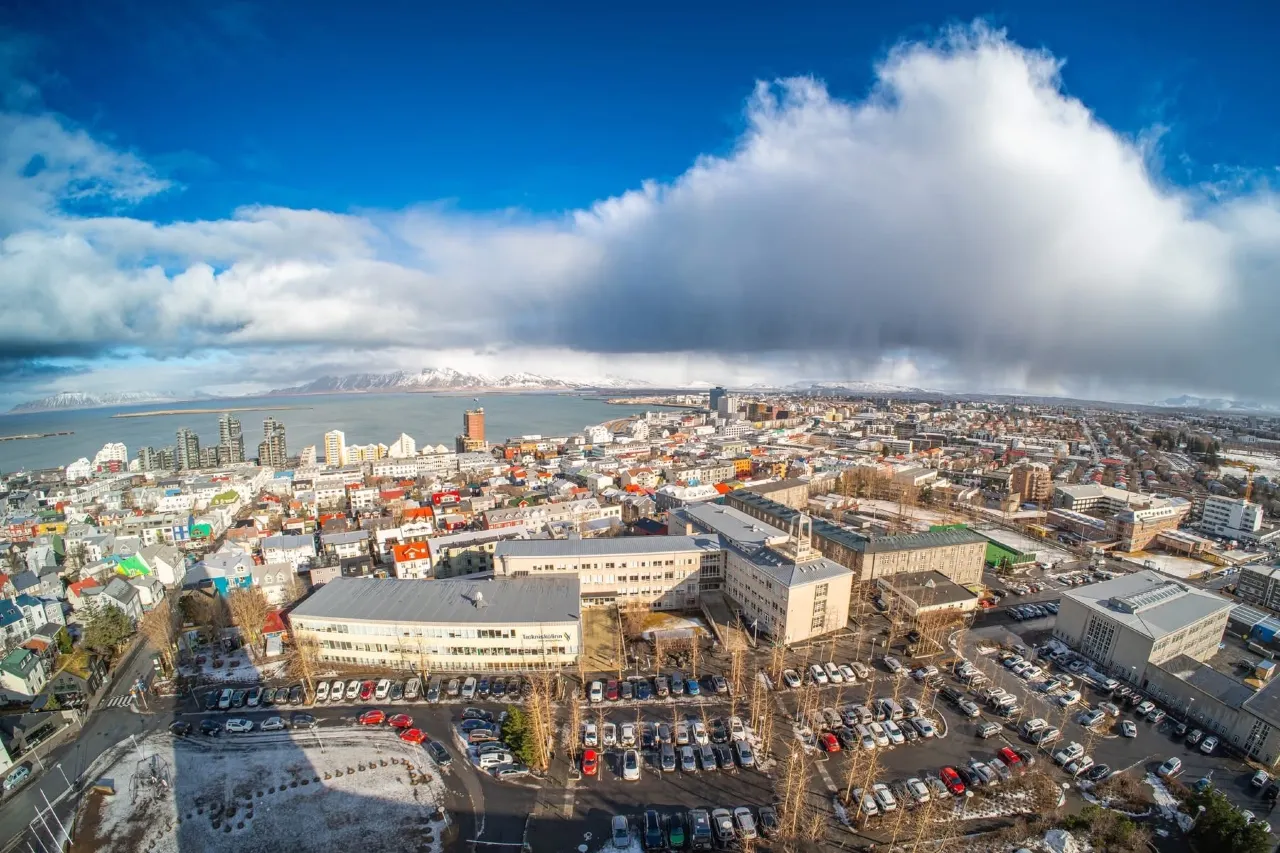
Whichever you choose, do the arrival admin first — SIM, weather app, hotel address saved offline — because Iceland’s first lesson arrives with the weather, not the sights. When a storm is running, the lagoon and the geopark lose their charm quickly, and the plan collapses to its honest core: get to a bed before the wind gets interesting.
Departure day: timing & security
Work backwards from the same efficiency that made arrival easy. Plan to reach the airport two and a half hours before departure — long enough for rental returns, check-in and security, short enough that nobody perishes in a terminal with modest food options. Liquids rules are the familiar European standard, so pack the usual toiletry discipline rather than heroic optimism, and remember the duty-free hall works in both directions if souvenirs need a last-second upgrade.
If a rental car is involved, budget real time for refuelling and the shuttle to the terminal rather than the fantasy ten minutes; petrol stations near the airport handle the full-to-full return routine daily. And eat before you fly when you can — KEF feeds travelers adequately, but the good kitchens are in Reykjavik, and a boarding sandwich bought in town is both cheaper and better.
Winter arrivals: storms & plan B
From autumn through spring, Atlantic storms are a normal part of the schedule, and occasionally they delay flights, close roads or make the coastal transfer genuinely unpleasant. The professional move is the Keflavík-town strategy: if your forecast arrives orange or worse, book a first night near the airport, sleep through the worst of it, and ride the morning bus into a calmer city. You lose nothing but an evening and gain a driver who is not white-knuckling Route 41 at midnight.
Check the two official feeds before you land and again at breakfast: en.vedur.is for weather warnings and road.is for road status, both plain to read and worth bookmarking. Our weather & wind planning guide explains the warning colours and the morning routine in detail — read it before winter travel, because the forecast, not the itinerary, is the boss on this island.
Frequently asked questions
How do I get from Keflavík airport to Reykjavik?
The Flybus meets essentially every arrival and drops at hotels across the capital, taking roughly forty-five minutes. Rental cars collect from a nearby rental village via shuttle, and taxis run to the city for roughly $120–160 (indicative). There is no train.
Do I need to exchange money at the airport?
No. Cards are accepted essentially everywhere in Iceland, down to hot dog stands and car parks, so skip the exchange counters entirely. If you want a little cash, an ATM in Reykjavik serves better than any airport desk.
Can I visit the Blue Lagoon on arrival day?
Yes — it sits about twenty minutes from the airport, which makes it the classic landing-afternoon soak. Pre-book your slot (the system uses a one-hour arrival window), plan luggage according to the lagoon’s own options, and only commit if the forecast is friendly.
Is a taxi worth it from KEF?
For most solo travelers and couples, the Flybus does the same job for a fraction of the cost. Taxis earn their price for groups splitting the fare, for very late arrivals, or when a storm makes standing at a bus stop the worst idea of the day.
What happens if a storm delays my flight?
Delays happen most often from autumn to spring, and the smart play is the Keflavík-town strategy: sleep near the airport, watch en.vedur.is and road.is overnight, and take the morning bus once warnings lift. Airlines and buses rebook around storms routinely — build the slack in rather than the stress.
Next stop: the city
Transfers are solved — the two decisions left are where to sleep and how the first days fit together. Both guides are one click away.
From the arrival hall, the trip branches fast: pick your base with the Reykjavik neighborhood guide, start exploring with the capital city guide, and if the road trip starts immediately, load the Ring Road driving guide before you reach the rental village. Recent reader reports live in the blog — arrival-day mistakes and fixes included.
Sources & official references
- Trip.com Iceland destination guide (checked 2026): transfer options, SIM pricing (prepaid from about $13 for 3GB) and indicative taxi ranges.
- Flybus operations and rental-village shuttle arrangements as published for 2025–2026; confirm hotel-drop lists and luggage storage when booking.
- Official services: en.vedur.is (weather warnings), road.is (road status), safetravel.is (general travel safety).
- Editorial arrivals across all four seasons 2024–2026 by the Iceland Travel Guides team.
