









Seljalandsfoss is the waterfall Iceland puts on every itinerary for one reason: a path leads behind the 60-metre curtain, and you stand in a cavern of spray while the whole river falls in front of you. It is the country’s most interactive big waterfall — free to visit, 120 minutes from Reykjavík on the South Coast, and it photographs best in exactly the golden light most visitors skip. The Trip.Best list ranks it #6 and its #2 night-attraction badge (summer evenings light the falls).
This is #6 of 39 in our Best Things to Do in Iceland guide (4.7/5 verified rating, saved by 140 travelers). Below: how the walk-behind works, what to wear (more than you think), the hidden neighbour Gljúfrabúi, and the timing that turns the standard bus-stop visit into the backlit golden-hour shot.
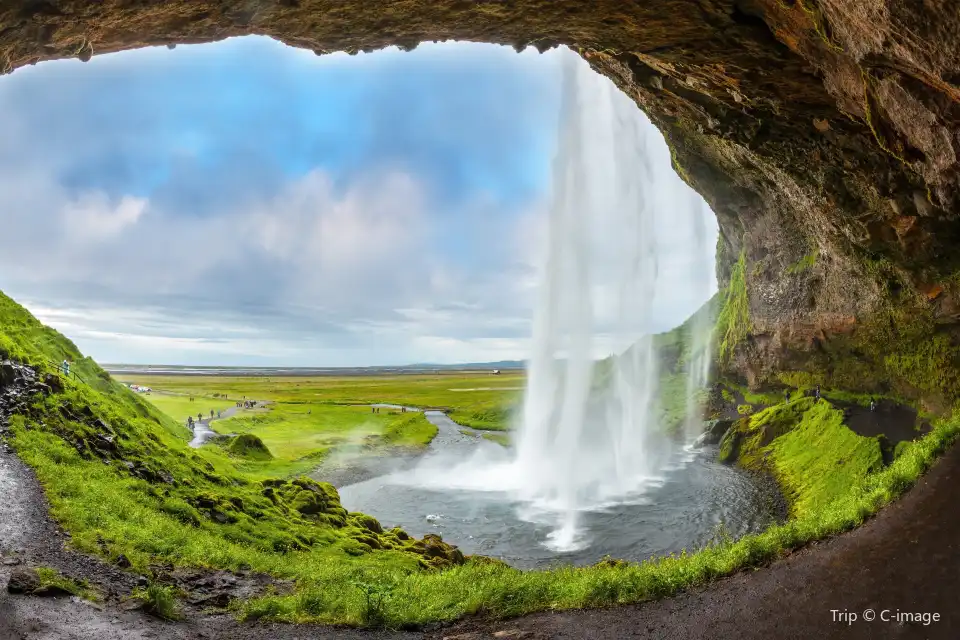
Key takeaways
- The walk-behind is real and open: the trail loops behind the fall’s curtain — slippery, soaked and utterly worth it; waterproof jacket and trousers are the honest kit.
- Golden hour is the shot: the west-facing curtain backlights at sunset — the one time of day the fall photographs as legendary.
- Gljúfrabúi is 600 m north: the “hidden” waterfall in a slit canyon — half the visitors miss it, and it is the better photo in many lights.
- Free entry, paid parking: no gate fee; the car park charges a modest fee that covers both falls.
- 2 hrs from Reykjavík: the first great South Coast stop — pair with Skógafoss (#8) 30 minutes east.
Quick answer: Stop en route east (it is on the Ring Road, impossible to miss), park once for both falls, walk the curtain loop first (jacket on, camera in a rain sleeve), then continue 600 m to Gljúfrabúi for the hidden-canyon shot. In summer, return after 21:00 for the illuminated falls and the emptiest path you will ever see there.
The walk-behind experience
The fall drops as a single clean curtain off a former sea cliff, fed by the Eyjafjallajökull glacier’s meltwater. The path starts beside the fall, climbs the rim trail, and then the signature move: a rock shelf leads behind the falling water itself. Inside, the world is spray, roar and backlit mist — you look out through the curtain at the crowd on the front path, and they look back at a silhouette in a cave of water. The floor is wet rock the whole way; the “path” is genuine but demands attention and proper shoes.
Two honest notes. First: you will get wet — not “a little misty” but properly sprayed; the waterproof jacket (and trousers if you care) is not optional gear, it is the entry requirement. Second: the trail behind closes when ice makes the shelf dangerous (deep winter, after storms) — the front path and the views remain open year-round, and the frozen-by-spray ice formations of January are their own spectacle.
Icy trail reality: the behind-the-fall shelf is closed by rangers when ice forms — typically in deep winter. Do not test it yourself; the front paths and Gljúfrabúi carry the winter visit. Studded shoe attachments help on all South Coast waterfall paths in the cold months.
Gljúfrabúi: the hidden neighbour
Six hundred metres north along the same cliff, Gljúfrabúi (“the canyon dweller”) drops inside a narrow rock slit — you wade the stream bed (or rock-hop) into the slot and find a 40-metre fall hidden in a canyon barely a body-width wide. It is the photographer’s favourite of the pair: the light comes down the slot in a single shaft, the crowd is a quarter of Seljalandsfoss’s, and the composition (looking up through spray at the sky-line) is unique on the South Coast.
The same parking ticket covers it, the same jacket rules apply, and the canyon floor is streambed rock — waterproof shoes earn their keep. In high water the stream crossing is deeper; the operators keep a stepping-stone route maintained. Give the pair 45–60 minutes total, more in photographer’s light.
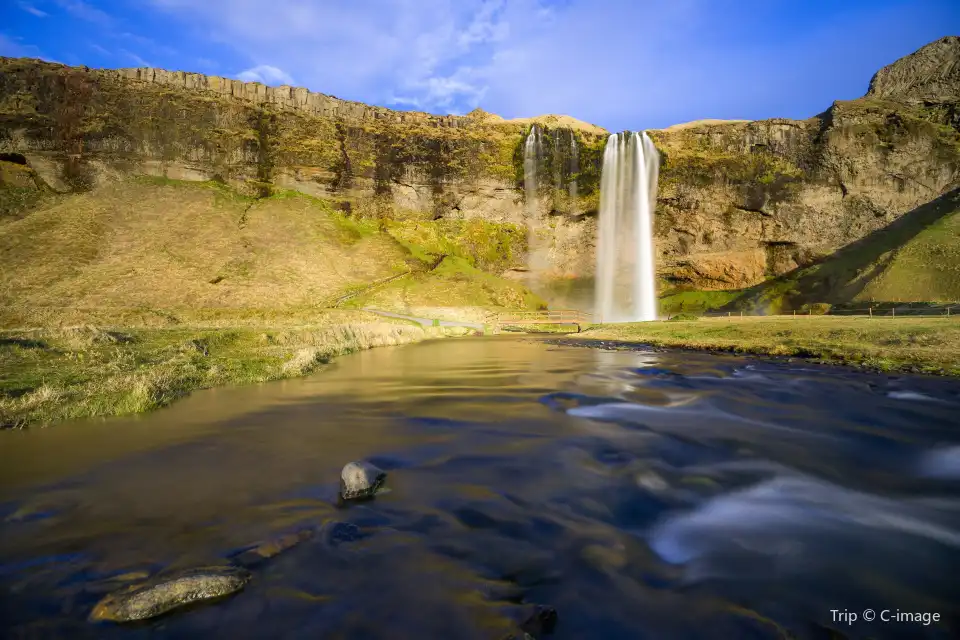
The photography logic
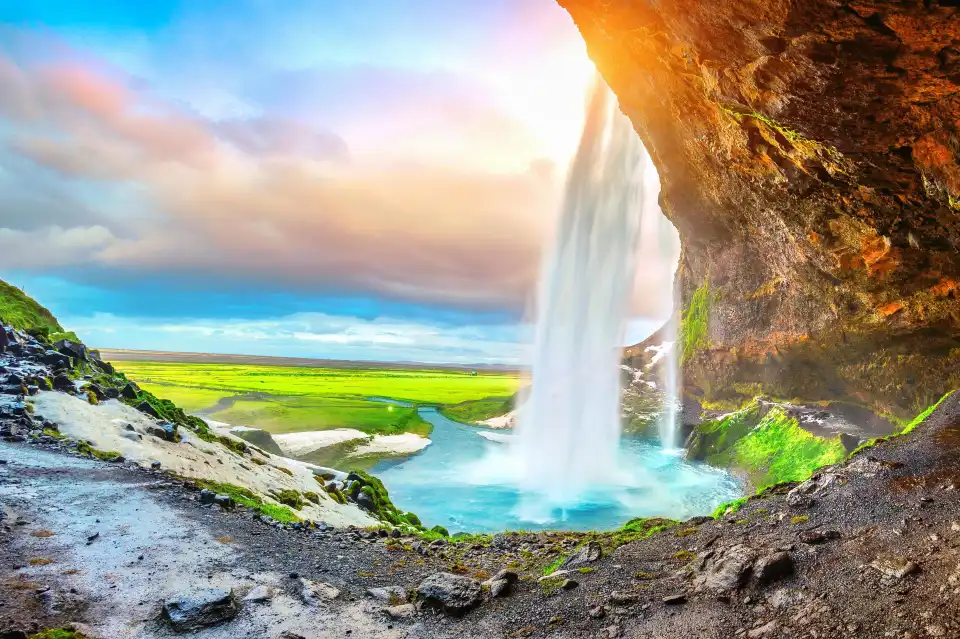
Seljalandsfoss is a west-facing curtain, which means sunset is its moment: the low sun backlights the falling water and turns the spray to gold — the shot that made the fall famous was taken exactly there, and it happens every clear evening, free. Midday light flattens the curtain into white noise. The behind-the-fall silhouette needs a fast shutter for the water texture and a cloth ready for the lens; the front path gives the wide 16–24 mm classic with the cliff horseshoe.
Gljúfrabúi wants the opposite discipline: the slot is dark, so shoot the shaft-of-light frames midday-to-afternoon, or the long-exposure fall with a 4–6 stop ND on overcast days. Evening visitors in summer get the illuminated falls (lit after dark) and empty paths — the night-attraction badge is earned, not decorative.
Lens cloth discipline: at Seljalandsfoss your front element will get hit. Microfibre cloth in a chest pocket, camera facing away from the fall when parked on the tripod, and shoot the behind-the-curtain frames first, before the spray film builds.
When to go
Spring and early summer carry the maximum flow (glacier melt peaks); autumn brings clearer mornings; winter adds ice sculptures and the possibility of aurora over the fall. Sunset works in every season — in June the light lasts until midnight. Crowds peak 11:00–15:00 with the tour buses; the golden-hour and illuminated-evening windows are the emptiest and the most beautiful, which is the rare case where the best light and the quietest paths coincide.
Access: the fall sits directly off the Ring Road with a signed turn — no detour roads, no hiking required. It is wheelchair-accessible on the front path (the behind-the-fall shelf is not). Winter visits check road.is for the coastal roads; the fall itself rarely closes entirely.
How it fits an Iceland route
Seljalandsfoss is the classic South Coast opener: capital → fall (2 hrs) → Skógafoss (#8) → Reynisfjara (#17) → Vík, a day that stacks three ranked experiences. The Golden Circle (#11) adds a second day from the same base. Our Seljalandsfoss deep-dive carries the full history and trail detail, and the photography guide’s South Coast chapter sequences the light.
Frequently asked questions
Can you really walk behind Seljalandsfoss?
Yes — a maintained trail loops behind the 60-metre curtain on a rock shelf. It is wet and slippery by design, closes when iced, and demands real waterproofs. It is the single most-photographed from-behind waterfall in Iceland.
How much does it cost?
Entry is free; the parking area charges a modest fee that covers both Seljalandsfoss and Gljúfrabúi. No tickets, no gate — just park, dress for spray, and go.
What is the hidden waterfall next door?
Gljúfrabúi, 600 m north: a 40-metre fall inside a narrow canyon slot, reached by wading the stream bed. Same parking, quarter of the crowds, and the better photo in many lights.
Is Seljalandsfoss lit at night?
Yes — summer evenings illuminate the falls after dark (the reason for its #2 night-attraction badge on the Trip.Best list). The illuminated window doubles as the quietest visiting hour of the day.
Where this ranks — and what is next
Seljalandsfoss is #6 of 39 in our Best Things to Do in Iceland guide — the full ranked list, built from Trip.Best traveler data, lives in one place.
Go deeper: The complete Seljalandsfoss guide (trails, history, light), How to photograph Seljalandsfoss (field workflow).
Sources & official references
- Trip.com listing for Seljalandsfoss: 4.7/5 rating, saved-by data (checked November 2026).
- Trip.Best ranking data: heat 7.6, #6 of 39; #2 night attraction badge (November 2026).
- Site operator information: parking, trail closures, illumination schedule (checked 2026).
- safetravel.is winter trail and footwear guidance.
- Editorial visits across all seasons including illuminated evenings, 2023–2026.
