




Goðafoss — “the waterfall of the gods” — is the north’s horseshoe: the Skjálfandafljót river spreading 30 metres wide before dropping 12 metres in a curved, stepped curtain that photographs like no other shape in Iceland. The name carries the story: in 999–1000, the lawspeaker Þorgeir threw his pagan idols into the fall when the Alþingi chose Christianity — the water kept the gods, the fall kept the name. Trip.Best ranks it #24 (4.2/5 from 33 verified reviews; the photography community rates it far higher).
This is #24 of 39 in our Best Things to Do in Iceland guide. Below: the two banks and what each gives, the winter-ice version (the horseshoe fringed with ice under aurora is a signature frame), the 999 story, and the Mývatn–Krafla pairing that makes the north day work.
Temel çıkarımlar
- 12 m high, 30 m wide: the curved horseshoe curtain — the only fall in Iceland with this shape.
- The 999 AD story: Þorgeir, the lawspeaker, threw his pagan idols into the fall at the Christianisation — the name records the moment.
- Two banks, two shots: the east bank (classic horseshoe-plus-river) and the west bank (edge-of-fall intimacy) — park at either, see both.
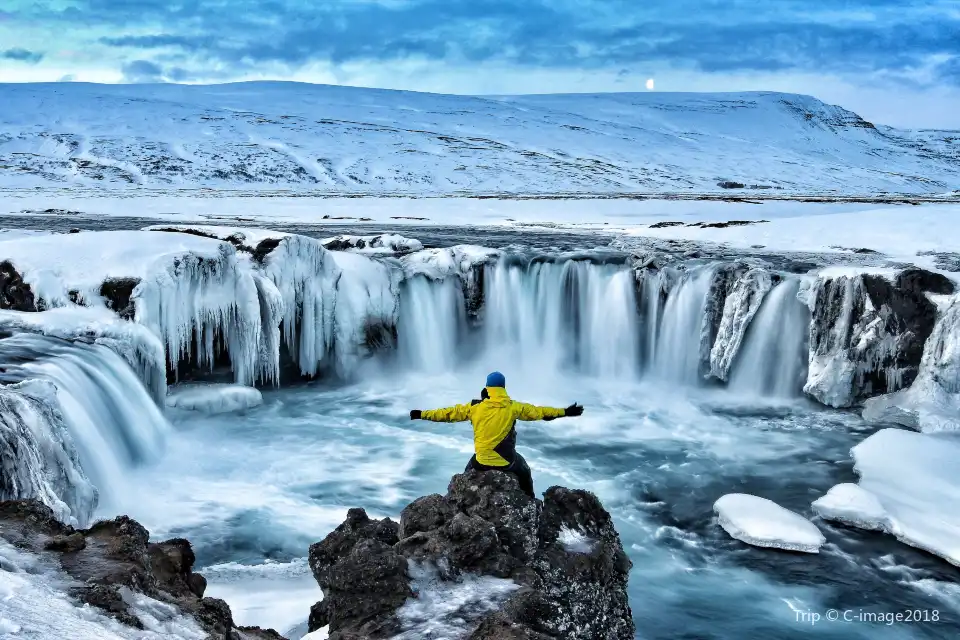
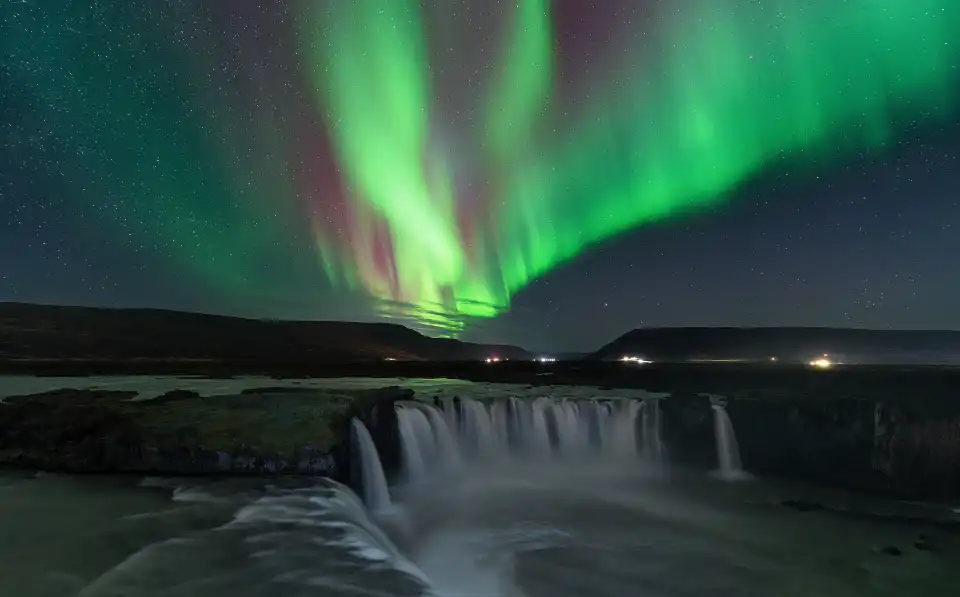
- Winter is the connoisseur version: ice-fringed edges, steam off the water, aurora over the horseshoe on clear nights.
- Directly on the Ring Road: the north’s easiest big fall — 40 minutes from Akureyri, 30 from the Mývatn cluster.
Hızlı cevap: Park on the east bank for the classic horseshoe view, walk the rim path, cross to the west bank for the close-up edge frames, and return in winter if you can — the iced horseshoe under clear sky is the fall’s best version. Pair with Mývatn (#35) and Krafla (#39) for the north’s full day.
The horseshoe and the two banks
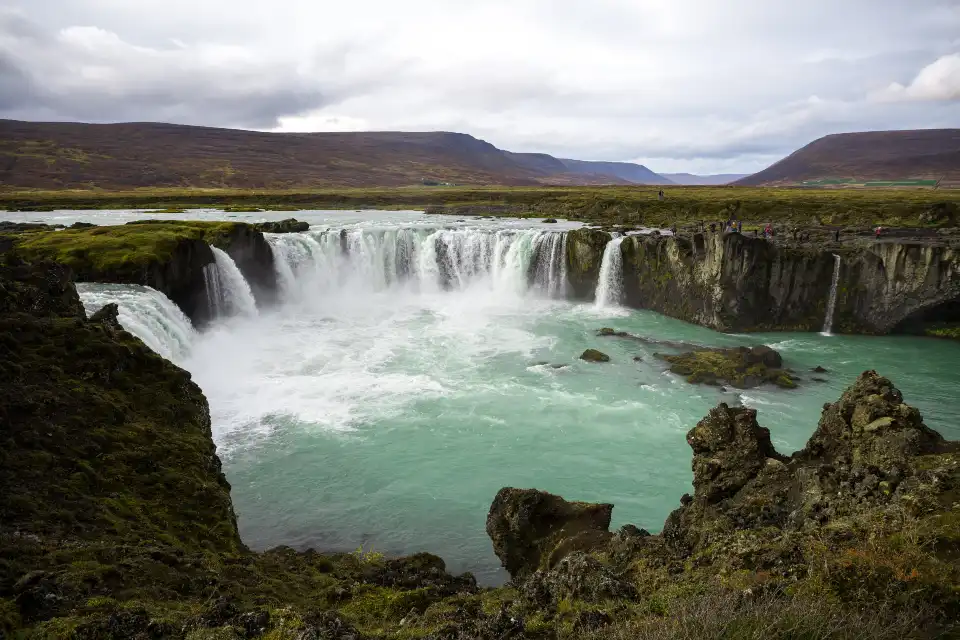
Goðafoss’s shape is its signature: where most Icelandic falls drop in straight curtains, Goðafoss curves — the river bends into a half-moon and steps down in overlapping ledges, so the fall reads as a horseshoe from the rim and as a stepped amphitheatre from the bank. The east side (main parking, café in season) gives the classic view: full horseshoe, river bending away toward the sea, the fall’s whole geometry in one frame.
The west bank (short drive or careful walk across the bridge) gives the intimate version: paths run to the rim where the water slides past your boots and the horseshoe’s inner curve fills the frame. Both banks are short walks — 10–20 minutes each; doing both is the standard visit and takes 45–60 minutes total. The rim edges are unfenced in sections: the usual cliff discipline, doubled when iced.
The 999–1000 story: when the Alþingi voted the island Christian (999 or 1000 — the sources argue), the lawspeaker Þorgeir, a pagan, returned home and — the story goes — threw his carved god figures into the fall. The name Goðafoss (“waterfall of the gods”) records the gesture; whether the idols were thrown or the story grew, the fall kept both the name and the sermon.
The winter version and the light
Goðafoss is the north’s best winter waterfall: the horseshoe’s edges ice into blue-white fringes while the river keeps flowing green-grey through the middle, steam rises in cold snaps, and on clear nights the aurora sits directly over the horseshoe — the fall is a dark-sky site and the north-facing geometry works for the lights. The photography guide’s Goðafoss chapter (spot 15 of 20) carries the full workflow: the east-bank wide, the west-bank rim, the winter long-exposure recipe.
Summer: the horseshoe photographs best in flat light (overcast keeps the water’s colour) and in the midnight-sun evenings; midday sun is the weakest light for the shape. Drone: national rules and the site’s crowd patterns; the geometry is strong enough from the ground.
The north-day loop: Goðafoss → Mývatn Nature Baths (#35, soak) → Krafla’s Víti crater (#39) → back through Goðafoss for the evening light. The loop is 90 minutes of driving between ranked stops — the north’s most efficient day.
Practical: access and facilities
Access: directly off the Ring Road (Route 1) east of Akureyri — signed turnoffs to both banks, paid parking, the east side carrying the café and services in season. The fall is open 24/7 year-round; winter paths are plowed but iced (studs), and the rim sections close when conditions demand. The visit: 45–60 minutes for both banks; photographers and winter-ice sessions run longer.
The north context: Goðafoss is the gateway stop for the Mývatn cluster — the baths (#35), Krafla (#39), Hverir’s steam fields and Dettifoss (30 km east) all orbit it. Akureyri (40 minutes west) carries the airport, the church (#28) and the capital-of-the-north services.
How it fits an Iceland route
On the ring, Goðafoss is the north’s first-ranked stop: Akureyri (#28) 40 minutes west, the Mývatn–Krafla–Dettifoss cluster east, Húsavík’s whale capital (#36) north. Our Dettifoss guide and the Mývatn geothermal guide cover the region, the photography guide’s chapter covers the fall, and the Ring Road guide sequences the north day.
Frequently asked questions
Why is it called the waterfall of the gods?
For the 999–1000 Christianisation story: the lawspeaker Þorgeir reportedly threw his pagan idols into the fall when Iceland adopted Christianity. The name records the moment; the story is the fall’s history lesson.
Which bank is better at Goðafoss?
Both: the east bank gives the classic full-horseshoe view; the west bank gives the rim-edge intimacy where the water slides past your feet. The standard visit does both — 45–60 minutes total.
Is Goðafoss good in winter?
It is the north’s best winter fall — ice-fringed horseshoe edges, steam in cold snaps, and aurora directly over the curve on clear nights. Paths are plowed but iced; studs and rim-closure respect apply.
How far is Goðafoss from Akureyri?
About 40 minutes east on the Ring Road — the fall is the north’s easiest big waterfall and the gateway to the Mývatn, Krafla and Dettifoss cluster.
Where this ranks — and what is next
Goðafoss Waterfall is #24 of 39 in our Best Things to Do in Iceland guide — the full ranked list, built from Trip.Best traveler data, lives in one place.
Go deeper: How to photograph Goðafoss (spot 15 of 20), Dettifoss — Europe’s most powerful waterfall (the region), Mývatn — the north’s geothermal guide.
Sources & official references
- Trip.com listing for Goðafoss Waterfall: 4.2/5 rating, 33 reviews (checked November 2026).
- Trip.Best ranking data: #24 of 39 (November 2026).
- Site operator information: banks, parking, winter path status (checked 2026).
- The Christianisation record (Þorgeir, Alþingi 999–1000) per saga-history literature.
- Editorial visits across seasons including winter aurora sessions, 2023–2026.
