





Every winter, meltwater tunnels beneath Vatnajökull — Europe’s largest ice cap — drain out and leave behind cathedral-sized rooms of ancient blue ice, polished enough to light up from within. These are the blue ice caves of southeastern Iceland, and they are the country’s #2 rated experience for good reason: nothing else in Iceland compresses the glacier’s scale, colour and violence into a single room you can stand inside. The caves are winter-only (roughly November–March), guide-only, and different every single year.
This is #2 of 39 in our Best Things to Do in Iceland guide, built from Trip.Best traveler data (heat 7.9, 4.6/5 verified rating). Below: how the tours actually work, why the colour is blue, what a cave visit costs and demands, and the safety rules that are not optional — the glacier that makes the caves also floods them.
Temel çıkarımlar
- Winter only: the season runs roughly November to March; in summer the meltwater reclaims the caves entirely.
- Guide-only, always: the caves are glacier hazards — access is exclusively through certified glacier-guide operators from the Jökulsárlón/Hof area.
- Every cave is new: caves melt, drain and collapse yearly; operators scout fresh caves each autumn — never trust last year’s photo locations.
- From ~US$158: typical “from” price on Trip.com for the standard half-day cave tour (2026).
- Go early in the season: November–December combines the deepest blue light with the smallest crowds; February–March trades colour for easier access.
Hızlı cevap: Book a certified glacier-guide operator based near Jökulsárlón or Hof, choose a November–December date if the calendar allows, wear waterproof boots and a real thermal layer system, and treat the guide’s rope and helmet rules as absolute. The cave is a weather-and-glacier system, not a tourist site — the tour runs when the ice says so.
What standing inside a blue ice cave is like
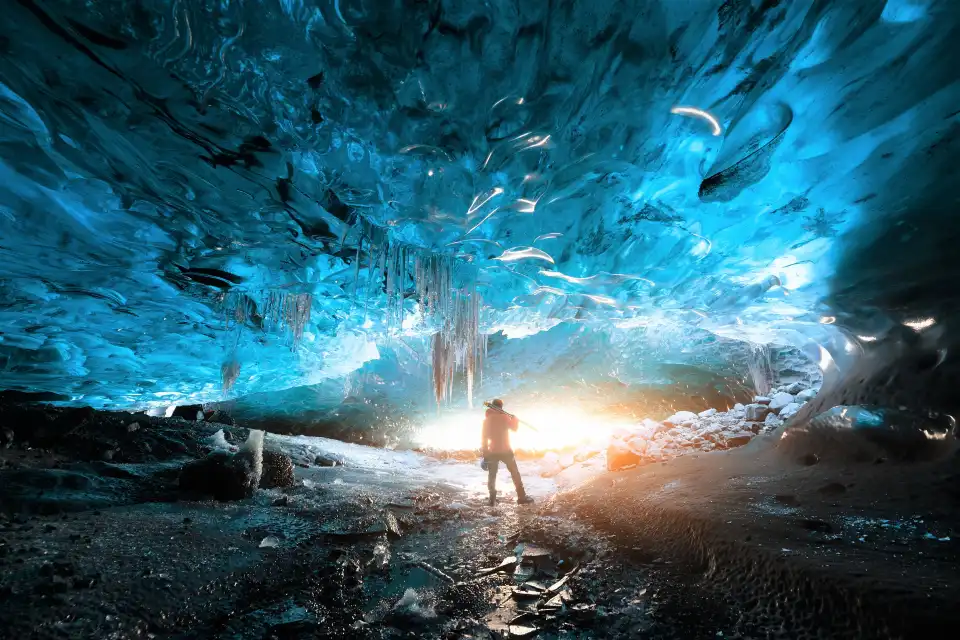
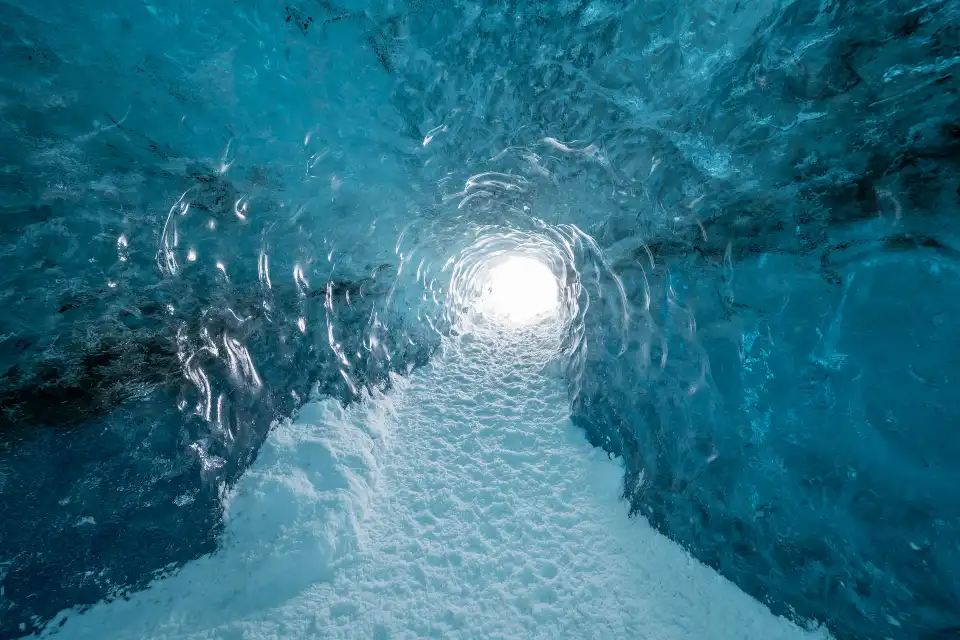
The approach is part of the theatre: a super-jeap ride onto the moraine, then a short hike in crampons over glacier ice to the cave mouth. Inside, the sound changes first — running water under the floor, ice creaking like ship hulls — and then the light does. Blue ice is not painted blue; it is ice so dense that every other wavelength has been squeezed out over centuries, and the daylight entering the entrance glows through it like stained glass. Ceiling heights range from crawl-spaces to five-metre vaults; floors are polished ice over running meltwater channels.
Tour guides manage the experience as much as the safety: they explain the annual cycle (melt tunnels form in summer, drain in autumn, freeze open in winter), point out volcanic ash layers from past eruptions banded through the ice, and set the photo routine — the standard shot is the cave-mouth silhouette with the blue room behind it. Groups are small (typically 8–14) and time inside is a disciplined half-hour to forty minutes.
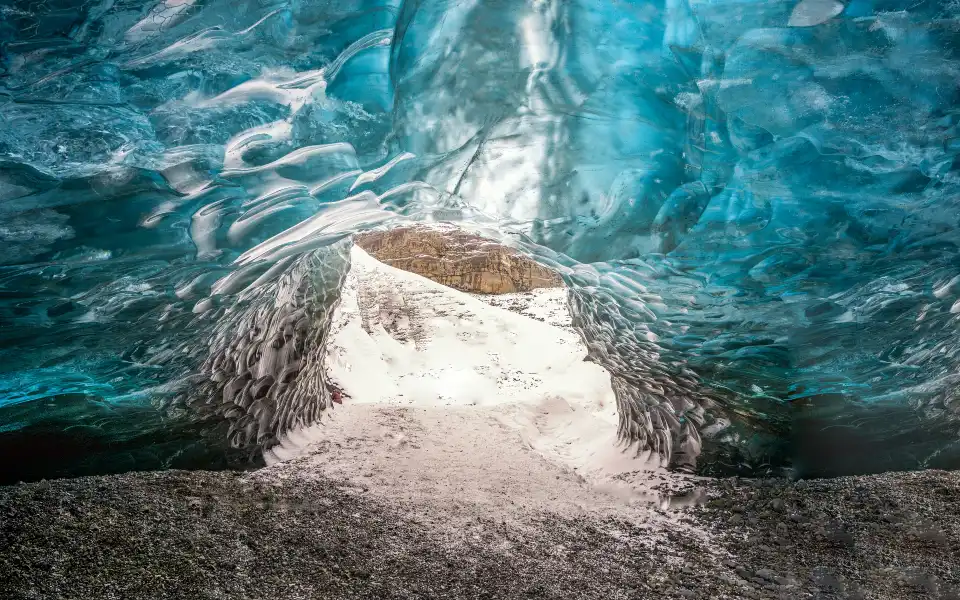
Why the colour varies: the deepest, most photogenic blue comes from older, compressed ice with the least trapped air — which is why the midwinter low sun, shining straight into the cave, is the light that makes the room glow. Gray overcast days photograph fine; blue-sky days photograph spectacularly.
How tours actually work
All cave access runs through licensed glacier-guide companies operating from the southeastern village cluster — Hali, Hof, Höfn and the Jökulsárlón area. A standard tour: meet at the operator base, gear up (crampons, helmet, headlamp provided; boots rentable), ride modified 4×4 transport onto the glacier edge, hike 15–30 minutes depending on the cave’s location that season, then guided time inside and the return. Total 3–4 hours, with morning and afternoon departures.
Two things decide whether a tour runs: weather (wind is the killer on the approach) and the cave’s own condition — operators close caves that have flooded or cracked overnight, sometimes mid-season, and rebook free of charge. Book directly with operators or through Trip.com with free-cancellation options; do not book non-refundable same-day flights around a cave slot. The Katla ice cave under Mýrdalsjökull and crystal-cave variants at Langjökull offer year-round alternatives — different ice, same principle.
Never enter a glacier cave without a guide — including “found” caves: roof stability, meltwater channels and air pockets kill. Every Icelandic ice-cave fatality and near-miss has been off-tour. The guides read the ice daily; you cannot.
Practical: clothing, age limits and costs
Dress for a winter mountain hike, not a sightseeing stop: thermal base layers, insulating mid-layer, windproof shell, waterproof boots with ankle support (hiking boots rentable), gloves and a warm hat. Inside the cave the air hovers near freezing and the floor is ice — crampons come on before entry. Minimum ages vary by operator (typically 8–10 for standard caves, higher for adventure variants); the tours are moderate fitness, not technical.
Budgets: standard tours run from roughly US$150–200 at 2026 rates, premium “photo caves” (fewer people, longer inside, tripod time) run higher, and private versions run much higher. Everything is guided-inclusive: transport on glacier, gear, and the cave itself. Accommodation clusters at Höfn, Hali and Guesthouse-country between Vík and Jökulsárlón — book those beds first in winter, they are scarce.
When the ice is bluest
November and December are the connoisseur’s months: the caves are freshly scouted and drained, the low sun enters the cave mouth directly, and tour density is lowest. January adds deep-winter reliability but shorter days (book the morning slot). February and March bring the strongest weather variability — spectacular post-storm clears, but the highest chance of a cave closing late in the season as melt begins.
Daylight is the real constraint all winter: the cave window is daylight hours, so tours compress around a ~10:00–16:00 window. Pair a cave morning with the Jökulsárlón lagoon and Diamond Beach (#3) in the same afternoon — the southeastern triangle in one day is the single highest-yield winter itinerary in the country.
Field report: our team’s standout session was a 30 November morning — a fresh cave scouted that week, three people in the room, and the entrance light hitting the oldest blue wall at 11:20. The guide said the same cave would be unrecognisable by February. The ice rewrites itself; the calendar is the strategy.
How it fits an Iceland route
The cave anchors the southeast winter triangle: Jökulsárlón lagoon, Diamond Beach and the ice caves within a 20-km radius, all reachable from Vík (2 hrs west) or Höfn (1 hr east). In summer, substitute the same geography with the glacier lagoon boat tours and the Skaftafell glacier walks (#29) — same park, summer version. Our glaciers and ice caves guide covers the full system, and the Jökulsárlón guide sequences the triangle.
Frequently asked questions
Can you visit ice caves without a tour?
No — and every serious source, including safetravel.is, is blunt about it. The caves are dynamic glacier hazards with unstable roofs and hidden meltwater channels; access is only through certified glacier guides who scout and rope the caves daily.
Why are the ice caves blue?
Ancient glacier ice is compressed until almost no air remains; ice without air bubbles absorbs red light and transmits blue. The effect is strongest in older deep ice under direct daylight — which is why the midwinter low sun makes the rooms glow.
Which month is best for ice caves?
November–December for colour and crowds (fresh caves, direct low sun, fewest tours); February–March for post-storm drama. All of the season works — book the earliest month your trip allows.
Are ice caves safe for children?
Standard tours typically accept ages 8–10 and up depending on operator; the approach is a real glacier hike. Families with younger children should consider the indoor ice tunnel at Perlan (#5) as the same idea, climate-controlled.
Where this ranks — and what is next
Blue Ice Cave is #2 of 39 in our Best Things to Do in Iceland guide — the full ranked list, built from Trip.Best traveler data, lives in one place.
Go deeper: Glaciers and ice caves: the complete system guide, Jökulsárlón glacier lagoon — the cave’s next-door neighbour.
Sources & official references
- Trip.com listing for Blue Ice Cave: price bands, hours, 4.6/5 rating (checked November 2026).
- Trip.Best ranking data: heat score 7.9, #2 of 39 in the Iceland list (November 2026).
- Licensed glacier-guide operator briefings (season windows, safety rules, cave scouting) — 2024–2026.
- safetravel.is glacier and ice-cave guidance.
- Editorial winter visits to Vatnajökull caves, 2023–2026.
