









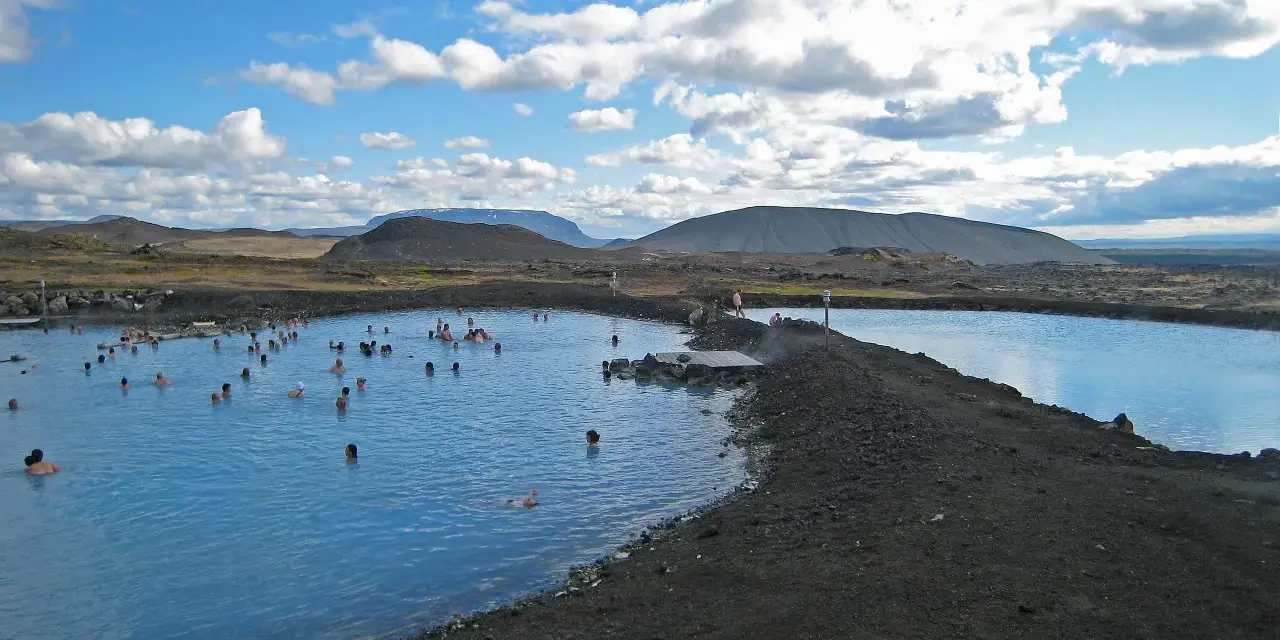
This is spot 13 of 20 in our Iceland Photography Guide — the bathers-in-landscape shot. The Mývatn Nature Baths, on the slopes above Lake Mývatn, are the master list’s evening-steam pick: a large mineral lagoon of milky blue water at 36–40 °C set in raw volcanic terrain, where steam rising off the pool photographs exactly as the field tip describes — “steam over warm blue water — the bathers-in-landscape shot.” It is the one master-list location built for people in the frame, and the only one where your own session ends with you inside the subject.
Photographing a bathing lagoon has rules — both etiquette and technical — and this guide covers them: the dusk-and-winter windows, the permission and privacy logic, the steam-and-color technique, the comparison with its famous southern cousin the Blue Lagoon, and how the baths close out the north’s densest master-list day.
Conclusiones clave
- Evening is the window: the master list’s “evening steam; magic in winter” — dusk light catches the rising steam, and bathers give the shot its human scale.
- Winter is the magic version: in freezing air the steam turns thick and glowing, snow rims the pool edges — the strongest single contrast in the north.
- Shoot from outside the fence: the exterior angle from the parking-side slope takes the bathers-in-landscape frame without pointing a lens at strangers up close.
- Long lens + steam = the detail game: 100–200 mm isolates steam plumes and heads against the dark hillsides.
- Swim it after: the baths are the master-list reward session — the water is 36–40 °C and the evening light belongs to the people inside it.
Respuesta rápida: photograph the exterior bathers-in-landscape frame in the last hour of light (100–200 mm from the slope, steam and heads against the dark hillside), then buy the ticket and get in — the interior experience is half the stop and the photographs of your own evening belong to you. Winter visits are the magic version: thick glowing steam, snow edges, empty water. Check the bath hours seasonally; the last light and the last swimming slot rarely overlap by accident.
Access, hours and tickets
The Nature Baths sit on the Ring Road side of the Mývatn circuit, a few minutes east of Reykjahlíð, with a parking lot at the base of the slope and the lagoon terrace above. Hours run longer in summer and shift with the season — check the bath’s own schedule when planning the session, because the photograph depends on the last hours of light and the bath’s evening slots rarely coincide by luck. Tickets are bought at the door (cheaper than the Blue Lagoon by a wide margin), swimsuit rental exists, and the showers-before rule is enforced like every Icelandic pool.
Photographically, access divides in two: the exterior angles from the parking-side slope and the Ring Road layby (public land, the bathers-in-landscape compositions) and the interior experience from inside the water (your own trip photos, phone or small camera in a dry bag, absolutely no photography of strangers in the water — the etiquette section below). The exterior is the master-list shot; the interior is the reason the master list calls this a wildcard treat.
Winter access is reliable — the Ring Road and the lot are maintained, and the baths run their normal schedule through the cold months; the “magic in winter” line in the master list is a standing promise, not a rare event.
Evening steam and the winter magic
The master list’s evening pick works because steam needs backlight — and at the baths, the setting sun sits behind the pool’s western edge in the hours before dusk, catching every rising wisp. The window is the last ninety minutes of light: steam columns glow, bathers’ heads silhouette against the dark ridge, and the water’s milky blue holds the sky’s last color. In summer the midnight sun stretches this for hours; in winter it compresses into a brief, saturated afternoon-to-dusk window.
Winter is the signature season. Freezing air turns the steam thick and vertical — it hangs over the pool like a curtain, glows when the low sun grazes it, and freezes crystal-by-crystal on the pool’s rock edges. The color contrast is the north’s best: glowing blue water, white steam, black basalt, snow. This is the frame the master guide’s field tip is pointing at, and it repeats on every cold clear evening of the season.
Gray days flatten the steam but the water color holds; aurora nights (clear season, September–March) add the wildcard — the baths photograph under green light, and the master list’s spot 20 recipe applies from the exterior slope.
Compositions and the people rule
The master tip names the frame — bathers in landscape — and its ethics matter as much as its settings:
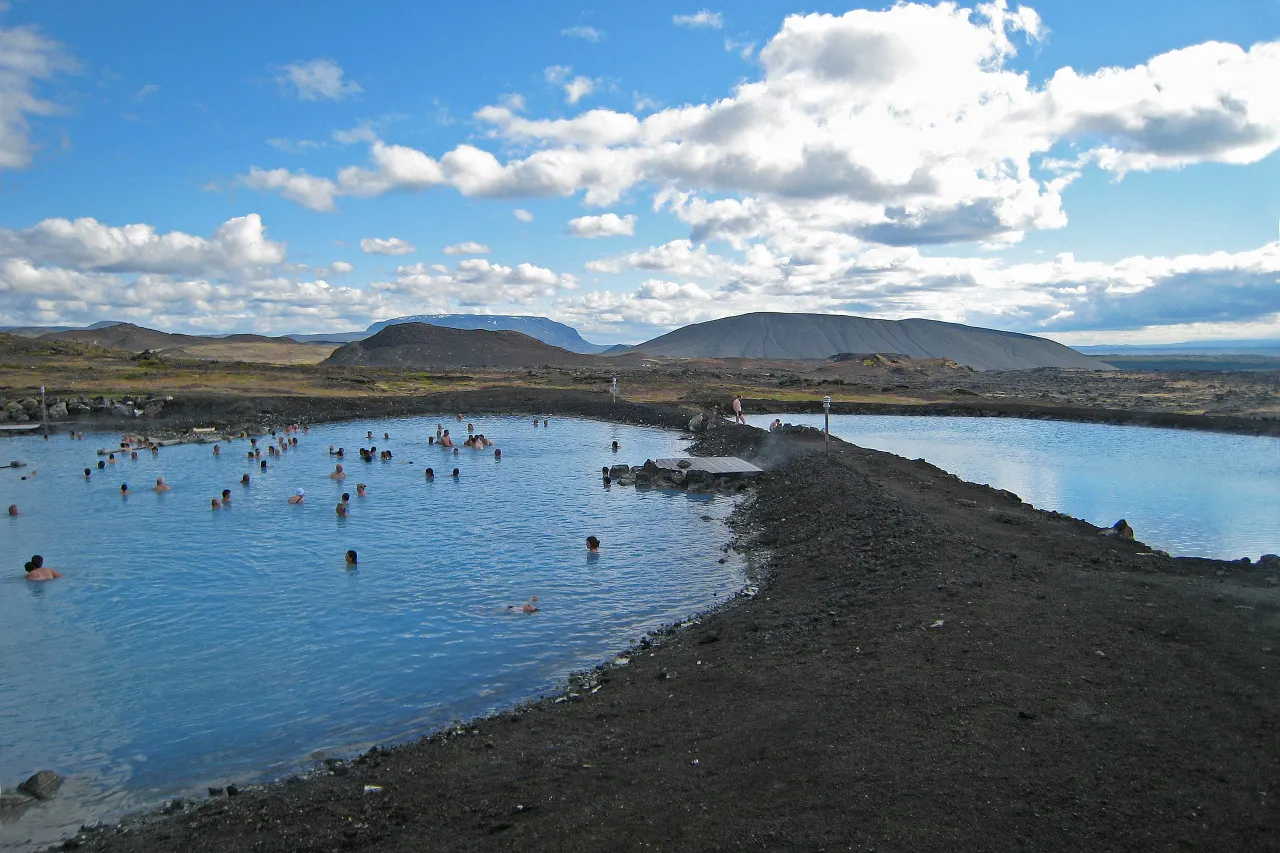
- The bathers-in-landscape: from the exterior slope, 100–200 mm compressed — the pool edge, steam rising, heads and shoulders as small silhouettes against the dark hillside. Distance and anonymity are the rule: this is a scale-and-context shot, never a close-up of strangers.
- The steam plume study: tight on a single steam column against the ridge — 200 mm, fast shutter for the wisp structure, evening backlight.
- The water-and-still: the pool surface’s color with steam smearing it — 1–4 s from the slope, the milky blue as the graphic subject. Polarizer off (the sheen is part of the color).
- Your own session: inside the water, the phone-in-dry-bag genre — steam, cold air, warm hands, one landscape frame looking out. The photographs of your own evening are the memory asset; take few, keep them private, and never point a camera at other bathers.
The people rule, stated once: exterior long-lens scale shots yes; identifiable close-ups of strangers no. The baths are a public bathing space before they are a photo set, and the master list’s framing (a “bathers-in-landscape shot”) is built on exactly that distance.
Settings and technique
Steam exposes like bright smoke: +0.7 EV, RAW, protect the backlit wisps, let the hillside go dark. The long-lens frames want 1/250–1/500 s for steam structure (wind moves the plumes fast) or 1–4 s for the smear aesthetic — both work, pick per frame. The water color is the constant: shoot RAW and lift the blues gently in post; the milky tone is real, not a filter.
Cold sessions add the winter kit: spare batteries warm in the jacket, the tripod’s leg locks icing, and the car as the between-frames shelter. The weather planning guide carries the cold-session habits; the en.vedur.is wind clock settles whether tonight’s steam stands in columns or tears sideways — both are good, they are different.
Blue Lagoon, Sky Lagoon, Mývatn
The master list deliberately carries one lagoon — and it is this one. The Blue Lagoon is the famous one (and our Blue Lagoon guide covers it), the Sky Lagoon is Reykjavík’s cliff-edge version (covered in its own guide), but the Mývatn baths are the photographer’s pick: cheaper, emptier, rawer setting, and the steam-over-volcanic-terrain frame that the other two cannot produce. Our hot springs beyond the Blue Lagoon guide ranks the alternatives; for a photography itinerary, this is the one that earns the master-list slot.
The north day and the reward session
The baths close the north’s densest photography day: dawn at Hverir, morning at Dettifoss, the Mývatn circuit at midday, Goðafoss at golden hour, and the baths at dusk — four master-list stops and a warm pool, all within an hour of each other. It is the reward session by design: the camera comes out once more for the exterior frame, then goes in the bag, and the evening belongs to the water.
Seasonally: summer gives the midnight-sun steam and the green backdrop; winter gives the magic version (thick steam, snow edges); autumn gives the emptiest water; spring is the shoulder with the longest swim slots. The bath schedule adjusts per season — plan the frame around it.
Frequently asked questions
Can I photograph people in the baths?
From the exterior slope at long-lens distance, as anonymous silhouettes in the landscape — yes, that is the master list’s own framing. Identifiable close-ups of strangers — no. Inside the water, photograph your own session only. The baths are a public bathing space first; the etiquette is the same as any Icelandic pool, extended to the lens.
Why choose Mývatn over the Blue Lagoon?
For a photography itinerary: the setting is raw volcanic terrain rather than a lava-field spa, the water is emptier, the price is lower, and the evening-steam frame over the ridge is one the southern lagoons cannot produce. The Blue Lagoon remains the iconic visit (our guide covers it) — the master list simply carries the one that photographs best.
When is the winter steam at its best?
On cold, still, clear evenings — freezing air makes the steam thick and vertical, and the low sun grazes it into a glowing curtain over the pool. The window is the last hour of light; the en.vedur.is temperature-and-wind forecast is the session predictor, and the frame repeats all season.
Do the baths work as an aurora location?
The exterior slope works on clear nights — steam and warm water under green light is a legitimate wildcard frame, and the master list’s spot 20 recipe (ISO 1600–3200, 8–15 s) applies. The interior swim under aurora is its own memory; the camera stays on the slope.
The full field list lives in one place
Spot 13 of 20 — the master guide ranks all twenty locations by region, best light and a field tip for each.
Go deeper: the Mývatn geothermal guide, the hot springs beyond the Blue Lagoon guide, and the Sky Lagoon guide for the capital-side comparison.
Sources & official references
- Water temperature (36–40 °C) and opening year (2004): Mývatn Nature Baths official information (checked 2026); verify hours per season.
- Bathing etiquette: Icelandic pool rules and the baths’ own visitor guidance.
- Weather and steam conditions: en.vedur.is forecasts for the Mývatn region.
- Field technique: editorial photography trips across seasons 2022–2026 by the Iceland Travel Guides team.
- Master list context: Iceland Photography Guide — 20 Best Photo Spots (this site).
