









Whale watching from Reykjavík’s Old Harbour is the capital’s best wildlife ticket: two to three hours on Faxaflói Bay with humpbacks, minke whales, white-beaked dolphins and harbour porpoises feeding within sight of the city’s skyline. It is also the most under-estimated entry on Iceland’s things-to-do lists — visitors expect a gimmick and find a genuinely productive feeding ground, with Mount Esja and the Harpa skyline as backdrop.
This is #4 of 39 in our Best Things to Do in Iceland guide (Trip.Best heat 7.7, 4.6/5 verified rating). Below: which boats sail (including the Andrea, the converted tug with the indoor viewing cabin), the season’s realistic odds, how to dress for the bay, and how a whale sail fits a capital itinerary — plus when to choose Húsavík instead.
Key takeaways
- Year-round sails: the boats run in every month; summer (May–September) carries the highest sighting rates and calmest seas.
- ~90–95% summer success: operators’ published sighting rates in high season — humpbacks and minkes are regulars, not lottery tickets.
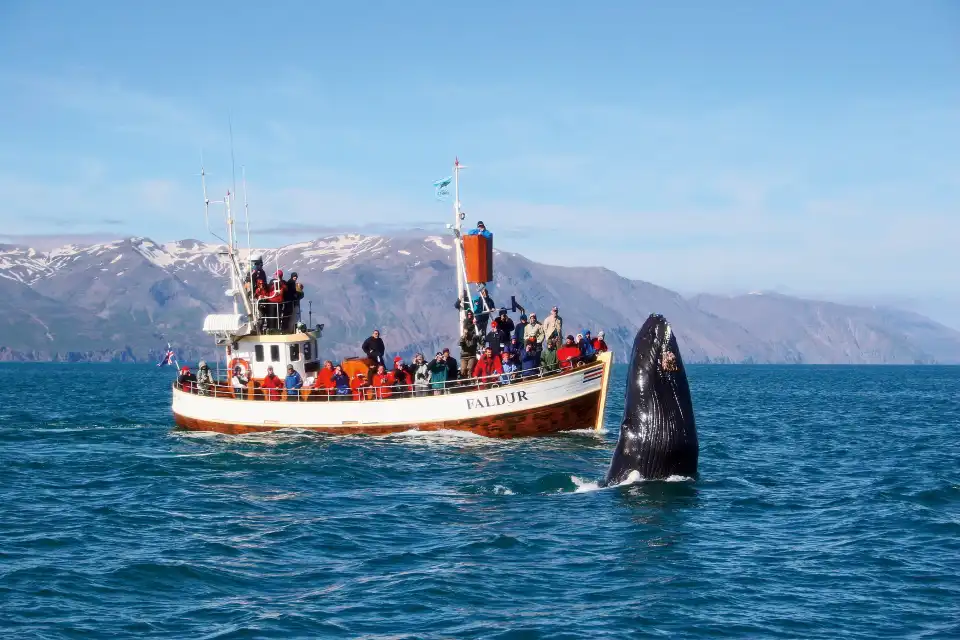
- The Andrea is the slow option: a converted tug with a heated indoor viewing deck — the family and winter pick; speedboats are the fast, wind-in-face option.
- From ~US$118: typical “from” price on Trip.com for the classic whale watching sail (2026).
- Dress for winter at sea: even in July the bay is cold — the overall loaner is essential kit, not decoration.
Quick answer: Book a morning or early-afternoon sail in May–September, take the classic boat if you want the heated cabin and stability (the Andrea), the speedboat if you want close water and flexibility, wear the loaner overall over your own warm layers, and treat any sighting as a bonus on top of a genuinely pleasant bay cruise — the bay almost always delivers something.
The experience on the bay
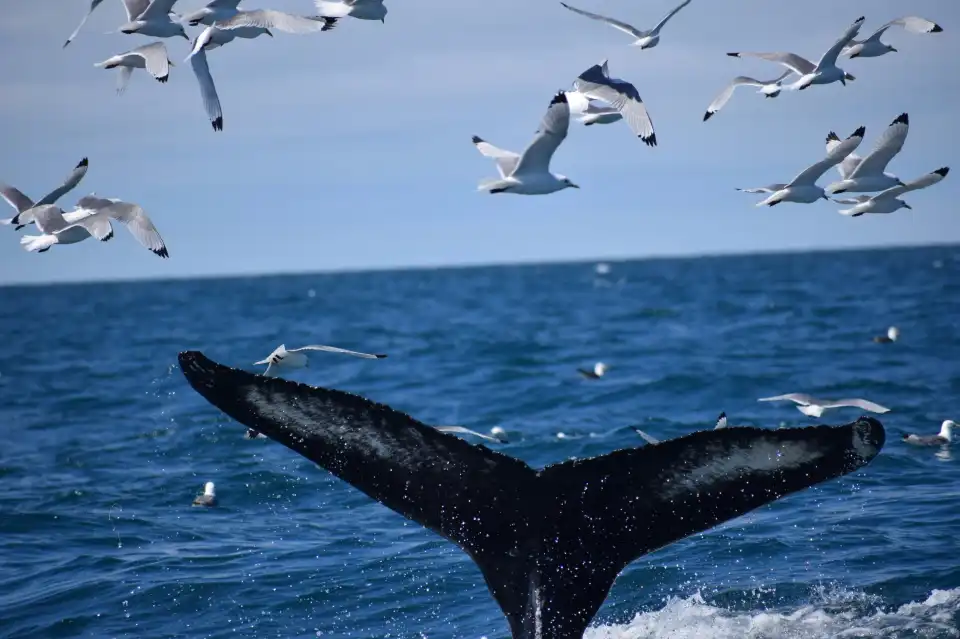
Sailings leave from Ægisgarður pier in the Old Harbour — the small-boat harbour east of Harpa. After a safety brief and overalls on, the boat crosses the harbour mouth into Faxaflói Bay and starts reading the water: the naturalist guides watch for blows, feeding birds and dolphin pods, and the skipper positions for wind and light. The bay’s regulars are humpback whales (surface-feeders, the fluke-shot artists), minke whales (fast, shy, the most common), white-beaked dolphins (the show-offs) and harbour porpoises.
The tone is wildlife-watching, not aquarium: no feeding, no crowding, engine-off drifts when animals appear. Guides double as spotters and narrators — identification by fin shape, feeding behaviour, and the bay’s ecology (the same nutrients that make the bay a whale canteen make it a seabird highway: puffins in summer, gannets and fulmars year-round). Sightings are cumulative: a typical good sail stacks dolphins, one or two minke surfacing runs, and often a humpback show.
The Andrea: a former tug converted for whale watching — wide decks, a heated indoor viewing cabin with big windows, and a slow, stable ride. Winter sails and family groups do best on her; the RIB speedboats trade comfort for spray and proximity.
Seasons and realistic odds
May–September is the high season: warm-water feeding brings humpbacks into the bay, sighting rates run around 90%+ on operator logs, and the sea state is friendliest. April and October are shoulder months with decent odds and thinner crowds. November–March sails run on reduced schedules and hunt the winter residents — orcas pass irregularly in winter, and the guides manage expectations honestly: winter is a bay cruise with whale chances, not a guarantee machine.
Dolphins and porpoises appear in every month and are the reliable floor of any sail. The honest framing for booking: in summer you are close to certain to see whales and dolphins; in winter you are certain to see the bay, likely to see dolphins, and delighted when whales appear. Either way the trip earns its slot — the skyline-to-wildlife contrast is the capital’s signature half-day.
Puffin season crossover: May–August sails often detour by Akurey and Lundey, the puffin islands in the bay mouth — thousands of puffins on the cliffs, sometimes included in the same ticket as the whale route. Ask at the pier which sail includes the islands.
Booking, boats and what to wear
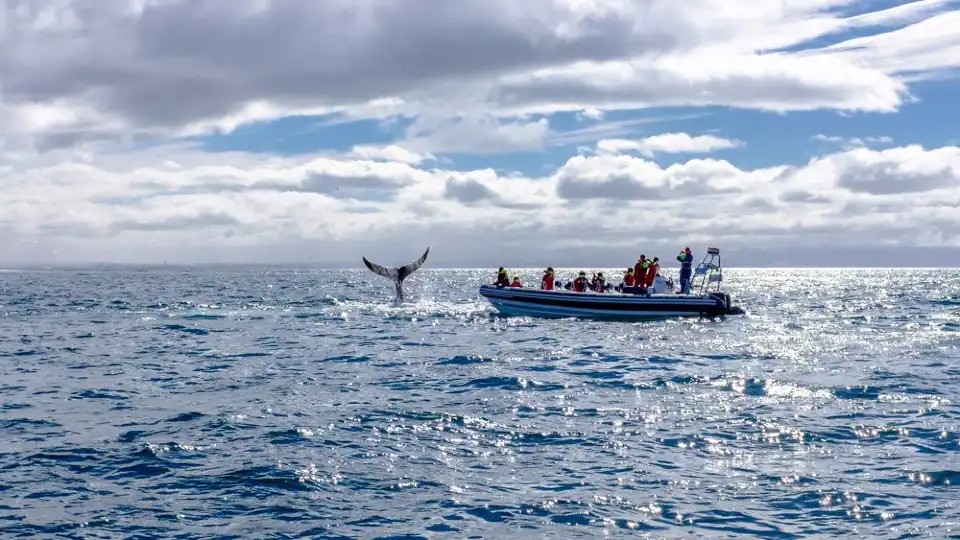
Two boat families matter: classic whale-watching vessels (twin-hulled, heated cabins, decks and railings — the Andrea is the flagship example) and RIB speedboats (12–20 seats, suits provided, water-level views and a rougher, wetter ride). Families, photographers with big lenses and cold-averse travellers take the classic; adventurers and photographers who want sea-level angles take the RIB. Tour length: 2–3 hours classic, 1.5–2 hours RIB.
Kit: the operator’s insulated overall on top of your own warm layers (beanie, gloves, waterproof shoes), sunglasses even in overcast, and sea-sickness precautions taken before boarding if you are prone — the bay is usually gentle but the outer harbour has its own chop. Tickets run from roughly US$100–120 at 2026 rates with Trip.com’s free-cancellation options; morning sails have the calmest water and the best booking flexibility if weather turns.
How it fits an Iceland route
The sail is a capital half-day: pair it with Perlan (#5) or the Aurora centre (#10) for an indoor-outdoor day, or slot it after a Golden Circle morning. It is also the comparison point for Húsavík (#36, GeoSea and the whale capital) — Húsavík’s Skjálfandi Bay has higher humpback density in June–August but demands the northern detour. If whales are the priority of your whole trip, do both; if you have one sail to give, the capital’s version pairs with everything else you will do there. Our Húsavík guide and the whale-watching deep-dive cover the trade-offs.
Frequently asked questions
Which month is best for whale watching in Reykjavík?
June–August for the highest sighting rates and calmest seas; May and September are strong shoulder months with fewer boats on the water. Sails run year-round with reduced winter schedules.
Will I see whales?
In high season, operator sighting logs run around 90%+ (most tours see humpbacks or minkes, almost always dolphins). Most operators offer a free re-sail if nothing appears — check the policy when booking.
What should I wear on the boat?
Wear proper warm layers under the loaner overall: wool base, fleece, beanie and gloves, waterproof shoes. The bay is 5–10°C colder than the dock feels; summer sails are winter-cold by most visitors’ standards.
Reykjavík or Húsavík for whales?
Húsavík has the denser humpback water (Skjálfandi Bay) but demands the northern route; Reykjavík sails from the capital with city logistics attached. Whales-first travellers do both; one-sail trips take whichever port is already on the route.
Where this ranks — and what is next
Reykjavik Whale Watching is #4 of 39 in our Best Things to Do in Iceland guide — the full ranked list, built from Trip.Best traveler data, lives in one place.
Go deeper: The complete Reykjavík whale watching guide, Húsavík — Europe’s whale watching capital.
Sources & official references
- Trip.com listing for Reykjavik Whale Watching: price, hours, 4.6/5 rating (checked November 2026).
- Trip.Best ranking data: heat score 7.7, #4 of 39 (November 2026).
- Operator published sighting statistics and schedules (Old Harbour operators, 2026 season).
- Editorial sails on classic boats and RIBs across seasons, 2023–2026.
