









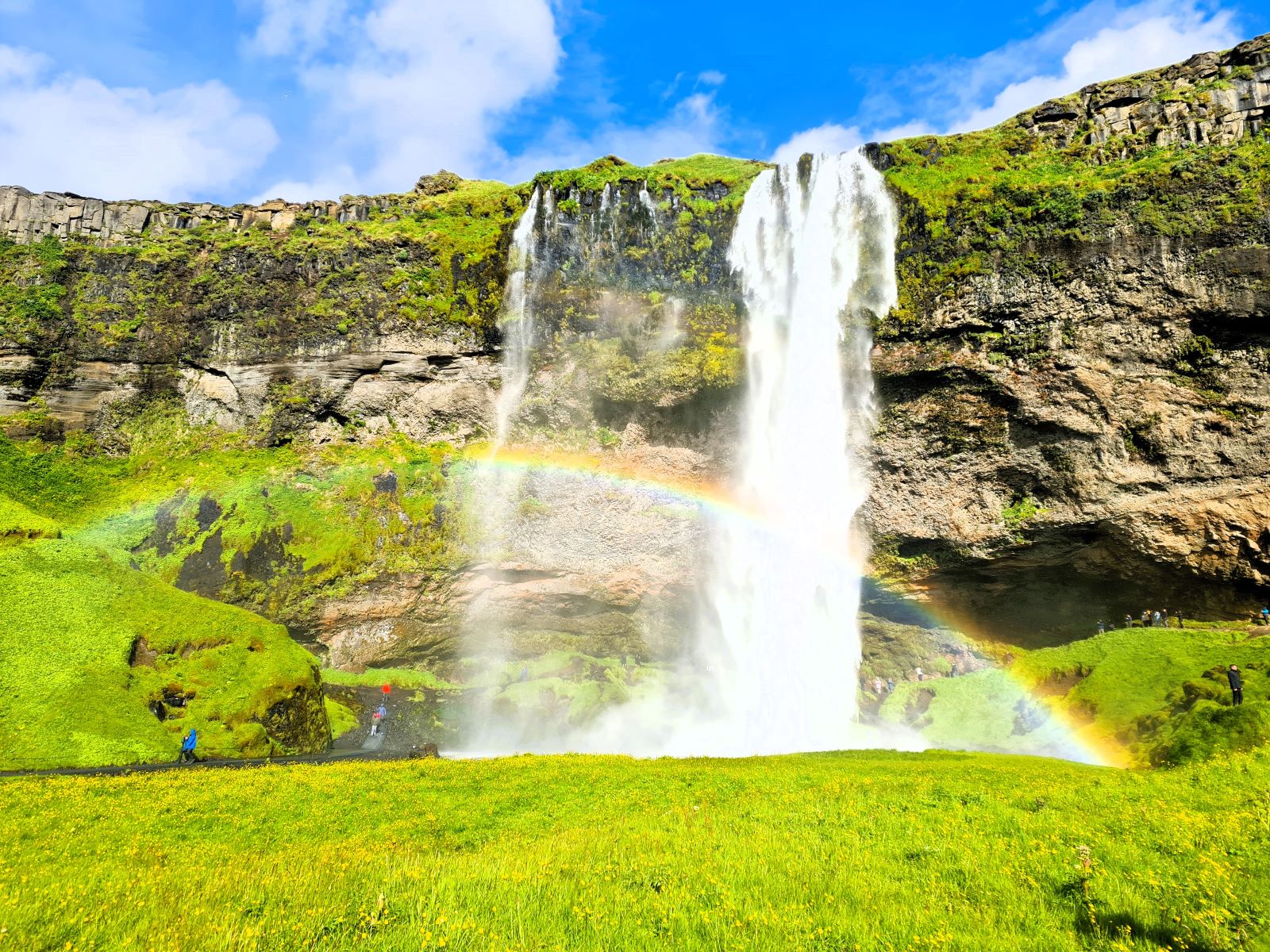
When travelers compile their list of things to do in Iceland, Seljalandsfoss Waterfall consistently ranks among the top natural attractions in the country. This magnificent 60-meter waterfall is one of the few places on Earth where visitors can walk completely behind the cascading water, offering a unique perspective that has made it one of the most photographed landmarks in the Land of Fire and Ice. Located along Iceland’s famous South Coast, Seljalandsfoss serves as a perfect introduction to the country’s dramatic waterfalls and volcanic landscapes.
Whether you are a photographer seeking the perfect shot, an adventurer looking for unique experiences, or a family traveler wanting to witness nature’s power firsthand, this comprehensive guide will cover everything you need to know about visiting Seljalandsfoss Iceland. From the geology behind the waterfall to safety tips, photography advice, nearby attractions, and practical visiting information, this post will ensure you make the most of your visit to one of Iceland’s most beloved natural wonders.
What is Seljalandsfoss Waterfall?
Seljalandsfoss is a spectacular waterfall located on the South Coast of Iceland, approximately 120 kilometers (75 miles) southeast of Reykjavik. The waterfall drops 60 meters (197 feet) from the top of a former sea cliff, creating a dramatic curtain of water that flows directly into a pool below.
What makes Seljalandsfoss truly unique is the cave-like passage that runs behind the waterfall. This natural alcove allows visitors to walk completely behind the cascading water, experiencing the roar and mist from an entirely different perspective. Few waterfalls worldwide offer this opportunity, making Seljalandsfoss a must-visit destination for any Iceland itinerary.
Key Features
- Height: 60 meters (197 feet)
- Water Source: Seljalands River, fed by the Seljalandsjökull glacier
- Unique Feature: Walk-behind cave passage
- Location: South Coast of Iceland, Route 1 (Ring Road)
- Accessibility: Open year-round, free to visit
- Nearby Attraction: Gljúfrabúi hidden waterfall (5-minute walk)
The Name’s Origin
The name “Seljalandsfoss” translates roughly to “Waterfall of the Land of the Sea Barn” or “Waterfall of the Seljaland Farm.” The surrounding area was historically farmland, and the waterfall takes its name from the nearby Seljaland farmstead. This agricultural heritage adds cultural context to the natural wonder, connecting Iceland’s farming traditions with its dramatic landscapes.
Geology and Formation of Seljalandsfoss
Understanding the geological history of Seljalandsfoss Waterfall adds depth to your visit. This waterfall is not just beautiful; it tells a story of Iceland’s volcanic past and ongoing geological evolution.
Ancient Sea Cliffs
Seljalandsfoss flows over what was once an ancient sea cliff. Thousands of years ago, this area was underwater, and the coastline sat much further inland than it does today. As Iceland’s landmass rose due to volcanic activity and post-glacial rebound (the land rising after the weight of glaciers was removed), the former seabed became dry land.
The cliff over which the water flows is composed of layers of volcanic rock, including:
- Basalt: Hard volcanic rock formed from cooled lava
- Tuff: Compressed volcanic ash
- Sedimentary Layers: Deposits from ancient ocean environments
The Water Source
The water feeding Seljalandsfoss originates from the Seljalandsjökull glacier, an outlet glacier of the larger Eyjafjallajökull ice cap. This glacial origin means the water is exceptionally cold year-round and carries fine glacial sediment that gives it a slightly milky appearance.
Water Flow Variations:
- Summer: Higher flow due to glacial melt (June to August)
- Winter: Lower flow, but often more dramatic ice formations (December to February)
- Spring: Peak flow as snow and ice melt rapidly (April to May)
- Autumn: Moderate flow with fewer crowds (September to October)
Ongoing Erosion
Like all waterfalls, Seljalandsfoss is slowly retreating upstream due to erosion. The force of the falling water wears away the softer rock layers beneath the harder cap rock, causing sections of the cliff to collapse over time. This natural process means the waterfall’s appearance changes gradually over decades and centuries.
History and Cultural Significance
While Seljalandsfoss is primarily known for its natural beauty, it holds cultural significance in Icelandic heritage and tourism history.
Early Tourism
Seljalandsfoss became one of Iceland’s first tourist attractions in the early 20th century. As travel to Iceland increased, word spread about the unique opportunity to walk behind a waterfall. By the 1950s and 1960s, it was a standard stop for visitors exploring the South Coast.
Infrastructure Development
Over the decades, infrastructure has been improved to accommodate growing visitor numbers:
- Parking Area: Expanded and paved to handle buses and cars
- Paths: Stone and gravel paths created to protect vegetation and improve accessibility
- Facilities: Restrooms and small cafe added near the parking area
- Safety Improvements: Railings and warning signs installed in hazardous areas
In Popular Culture
Seljalandsfoss has appeared in numerous:
- Travel documentaries about Iceland
- Photography books and magazines
- Social media posts and travel blogs
- Music videos and film productions
Its iconic status has made it one of the most recognizable images associated with Iceland tourism worldwide.
How to Get to Seljalandsfoss
Reaching Seljalandsfoss Waterfall is straightforward, making it accessible for all types of travelers.
From Reykjavik
Distance: Approximately 120 kilometers (75 miles)
Driving Time: 1 hour 30 minutes to 2 hours without stops
Route: Take Route 1 (Ring Road) southeast from Reykjavik. The waterfall is clearly signposted and visible from the road.
Road Conditions: Paved highway year-round; generally well-maintained even in winter.
By Rental Car
Advantages:
- Maximum flexibility for timing and duration
- Easy to combine with other South Coast attractions
- Ability to visit during sunrise or sunset for best light
- Cost-effective for groups and families
Parking: Free parking available in the designated lot near the waterfall.
Navigation: GPS and road signs clearly mark the location; download offline maps as backup.
Fuel: Fill up in Reykjavik or Selfoss; gas stations available along Route 1.
By Tour Bus
Advantages:
- No driving in unfamiliar conditions
- Guided commentary provides context and history
- Often combined with other South Coast attractions
- No parking concerns
Considerations:
- Fixed schedule limits flexibility
- Less time at the waterfall (typically 30-45 minutes)
- Group pace may not suit everyone
Tour Types: Half-day, full-day, and multi-day South Coast tours available from Reykjavik.
By Public Transportation
Availability: Limited public bus service along the South Coast.
Seasonal: More frequent service in summer; reduced in winter.
Recommendation: Rental car or tour bus recommended for most visitors due to limited public transport options.
As Part of the South Coast Route
Seljalandsfoss is a key stop on Iceland’s famous South Coast route, which typically includes:
- Seljalandsfoss: Walk-behind waterfall experience
- Gljúfrabúi: Hidden waterfall in a canyon
- Skógafoss: Massive curtain waterfall nearby
- Reynisfjara: Black sand beach
- Vík: Charming coastal village
- Dyrhólaey: Natural arch and puffin colony
Typical Itinerary: Most South Coast tours spend 45 minutes to 1 hour at Seljalandsfoss before continuing to other attractions.
Best Time to Visit Seljalandsfoss
Iceland’s seasons dramatically affect the Seljalandsfoss experience. Understanding the differences helps you plan accordingly.
Summer (June to August)
Pros:
- Maximum daylight hours (nearly 24 hours in June)
- Highest water flow from glacial melt
- All facilities fully operational
- Warmest temperatures for walking behind the waterfall
- Green landscapes with vibrant vegetation
- Accessible paths without ice or snow
Cons:
- Peak tourist season; largest crowds
- Busiest parking lot; arrive early or late
- Highest accommodation and tour prices
- Midnight sun means it never gets fully dark
- Midges (small flies) can be present near the water
Best For: First-time visitors, families, photographers wanting green landscapes, and those wanting full access to all areas.
Winter (November to March)
Pros:
- Minimal crowds; peaceful experience
- Lowest prices for tours and accommodation
- Dramatic ice formations around the waterfall
- Potential to see Northern Lights from the area
- Unique photography opportunities with snow and ice
- Waterfall partially frozen creates surreal scenes
Cons:
- Very limited daylight (4-5 hours in December)
- Paths can be icy and slippery; crampons recommended
- Walking behind the waterfall may be restricted due to ice danger
- Weather can be harsh; roads may close due to storms
- Some facilities may have reduced hours
Best For: Photographers seeking dramatic shots, budget travelers, Northern Lights hunters, and those seeking solitude.
Shoulder Season (April-May, September-October)
Pros:
- Good balance of daylight and fewer crowds
- Moderate prices
- Possible Northern Lights in September-October and April
- Spring blooms or autumn colors
- Most facilities operational
- Walking behind waterfall generally accessible
Cons:
- Weather can be unpredictable
- Some services may be transitioning between seasons
- Path conditions can vary with rain and wind
Best For: Travelers seeking balance between crowds, cost, and conditions.
Time of Day
Sunrise (5:00 AM to 7:00 AM in Summer): Fewest visitors; best light for photography; peaceful atmosphere; parking easily available.
Midday (11:00 AM to 3:00 PM): Busiest period; tour groups present; good for facilities and services; challenging for photography due to crowds.
Sunset (8:00 PM to 10:00 PM in Summer): Crowds thin; golden hour lighting; ideal for photography; magical atmosphere.
Night: Excellent for Northern Lights in winter; very quiet; limited visibility; bring headlamp for navigation.
Walking Behind the Waterfall: What to Expect
The highlight of visiting Seljalandsfoss is the unique opportunity to walk behind the cascading water. Here is everything you need to know about this experience.
The Path
Entrance: The path behind the waterfall begins on the right side of the waterfall (when facing it). Look for the marked trail leading toward the cliff.
Terrain: The path is a combination of natural rock, gravel, and some constructed steps. It can be uneven and slippery, especially when wet.
Distance: The complete walk behind the waterfall takes approximately 10-15 minutes at a leisurely pace.
Difficulty: Moderate. The path requires sure footing but is manageable for most fitness levels. Not recommended for those with mobility issues.
What You’ll Experience
The Mist: As you approach and walk behind the waterfall, you will be sprayed with fine mist from the falling water. This is refreshing in summer but can be quite cold, especially in shoulder seasons and winter.
The Sound: The roar of the water is amplified when you are behind the falls. The sound can be overwhelming and is a powerful reminder of nature’s force.
The View: Looking out from behind the waterfall provides a unique framed view of the landscape beyond. The water curtain creates a natural filter that softens the light and adds drama to photographs.
The Cave: The alcove behind the waterfall is not a deep cave but rather a shallow recess in the cliff face. It provides enough space for visitors to walk through but is not large enough for extended停留.
Safety Considerations
Slippery Surfaces: The rocks and path are constantly wet from the waterfall’s spray. Slip and fall accidents are common.
Falling Ice: In winter and early spring, ice can form on the cliff above the path and fall without warning. This is a serious hazard.
Restricted Access: During certain times of year (typically late winter and early spring), the path behind the waterfall may be closed due to ice danger. Always check with staff or look for closure signs.
Footwear: Proper footwear is essential. See the packing section below for recommendations.
Children: Supervise children closely. The path has no railings in many sections, and the drop to the pool below is significant.
Gljúfrabúi: The Hidden Waterfall
Just a short walk from Seljalandsfoss lies another spectacular waterfall that many visitors miss: Gljúfrabúi.
Location and Access
Distance: Approximately 5-10 minutes walk from Seljalandsfoss parking area.
Directions: Walk north along the path from Seljalandsfoss. Look for a canyon opening in the cliff face. The waterfall is hidden inside this canyon.
Signage: The path is marked, but the waterfall entrance can be easy to miss. Ask staff for directions if unsure.
The Experience
Hidden Setting: Gljúfrabúi flows inside a narrow canyon, making it partially hidden from view. This creates an intimate, secret atmosphere.
Access: To see the waterfall up close, you must wade through a shallow stream entering the canyon. The water is cold and can reach mid-calf depth.
Height: Approximately 40 meters (131 feet), slightly shorter than Seljalandsfoss but equally dramatic.
Photography: The canyon creates natural framing for photographs. Light filtering through the canyon opening adds drama.
Tips for Visiting Gljúfrabúi
Footwear: Waterproof boots are essential. You will get wet entering the canyon.
Timing: Visit Gljúfrabúi after Seljalandsfoss to avoid backtracking.
Crowds: Typically less crowded than Seljalandsfoss, offering a more peaceful experience.
Safety: The canyon floor is slippery. Move carefully and watch your step.
Photography: Bring a waterproof camera or protect your gear from spray.
Photography Guide: Capturing Seljalandsfoss
Seljalandsfoss is one of the most photographed locations in Iceland. To help you capture stunning images, here are specialized tips.
Best Photography Locations
Front View: The classic shot from the pool area shows the full waterfall with the path visible behind it.
Behind the Waterfall: Unique perspective looking out through the water curtain. Great for creative compositions.
Side Angles: Capture the waterfall from the left or right sides for different perspectives.
Gljúfrabúi: The hidden waterfall offers intimate canyon shots with dramatic lighting.
Sunset/Sunrise: Golden hour light illuminates the water and creates rainbows in the mist.
Camera Settings
Waterfall (Silky Effect):
- Shutter Speed: 1/2 second to 2 seconds
- Aperture: f/8 to f/16
- ISO: 100-400
- Tripod: Essential for stability
Waterfall (Frozen Motion):
- Shutter Speed: 1/500 second or faster
- Aperture: f/5.6 to f/8
- ISO: Adjust for lighting conditions
- Handheld: Possible with fast shutter speeds
Behind the Waterfall:
- Shutter Speed: 1/60 second or faster (handheld)
- Aperture: f/8 for depth of field
- ISO: May need to increase due to lower light
- Protection: Keep camera dry from spray
Northern Lights (Winter):
- Shutter Speed: 10-25 seconds
- Aperture: f/2.8 or wider
- ISO: 1600-3200
- Tripod: Absolutely essential
Essential Equipment
Tripod: Necessary for long exposures and low-light conditions.
Wide-Angle Lens: Captures the full waterfall and surrounding landscape.
ND Filters: Neutral Density filters allow slow shutter speeds in bright conditions.
Lens Cloth: Mist from the waterfall will fog your lens; keep it clean.
Waterproof Bag: Protect your camera gear from water spray.
Extra Batteries: Cold weather drains batteries quickly in winter.
Polarizing Filter: Reduces glare from wet rocks and enhances sky contrast.
Composition Tips
Include Foreground: Add rocks, flowers, or people in the foreground for depth.
Leading Lines: Use the path or river to lead the eye toward the waterfall.
Scale: Include a person to show the waterfall’s impressive size.
Rainbows: On sunny days, look for rainbows in the mist.
Reflections: The pool below can create reflections on calm days.
Framing: Use the cave opening to frame the landscape beyond.
Protecting Your Gear
The environment at Seljalandsfoss is harsh for electronics.
Water Spray: The mist from the waterfall can penetrate camera bags. Use waterproof covers or dry bags.
Condensation: When moving between cold and warm environments, keep your camera in a bag to prevent condensation.
Sand and Dirt: The path can be dusty; keep your camera bag zipped when not in use.
Cleaning: Bring a microfiber cloth to wipe your lens frequently.
Safety Information
While Seljalandsfoss is generally safe, understanding potential hazards ensures a worry-free visit.
Path Hazards
Slippery Rocks: The constant mist makes rocks and paths extremely slippery. Wear appropriate footwear and move carefully.
Uneven Terrain: The natural path has uneven surfaces that can cause trips and falls.
No Railings: Many sections of the path have no protective railings. Stay away from edges.
Limited Visibility: Behind the waterfall, visibility is reduced due to the water curtain. Move slowly.
Water Hazards
Cold Water: The glacial water is extremely cold year-round. Falling into the pool could cause cold water shock.
Strong Current: The pool below the waterfall has currents that can be dangerous.
Slippery Pool Edge: The rocks around the pool are slippery; do not stand too close to the edge.
Ice Hazards (Winter)
Falling Ice: Ice can form on the cliff above and fall without warning. This is the most serious hazard.
Icy Paths: Winter paths can be covered in ice. Crampons or ice cleats are highly recommended.
Path Closures: The path behind the waterfall may be closed in winter due to ice danger. Respect all closure signs.
Hypothermia: Getting wet in cold weather can lead to hypothermia. Change out of wet clothing promptly.
Weather Considerations
Wind: Strong winds are common on the South Coast. Secure loose items and dress in layers.
Rain: Weather changes rapidly. Bring waterproof clothing even on seemingly clear days.
Visibility: Fog can reduce visibility quickly. Stay on marked trails.
Lightning: Rare but possible in summer storms. Seek shelter if thunderstorms develop.
Emergency Information
Ranger Station: Park rangers are occasionally present during peak season.
Emergency Number: 112 for all emergencies in Iceland.
First Aid: Basic first aid available at nearby facilities in Vík or Selfoss.
Cell Service: Generally good throughout the area.
General Safety Tips
- Stay on marked paths and trails
- Do not venture into restricted areas
- Supervise children closely at all times
- Keep a safe distance from the waterfall’s edge
- Check weather forecast before arrival
- Dress appropriately for conditions
- Inform someone of your plans if traveling alone
- Respect barriers and warning signs
- Do not climb on rocks near the waterfall
- Be aware of other visitors on narrow paths
Practical Tips for Tourists
Maximize your Seljalandsfoss experience with these practical recommendations.
What to Wear
Waterproof Jacket: Essential for protection from waterfall spray and unpredictable weather.
Waterproof Pants: Recommended, especially if walking behind the waterfall.
Sturdy Boots: Waterproof hiking boots with good grip are essential. The terrain is wet and slippery.
Warm Layers: Even in summer, the mist and wind can make it feel cold. Wear fleece or wool layers.
Hat and Gloves: Recommended in shoulder seasons; essential in winter.
Change of Clothes: Consider bringing a change of clothes in case you get wet.
Facilities
Restrooms: Clean public restrooms are available at the parking area. Small fee may apply.
Cafe: A small cafe near the parking area serves coffee, snacks, and light meals.
Gift Shop: Souvenirs and local crafts are available.
Parking: Free parking available; can fill up during peak hours.
WiFi: Limited availability; download offline maps before arriving.
Accessibility
Main Viewing Area: The main viewing area in front of the waterfall is accessible for most visitors.
Path Behind Waterfall: Not wheelchair accessible due to uneven terrain, steps, and narrow passages.
Gljúfrabúi: Not accessible for those with mobility limitations due to stream crossing and canyon terrain.
Parking: Accessible parking spaces available near the entrance.
Assistance: Staff can provide guidance for visitors with specific needs.
Costs
Entrance Fee: Free to visit Seljalandsfoss Waterfall.
Parking: Free parking available at the designated lot.
Facilities: Restrooms may have a small fee (approximately 200-500 ISK).
Tours: Guided tours from Reykjavik vary in price depending on inclusions.
Connectivity
Cell Service: Generally good throughout the area.
WiFi: Limited or unavailable at the site.
Navigation: Download offline maps before arrival as backup.
Nearby Attractions to Combine With Your Visit
Seljalandsfoss’s location on the South Coast makes it easy to combine with other Iceland attractions for a full day of exploration.
Gljúfrabúi Waterfall
Distance: 5-10 minutes walk from Seljalandsfoss
Highlights: Hidden waterfall inside a narrow canyon; unique wading experience
Time Needed: 30-45 minutes
Best Combined With: Visit immediately after Seljalandsfoss
Skógafoss Waterfall
Distance: 30 minutes drive east
Highlights: Massive 60-meter curtain waterfall; staircase to top; rainbow views
Time Needed: 1-2 hours
Best Combined With: Same day South Coast itinerary
Reynisfjara Black Sand Beach
Distance: 45 minutes drive east
Highlights: Black volcanic sand; basalt columns; sea stacks; dramatic waves
Time Needed: 1-2 hours
Best Combined With: Full South Coast day trip
Vík Village
Distance: 45 minutes drive east
Highlights: Charming coastal village; red-roof church; restaurants and shops
Time Needed: 1-2 hours
Best Combined With: Lunch stop on South Coast journey
Dyrhólaey Peninsula
Distance: 50 minutes drive east
Highlights: Natural stone arch; puffin colony (summer); lighthouse; panoramic views
Time Needed: 1-2 hours
Best Combined With: Wildlife and photography enthusiasts
Sólheimasandur Plane Wreck
Distance: 35 minutes drive east
Highlights: Abandoned DC-3 plane on black sand desert; surreal photography
Time Needed: 2-3 hours (including hike or shuttle)
Best Combined With: Afternoon stop on South Coast route
Kerið Crater
Distance: 45 minutes drive west (toward Reykjavik)
Highlights: Volcanic crater lake; red rocks; walking path around rim
Time Needed: 45 minutes to 1 hour
Best Combined With: On return journey to Reykjavik
Secret Lagoon
Distance: 40 minutes drive north
Highlights: Natural geothermal pool; less crowded than Blue Lagoon
Time Needed: 2-3 hours
Best Combined With: Relaxation after waterfall hiking
Where to Stay Near Seljalandsfoss
There are no hotels directly at Seljalandsfoss, but several accommodation options exist nearby.
Option 1: Reykjavik
Distance: 1 hour 30 minutes to 2 hours drive
Advantages:
- Widest selection of hotels and restaurants
- All price ranges available
- Easy access to airport and other attractions
- Urban amenities and nightlife
Best For: Visitors who want city convenience and plan multiple day trips.
Option 2: Selfoss
Distance: 45 minutes drive west
Advantages:
- Smaller town with local character
- Good restaurant options
- Convenient for South Coast exploration
- More affordable than Reykjavik
Best For: Travelers wanting to stay outside the capital while maintaining access to amenities.
Option 3: Hvolsvöllur
Distance: 20 minutes drive west
Advantages:
- Small village close to Seljalandsfoss
- Several guesthouses and hotels
- Local restaurant options
- Good base for South Coast exploration
Best For: Those wanting proximity to Seljalandsfoss for sunrise/sunset photography.
Option 4: Vík
Distance: 45 minutes drive east
Advantages:
- Charming coastal village atmosphere
- Multiple accommodation options
- Restaurants and shops available
- Close to Reynisfjara and Dyrhólaey
Best For: Travelers continuing along the South Coast toward Vatnajökull.
Option 5: Farm Stays and Guesthouses
Distance: Various locations along South Coast
Advantages:
- Authentic Icelandic experience
- Often family-run with personal service
- Unique rural settings
- Opportunity to meet locals
Best For: Travelers seeking cultural immersion and unique accommodations.
Seljalandsfoss for Different Types of Travelers
Seljalandsfoss offers something for every type of visitor. Here is how different travelers can maximize their experience.
Families with Children
Highlights: Walk-behind waterfall experience, nearby Gljúfrabúi, easy access from parking.
Tips: Supervise children closely on slippery paths; bring change of clothes; visit during daylight hours; allow extra time for exploration.
Best Time: Summer months when paths are safest and facilities are fully operational.
Safety: Keep children away from waterfall edges; hold hands on wet paths.
Couples
Highlights: Romantic sunset views, photography opportunities, nearby dining in Vík.
Tips: Time visit for golden hour; combine with dinner in Vík; consider staying at nearby guesthouse for sunrise visit.
Best Time: Late afternoon into evening for romantic ambiance and fewer crowds.
Solo Travelers
Highlights: Self-paced exploration, photography opportunities, easy to join group tours.
Tips: Take your time with photography; join guided tour if you want social interaction; inform someone of your plans.
Best Time: Weekday mornings for fewer crowds and better photo opportunities.
Photography Enthusiasts
Highlights: Walk-behind perspective, golden hour light, nearby Gljúfrabúi, Northern Lights in winter.
Tips: Bring tripod and ND filters; visit at sunrise or sunset; allow extra time for setup; protect gear from spray.
Best Time: Sunrise for fewest people; sunset for warm light; winter for Northern Lights.
Adventure Seekers
Highlights: Walk behind waterfall, explore Gljúfrabúi canyon, combine with South Coast hiking.
Tips: Wear proper footwear; bring waterproof gear; explore beyond main path safely; consider guided glacier hikes nearby.
Best Time: Summer for full access to all areas; shoulder season for fewer crowds.
Seniors
Highlights: Main viewing area accessible, short walk from parking, facilities nearby.
Tips: Use walking poles for stability; stay on main paths; avoid behind-waterfall path if mobility is limited; take breaks as needed.
Best Time: Summer months when paths are driest and safest.
Frequently Asked Questions (FAQ)
Q: Is there an entrance fee for Seljalandsfoss? A: No, visiting Seljalandsfoss Waterfall is completely free. Parking is also free. Restrooms may have a small fee.
Q: How long should I spend at Seljalandsfoss? A: Plan for 45 minutes to 1.5 hours. This allows time to view the waterfall from multiple angles, walk behind it, and visit Gljúfrabúi nearby.
Q: Can I walk behind the waterfall in winter? A: The path behind the waterfall is often closed in winter (typically November to March) due to ice danger. Check with staff or look for closure signs upon arrival.
Q: Is Seljalandsfoss wheelchair accessible? A: The main viewing area is accessible, but the path behind the waterfall is not wheelchair accessible due to uneven terrain and steps.
Q: What should I wear to Seljalandsfoss? A: Waterproof jacket and pants, sturdy waterproof boots with good grip, and warm layers. You will get sprayed with mist if walking behind the waterfall.
Q: Can I swim in the pool below Seljalandsfoss? A: Swimming is not recommended and can be dangerous. The water is extremely cold, and the currents can be strong.
Q: Are there restrooms at Seljalandsfoss? A: Yes, public restrooms are available at the parking area. A small fee may apply for maintenance.
Q: Is there a cafe or restaurant at Seljalandsfoss? A: A small cafe near the parking area serves coffee, snacks, and light meals. More dining options are available in nearby Vík or Hvolsvöllur.
Q: Can I visit Seljalandsfoss at night? A: Yes, the waterfall is accessible 24/7. However, visibility is limited without daylight. In winter, this can be a good opportunity for Northern Lights photography.
Q: How crowded does Seljalandsfoss get? A: During peak summer months (June to August), the waterfall can be very crowded, especially midday. Visit early morning or late evening for fewer people.
Q: Is photography allowed at Seljalandsfoss? A: Yes, photography is encouraged. Just be mindful of other visitors and protect your gear from water spray.
Q: Can I bring my dog to Seljalandsfoss? A: Dogs are allowed but must be kept on a leash. Clean up after your pet and be mindful of other visitors.
Q: What is the best time of day for photography? A: Sunrise and sunset provide the best light with warm colors and fewer crowds. Midday light can be harsh and attracts the most visitors.
Q: Is Gljúfrabúi worth visiting? A: Absolutely. Many visitors miss this hidden waterfall, but it offers a unique and less crowded experience just minutes from Seljalandsfoss.
Q: Can I visit Seljalandsfoss on a day trip from Reykjavik? A: Yes, Seljalandsfoss is easily accessible as a day trip from Reykjavik. It is commonly combined with other South Coast attractions for a full-day excursion.
Q: Are there guided tours available? A: Yes, multiple companies offer guided South Coast tours from Reykjavik that include Seljalandsfoss. This is convenient for those who prefer not to drive.
Q: What happens if the path behind the waterfall is closed? A: You can still view the waterfall from the front and visit Gljúfrabúi. The closure is for safety due to ice danger and should be respected.
Q: Is cell phone service available at Seljalandsfoss? A: Yes, cell service is generally good throughout the area, though some spots may have limited coverage.
Q: Can I fly a drone at Seljalandsfoss? A: Drone regulations in Iceland are strict. Generally, drones are not allowed near crowds or without specific permission. Check current regulations before flying.
Q: What other waterfalls are near Seljalandsfoss? A: Skógafoss (30 minutes east) and Gljúfrabúi (5-minute walk) are the closest. Both are highly recommended additions to your itinerary.
Conclusion: Iceland’s Most Accessible Natural Wonder
Seljalandsfoss Waterfall stands as one of Iceland’s most accessible and rewarding natural attractions. Its unique walk-behind experience, combined with its dramatic beauty and convenient location along the South Coast, makes it an essential stop for any Iceland itinerary.
When compiling your list of things to do in Iceland, Seljalandsfoss deserves top priority. Unlike many natural wonders that require extensive hiking or challenging conditions to reach, Seljalandsfoss offers its magic just steps from the parking area. This accessibility makes it perfect for travelers of all ages and abilities, while still delivering an unforgettable experience.
The waterfall’s cultural significance, geological story, and photographic potential combine to create an attraction that appeals to diverse interests. Whether you are marveling at the power of glacial water, capturing the perfect photograph, or simply enjoying the mist on your face as you walk behind the cascade, Seljalandsfoss creates memories that last a lifetime.
Remember to respect this natural wonder. Stay on marked paths, follow safety guidelines, and be mindful of other visitors. The Icelanders who have cherished this waterfall for generations understand its power and beauty. As you experience Seljalandsfoss, you join countless travelers who have been moved by this remarkable place.
Your journey to Seljalandsfoss Waterfall is more than a tourist stop; it is a connection to Iceland’s raw natural beauty. Take your time, absorb the experience, capture the memories, and let this magnificent waterfall inspire you as it has inspired countless visitors before.
Quick Visit Checklist
Before you depart for Seljalandsfoss, verify the following:
- Checked weather forecast and road conditions
- Packed waterproof jacket and pants
- Brought sturdy waterproof boots with good grip
- Charged camera batteries and brought spare SD cards
- Downloaded offline maps for navigation
- Brought cash/card for restroom fees and cafe
- Planned nearby stops (Gljúfrabúi, Skógafoss, Vík)
- Reviewed safety guidelines for waterfall paths
- Allowed 1-2 hours for full experience
- Checked if path behind waterfall is open (winter visits)
- Brought change of clothes in case of getting wet
- Arrived early morning or late evening to avoid crowds
With this guide in hand, you are ready to experience one of Iceland’s most treasured natural wonders. Enjoy your adventure at Seljalandsfoss Waterfall!
