





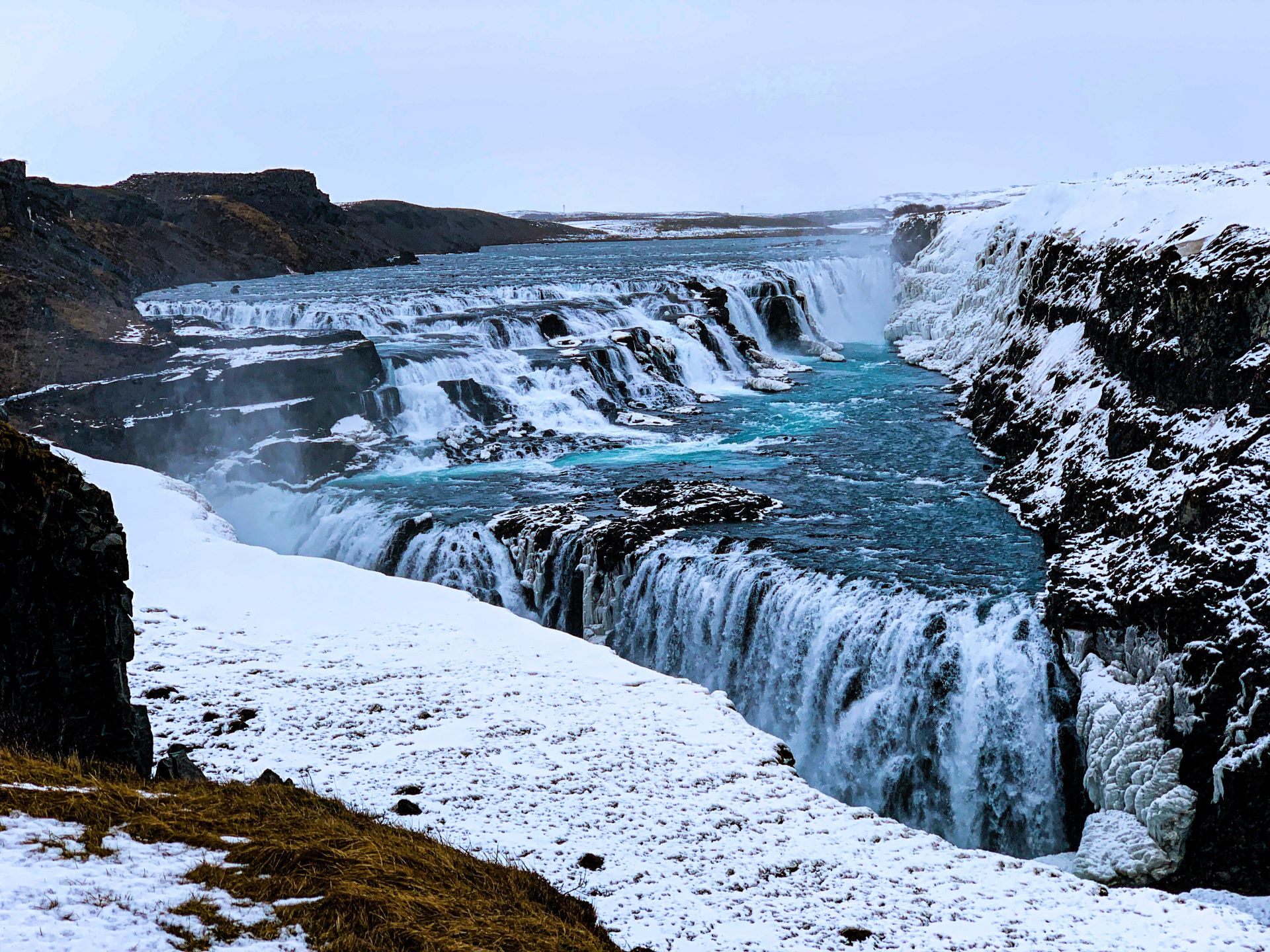
When travelers compile their list of things to do in Iceland, Gullfoss Falls consistently ranks among the most iconic and breathtaking natural attractions in the country. This magnificent two-tiered waterfall, part of Iceland’s famous Golden Circle route, plunges 32 meters into a dramatic canyon, creating a spectacle of raw power and beauty that has captivated visitors for over a century. Whether you are witnessing the thunderous cascade for the first time or returning to experience its seasonal transformations, Gullfoss Iceland delivers an unforgettable encounter with nature’s forces.
This comprehensive guide will walk you through everything you need to know about visiting Gullfoss Waterfall, from its fascinating history and geological formation to practical visiting information, photography tips, safety guidelines, and nearby attractions. Whether you are a first-time visitor to Iceland or a returning traveler seeking deeper experiences, this post will ensure you make the most of your visit to one of Iceland’s most beloved natural wonders.
What is Gullfoss Falls?
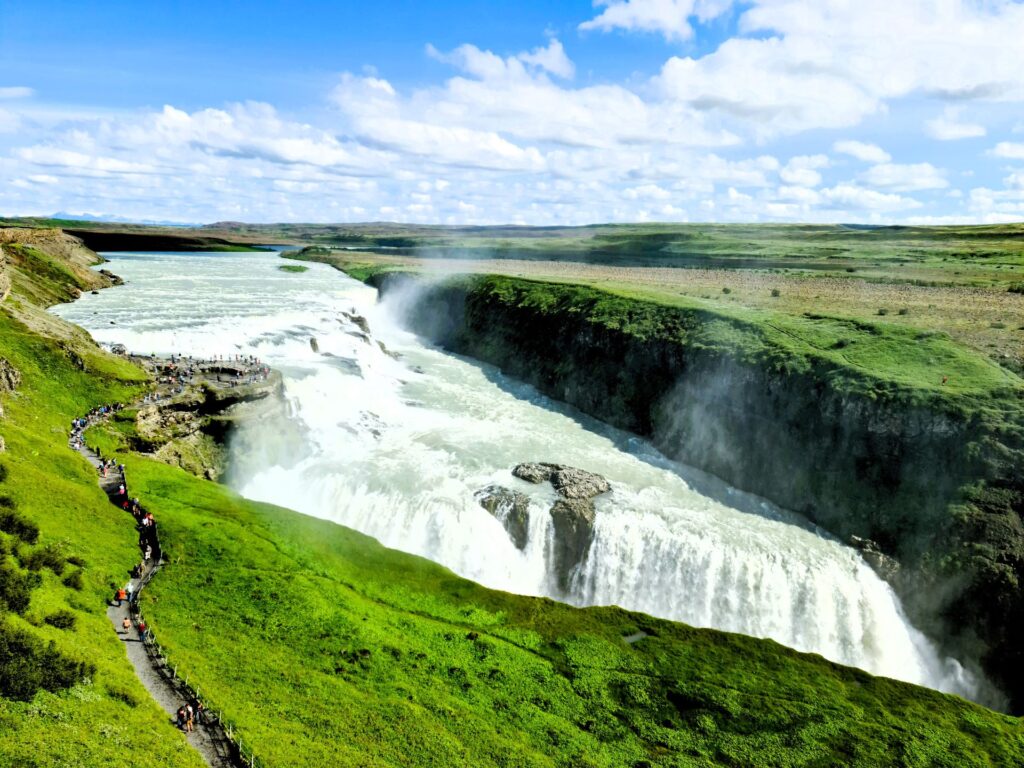
Gullfoss, which translates to “Golden Falls” or “Golden Waterfall” in English, is one of Iceland’s most spectacular waterfalls located in the canyon of the Hvítá River in southwest Iceland. The waterfall drops in two stages, creating a unique cascading effect that distinguishes it from single-drop waterfalls elsewhere in the country.
Key Features
- Total Height: 32 meters (105 feet) across two tiers
- Upper Tier: 11 meters (36 feet)
- Lower Tier: 21 meters (69 feet)
- Width: Up to 70 meters (230 feet) depending on water flow
- Water Source: Hvítá River, fed by Langjökull glacier
- Location: Southwest Iceland, part of the Golden Circle route
- Accessibility: Open year-round, free to visit
- Canyon Depth: Approximately 70 meters deep
The Name’s Origin
The name “Gullfoss” has an interesting history. In the early 20th century, there were plans to harness the waterfall’s power for hydroelectric energy. Local farmers and conservationists fought to preserve the falls, and the name “Golden” reportedly came from the way sunlight creates golden rainbows in the mist on sunny days. Another theory suggests the name refers to the golden-brown color of the glacial water during summer melt seasons.
History and Conservation of Gullfoss
Understanding the history of Gullfoss Falls adds profound meaning to your visit. This waterfall represents a pivotal moment in Iceland’s environmental conservation movement.
Early Threats (1900s)
In the early 20th century, foreign investors showed interest in harnessing Gullfoss for hydroelectric power. The waterfall’s powerful flow and dramatic drop made it an attractive site for energy generation. Plans were drawn up to build a dam that would have fundamentally altered or destroyed the natural cascade.
Sigríður Tómasdóttir: The Heroine of Gullfoss
The waterfall was saved thanks to the determined efforts of Sigríður Tómasdóttir, a local farmer’s daughter who became Iceland’s first environmental activist. She fought tirelessly to protect Gullfoss from development, even threatening to throw herself into the falls if construction proceeded.
Her Legacy:
- Her persistence led to the cancellation of hydroelectric plans
- She is considered a national hero in Iceland
- A memorial stone at Gullfoss honors her contributions
- Her efforts helped establish Iceland’s conservation ethic
Protection and Preservation
| Year | Milestone |
|---|---|
| 1929 | Gullfoss leased to the Icelandic state |
| 1940 | Full ownership transferred to the state |
| 1979 | Designated as a protected natural monument |
| 2000s | Visitor center and facilities improved |
| Present | Part of Iceland’s most visited natural attractions |
Today, Gullfoss is protected as a natural monument, ensuring that future generations can experience its beauty in its natural state. The story of its preservation remains an important part of Icelandic environmental consciousness.
Geology and Formation of Gullfoss
The geological story behind Gullfoss Waterfall is as fascinating as its visual splendor. Understanding how this waterfall formed adds depth to your appreciation of the landscape.
The Hvítá River
The Hvítá (White River) originates from Langjökull glacier, Iceland’s second-largest ice cap. The glacial origin means the water carries fine sediment that gives it a distinctive milky-white appearance, especially during summer melt seasons.
Water Flow Variations:
- Summer: Up to 140 cubic meters per second during peak melt
- Winter: Approximately 109 cubic meters per second
- Spring: Highest flow as snow and ice melt rapidly
- Autumn: Moderate flow with clearer water
Canyon Formation
The canyon into which Gullfoss plunges was carved over thousands of years by the relentless action of the river. The process involved:
- Glacial Activity: Ancient glaciers shaped the initial landscape
- River Erosion: The Hvítá River cut through volcanic rock layers
- Waterfall Retreat: The falls slowly move upstream as erosion continues
- Volcanic Rock: Layers of basalt and other volcanic materials form the canyon walls
The Two-Tier Structure
What makes Gullfoss unique is its two-stage drop:
Upper Tier: The river flows over the first ledge, creating a wide cascade that turns at a right angle.
Lower Tier: The water then plunges into the deep canyon below, creating the dramatic final drop that visitors witness from the viewing platforms.
This unusual configuration creates multiple viewing angles and perspectives, making Gullfoss photogenic from numerous vantage points.
Ongoing Geological Activity
Like all waterfalls, Gullfoss is slowly retreating upstream due to erosion. The force of the falling water wears away the softer rock layers beneath the harder cap rock, causing sections of the cliff to collapse over time. This natural process means the waterfall’s appearance changes gradually over decades and centuries, though these changes are imperceptible during a single visit.
How to Get to Gullfoss Falls
Reaching Gullfoss Falls is straightforward, making it accessible for all types of travelers. Its location on the Golden Circle route means it is one of Iceland’s most accessible major waterfalls.
From Reykjavik
Distance: Approximately 105 kilometers (65 miles) from downtown Reykjavik
Driving Time: 1 hour 30 minutes to 2 hours without stops
Route: Take Route 1 west from Reykjavik, then turn onto Route 35 (Golden Circle route). Follow signs to Gullfoss.
Road Conditions: Paved highway year-round; Route 35 is well-maintained even in winter, though conditions can vary during storms.
By Rental Car
Advantages:
- Maximum flexibility for timing and duration
- Easy to combine with other Golden Circle attractions
- Ability to visit during sunrise or sunset for best light
- Cost-effective for groups and families
- Freedom to explore at your own pace
Parking: Free parking available in the designated lot near the visitor center.
Navigation: GPS and road signs clearly mark the location; download offline maps as backup.
Fuel: Fill up in Reykjavik or Selfoss; gas stations available along the Golden Circle route.
By Tour Bus
Advantages:
- No driving in unfamiliar conditions
- Guided commentary provides context and history
- Often combined with Thingvellir and Geysir (complete Golden Circle)
- No parking concerns
- Transportation included in package price
Considerations:
- Fixed schedule limits flexibility
- Less time at the waterfall (typically 45 minutes to 1 hour)
- Group pace may not suit everyone
- Less opportunity for sunrise/sunset visits
Tour Types: Half-day, full-day, and multi-day Golden Circle tours available from Reykjavik.
By Public Transportation
Availability: Limited public bus service along the Golden Circle route.
Seasonal: More frequent service in summer; significantly reduced in winter.
Recommendation: Rental car or tour bus recommended for most visitors due to limited public transport options and flexibility constraints.
As Part of the Golden Circle
Gullfoss is the final major stop on Iceland’s famous Golden Circle route, which typically includes:
Thingvellir National Park:
- Distance from Reykjavik: 45 minutes
- Highlights: Tectonic plates, historical parliament site, crystal-clear waters
- Time Needed: 1-2 hours
Geysir Geothermal Area:
- Distance from Thingvellir: 50 minutes
- Highlights: Strokkur geyser erupts every 5-10 minutes, hot springs
- Time Needed: 1-2 hours
Gullfoss Falls:
- Distance from Geysir: 10 minutes
- Highlights: Two-tiered waterfall, canyon views, visitor center
- Time Needed: 1-2 hours
Typical Itinerary: Most Golden Circle tours spend 1-2 hours at Gullfoss, allowing time for multiple viewing platforms, photography, and visitor center exploration.
Full Day: Allow 6-8 hours for the complete Golden Circle experience from Reykjavik.
Best Time to Visit Gullfoss Falls
Iceland’s seasons dramatically affect the Gullfoss experience. Understanding the differences helps you plan accordingly and set appropriate expectations.
Summer (June to August)
Pros:
- Maximum daylight hours (nearly 24 hours in June)
- Highest water flow from glacial melt
- All facilities fully operational
- Warmest temperatures for outdoor viewing
- Green landscapes with vibrant vegetation
- Accessible paths without ice or snow
- Best chance for rainbows in the mist
Cons:
- Peak tourist season; largest crowds
- Busiest parking lot; arrive early or late
- Highest accommodation and tour prices
- Midnight sun means it never gets fully dark
- Midges (small flies) can be present near the water
Best For: First-time visitors, families, photographers wanting green landscapes, and those wanting full access to all viewing areas.
Winter (November to March)
Pros:
- Minimal crowds; peaceful experience
- Lowest prices for tours and accommodation
- Dramatic ice formations around the waterfall
- Potential to see Northern Lights from the area
- Unique photography opportunities with snow and ice
- Partially frozen waterfall creates surreal scenes
- Steam rising from the water creates ethereal atmosphere
Cons:
- Very limited daylight (4-5 hours in December)
- Paths can be icy and slippery; crampons recommended
- Some viewing platforms may be restricted due to ice danger
- Weather can be harsh; roads may close due to storms
- Some facilities may have reduced hours
- Water flow reduced but still impressive
Best For: Photographers seeking dramatic shots, budget travelers, Northern Lights hunters, and those seeking solitude.
Shoulder Season (April-May, September-October)
Pros:
- Good balance of daylight and fewer crowds
- Moderate prices
- Possible Northern Lights in September-October and April
- Spring blooms or autumn colors
- Most facilities operational
- Good water flow without peak crowds
Cons:
- Weather can be unpredictable
- Some services may be transitioning between seasons
- Path conditions can vary with rain and wind
Best For: Travelers seeking balance between crowds, cost, and conditions.
Time of Day
Sunrise (5:00 AM to 7:00 AM in Summer): Fewest visitors; best light for photography; peaceful atmosphere; parking easily available; potential for morning mist effects.
Midday (11:00 AM to 3:00 PM): Busiest period; tour groups present; good for facilities and services; challenging for photography due to crowds; harshest lighting.
Sunset (8:00 PM to 10:00 PM in Summer): Crowds thin; golden hour lighting; ideal for photography; magical atmosphere; warm colors on water and canyon.
Night: Excellent for Northern Lights in winter; very quiet; limited visibility; bring headlamp for navigation; some viewing areas may be closed.
Viewing Platforms and What to Expect
Gullfoss offers multiple viewing platforms that provide different perspectives of the waterfall. Understanding these options helps you plan your visit effectively.
Upper Viewing Platform
Location: Closest to the visitor center and parking area
Accessibility: Most accessible platform; suitable for most visitors including those with limited mobility
View: Provides a distant but comprehensive view of both tiers of the waterfall
Features:
- Paved pathways
- Safety railings
- Information signs
- Benches for resting
- Best for overview photographs
Time Needed: 15-20 minutes
Lower Viewing Platform
Location: Closer to the waterfall, requires walking down a path
Accessibility: Moderate; involves stairs and uneven terrain
View: Closer perspective of the upper tier and the angle where the water turns
Features:
- Gravel and stone pathways
- Safety railings in most sections
- More immersive experience
- Better for detailed photographs
- Feel the mist from the falls
Time Needed: 20-30 minutes
Canyon Edge Platforms
Location: Along the canyon rim, multiple viewpoints
Accessibility: Varies; some areas have steep drops and require caution
View: Dramatic perspectives looking down into the canyon where the water disappears
Features:
- Natural rock viewpoints
- Some areas without railings (exercise caution)
- Best for understanding the canyon’s depth
- Excellent for wide-angle landscape photography
- Wind can be strong in these areas
Time Needed: 30-45 minutes to explore multiple viewpoints
What You’ll Experience
The Sound: The roar of Gullfoss is powerful and can be heard from the parking area. As you approach, the thunderous cascade becomes overwhelming—a reminder of nature’s raw power.
The Mist: On sunny days with good water flow, the mist from the falls creates rainbows that dance in the air. This is where the “Golden” in Gullfoss comes alive.
The Power: Standing near the edge, you can feel the vibration of the water crashing into the canyon below. The sheer volume of water is awe-inspiring.
The Canyon: Looking down into the 70-meter-deep gorge provides perspective on the waterfall’s dramatic setting and geological history.
Photography Guide: Capturing Gullfoss
Gullfoss is one of the most photographed locations in Iceland. To help you capture stunning images, here are specialized tips for this iconic waterfall.
Best Photography Locations
Upper Platform: Classic wide shot showing both tiers and the surrounding landscape.
Lower Platform: Closer perspective emphasizing the power and volume of water.
Canyon Edge: Dramatic angles looking down into the gorge.
Side Angles: Walk along the canyon rim for different perspectives.
Winter Shots: Ice formations and snow create unique compositions.
Rainbow Shots: Position yourself with the sun behind you on sunny days.
Camera Settings
Waterfall (Silky Effect):
- Shutter Speed: 1/2 second to 2 seconds
- Aperture: f/8 to f/16
- ISO: 100-400
- Tripod: Essential for stability
Waterfall (Frozen Motion):
- Shutter Speed: 1/500 second or faster
- Aperture: f/5.6 to f/8
- ISO: Adjust for lighting conditions
- Handheld: Possible with fast shutter speeds
Rainbow Photography:
- Shutter Speed: 1/125 second or faster
- Aperture: f/8 to f/11
- ISO: 100-400
- Polarizing Filter: Enhances rainbow colors
Northern Lights (Winter):
- Shutter Speed: 10-25 seconds
- Aperture: f/2.8 or wider
- ISO: 1600-3200
- Tripod: Absolutely essential
Essential Equipment
Tripod: Necessary for long exposures and low-light conditions.
Wide-Angle Lens: Captures the full waterfall and canyon landscape (16-35mm recommended).
ND Filters: Neutral Density filters allow slow shutter speeds in bright conditions.
Lens Cloth: Mist from the waterfall will fog your lens; keep it clean.
Waterproof Bag: Protect your camera gear from water spray.
Extra Batteries: Cold weather drains batteries quickly in winter.
Polarizing Filter: Reduces glare from wet rocks and enhances sky contrast; essential for rainbow photography.
Telephoto Lens: Useful for capturing details and compressing the landscape (70-200mm).
Composition Tips
Include Foreground: Add rocks, flowers, or snow in the foreground for depth.
Leading Lines: Use the river or canyon edges to lead the eye toward the waterfall.
Scale: Include a person to show the waterfall’s impressive size.
Rainbows: On sunny days, look for rainbows in the mist; position with sun at your back.
Multiple Exposures: Bracket exposures to capture both bright water and darker canyon.
Vertical Shots: Don’t forget vertical compositions for the two-tier structure.
Panoramas: Stitch multiple images for wide canyon views.
Protecting Your Gear
The environment at Gullfoss is harsh for electronics.
Water Spray: The mist from the waterfall can penetrate camera bags. Use waterproof covers or dry bags.
Condensation: When moving between cold and warm environments, keep your camera in a bag to prevent condensation.
Wind: Strong winds are common; secure your tripod and equipment.
Cleaning: Bring a microfiber cloth to wipe your lens frequently.
Winter Care: Keep spare batteries warm in your pocket; cold drains them quickly.
Safety Information
While Gullfoss is generally safe, understanding potential hazards ensures a worry-free visit. The canyon edges and wet conditions require awareness and caution.
Path Hazards
Slippery Surfaces: The constant mist makes rocks and paths extremely slippery, especially near the waterfall. Wear appropriate footwear and move carefully.
Uneven Terrain: Natural paths have uneven surfaces that can cause trips and falls. Watch your step.
Steep Drops: Many viewing areas have significant drops into the canyon. Stay behind railings and barriers.
Limited Visibility: Mist and spray can reduce visibility near the falls. Move slowly and stay on marked paths.
Winter Ice: Paths can be covered in ice during winter months. Crampons or ice cleats are highly recommended.
Water Hazards
Cold Water: The glacial water is extremely cold year-round. Falling into the river could cause cold water shock.
Strong Current: The Hvítá River has powerful currents, especially during high flow periods.
Slippery River Edge: The rocks around the river are slippery; do not stand too close to the edge.
Sudden Floods: Glacial outburst floods (jökulhlaup) are rare but possible. Follow all warning signs.
Weather Considerations
Wind: Strong winds are common at Gullfoss. Secure loose items and dress in layers.
Rain: Weather changes rapidly. Bring waterproof clothing even on seemingly clear days.
Visibility: Fog can reduce visibility quickly. Stay on marked trails.
Lightning: Rare but possible in summer storms. Seek shelter if thunderstorms develop.
Winter Storms: Roads can close during severe weather. Check conditions before traveling.
Restricted Areas
Closed Platforms: Some viewing platforms may be closed during winter due to ice danger. Respect all closure signs.
Barrier Lines: Do not climb over railings or barriers. They are there for your safety.
Canyon Floor: Access to the canyon floor is not permitted for visitors.
River Access: Do not attempt to access the river directly.
Emergency Information
Visitor Center: Staff are available during operating hours for assistance.
Emergency Number: 112 for all emergencies in Iceland.
First Aid: Basic first aid available at the visitor center.
Cell Service: Generally good throughout the area.
Rangers: Park rangers occasionally patrol during peak season.
General Safety Tips
- Stay on marked paths and trails
- Do not venture into restricted areas
- Supervise children closely at all times
- Keep a safe distance from canyon edges
- Check weather forecast before arrival
- Dress appropriately for conditions
- Inform someone of your plans if traveling alone
- Respect barriers and warning signs
- Do not climb on rocks near the waterfall
- Be aware of other visitors on narrow paths
- Hold onto railings in windy conditions
- Do not attempt to access the river
Practical Tips for Tourists
Maximize your Gullfoss experience with these practical recommendations.
What to Wear
Waterproof Jacket: Essential for protection from waterfall spray and unpredictable weather.
Waterproof Pants: Recommended, especially if visiting viewing platforms close to the falls.
Sturdy Boots: Waterproof hiking boots with good grip are essential. The terrain is wet and can be slippery.
Warm Layers: Even in summer, the mist and wind can make it feel cold. Wear fleece or wool layers.
Hat and Gloves: Recommended in shoulder seasons; essential in winter.
Crampons/Ice Cleats: Highly recommended for winter visits (November to March).
Sunglasses: Useful on sunny days; the water reflection can be bright.
Facilities
Visitor Center:
- Information desk with multilingual staff
- Exhibitions about Gullfoss history and geology
- Restrooms (clean and well-maintained)
- Gift shop with souvenirs and educational materials
- Cafe serving snacks and beverages
Restrooms:
- Located at visitor center
- Free to use
- Well-maintained throughout the season
Food and Dining:
- Cafe at visitor center (limited menu)
- Vending machines available
- Nearest restaurants at Geysir (10 minutes away)
- Recommend bringing snacks and water for longer visits
Parking:
- Free parking available
- Large lot accommodates buses and cars
- Can fill up during peak summer hours
- Arrive early or late for best availability
Accessibility:
- Main paths and visitor center are wheelchair accessible
- Some natural trails have uneven terrain
- Accessible restrooms available
- Assistance available upon request
WiFi:
- Available at visitor center
- Cell service generally good throughout the area
- Download offline maps before arrival as backup
Costs
Entrance Fee: Free to visit Gullfoss Falls.
Parking: Free parking available at the designated lot.
Facilities: Restrooms are free at the visitor center.
Tours: Guided Golden Circle tours from Reykjavik vary in price depending on inclusions (typically $80-$150 per person).
Food: Cafe prices are moderate; expect 1,500-3,000 ISK for light meals.
Connectivity
Cell Service: Generally good throughout the area.
WiFi: Available at visitor center for visitors.
Navigation: Download offline maps before arrival as backup.
Charging: Limited charging stations; bring portable battery for devices.
Nearby Attractions to Combine With Your Visit
Gullfoss’s location on the Golden Circle makes it easy to combine with other Iceland attractions for a full day of exploration.
Geysir Geothermal Area
Distance: 10 minutes drive from Gullfoss
Highlights:
- Strokkur geyser erupts every 5-10 minutes
- Great Geysir (the original namesake of all geysers)
- Hot springs and bubbling mud pots
- Visitor center with cafe and gift shop
Time Needed: 1-2 hours
Best Combined With: Visit before or after Gullfoss on Golden Circle tour
Thingvellir National Park
Distance: 45 minutes drive from Gullfoss
Highlights:
- Walk between tectonic plates
- Historical Althing parliament site
- Crystal-clear Silfra fissure
- Öxarárfoss waterfall
Time Needed: 2-3 hours
Best Combined With: First stop on Golden Circle route
Kerid Crater
Distance: 20 minutes drive from Gullfoss
Highlights:
- Volcanic crater lake with red rocks
- Walking path around the rim
- Unique geological formation
Time Needed: 45 minutes to 1 hour
Entry Fee: Small fee for viewing platform (approximately 400-600 ISK)
Best Combined With: On return journey to Reykjavik
Secret Lagoon
Distance: 15 minutes drive from Gullfoss
Highlights:
- Natural geothermal pool
- Less crowded than Blue Lagoon
- Historical bathing pool (oldest in Iceland)
Time Needed: 2-3 hours
Entry Fee: Approximately 3,500-4,500 ISK per adult
Best Combined With: Relaxation after waterfall hiking
Skalholt Cathedral
Distance: 25 minutes drive from Gullfoss
Highlights:
- Historical church site
- Important religious center in Icelandic history
- Peaceful atmosphere
Time Needed: 45 minutes to 1 hour
Best Combined With: Cultural and historical interest
Faxi Waterfall
Distance: 15 minutes drive from Gullfoss
Highlights:
- Smaller, less crowded waterfall
- Salmon ladder visible during summer
- Peaceful setting
Time Needed: 30-45 minutes
Best Combined With: Additional waterfall experience without crowds
Reykjavik
Distance: 1 hour 30 minutes to 2 hours drive
Highlights:
- Capital city attractions
- Dining and shopping
- Hallgrímskirkja, Harpa, museums
Time Needed: Half to full day
Best Combined With: Base for Golden Circle day trips
Where to Stay Near Gullfoss
There are no hotels directly at Gullfoss, but several accommodation options exist nearby for those wanting to extend their Golden Circle experience.
Option 1: Reykjavik
Distance: 1 hour 30 minutes to 2 hours drive
Advantages:
- Widest selection of hotels and restaurants
- All price ranges available
- Easy access to airport and other attractions
- Urban amenities and nightlife
Best For: Visitors who want city convenience and plan multiple day trips.
Option 2: Selfoss
Distance: 45 minutes drive from Gullfoss
Advantages:
- Smaller town with local character
- Good restaurant options
- Convenient for Golden Circle exploration
- More affordable than Reykjavik
Best For: Travelers wanting to stay outside the capital while maintaining access to amenities.
Option 3: Laugarvatn
Distance: 25 minutes drive from Gullfoss
Advantages:
- Close to Secret Lagoon geothermal pool
- Quiet rural setting
- Good base for Golden Circle
- Several guesthouses and hotels
Best For: Those wanting to combine Gullfoss with geothermal bathing.
Option 4: Geysir Area
Distance: 10 minutes drive from Gullfoss
Advantages:
- Very close to Gullfoss and Geysir
- Hotel Geysir and nearby accommodations
- Early morning access to attractions
- Rural Icelandic experience
Best For: Photographers wanting sunrise access and Golden Circle immersion.
Option 5: Farm Stays and Guesthouses
Distance: Various locations along Golden Circle
Advantages:
- Authentic Icelandic experience
- Often family-run with personal service
- Unique rural settings
- Opportunity to meet locals
Best For: Travelers seeking cultural immersion and unique accommodations.
Gullfoss for Different Types of Travelers
Gullfoss offers something for every type of visitor. Here is how different travelers can maximize their experience.
Families with Children
Highlights: Accessible viewing platforms, visitor center exhibits, short walks from parking.
Tips: Supervise children closely near canyon edges; bring snacks and water; visit during daylight hours; allow extra time for exploration; use visitor center restrooms before exploring.
Best Time: Summer months when paths are safest and facilities are fully operational.
Safety: Keep children away from canyon edges; hold hands on wet paths; explain safety rules clearly.
Couples
Highlights: Romantic sunset views, photography opportunities, nearby dining options.
Tips: Time visit for golden hour; combine with dinner at Geysir or Laugarvatn; consider staying at nearby guesthouse for sunrise visit; enjoy peaceful moments away from crowds.
Best Time: Late afternoon into evening for romantic ambiance and fewer crowds.
Solo Travelers
Highlights: Self-paced exploration, photography opportunities, easy to join group tours.
Tips: Take your time with photography; join guided tour if you want social interaction; inform someone of your plans; use visitor center for information and meeting other travelers.
Best Time: Weekday mornings for fewer crowds and better photo opportunities.
Photography Enthusiasts
Highlights: Multiple viewing angles, golden hour light, rainbows in mist, Northern Lights in winter.
Tips: Bring tripod and ND filters; visit at sunrise or sunset; allow extra time for setup; protect gear from spray; explore all viewing platforms for different compositions.
Best Time: Sunrise for fewest people; sunset for warm light; winter for Northern Lights and ice formations.
Adventure Seekers
Highlights: Explore all viewing platforms, combine with Golden Circle hiking, winter ice formations.
Tips: Wear proper footwear; bring waterproof gear; explore beyond main path safely; consider guided glacier hikes nearby at Langjökull.
Best Time: Summer for full access to all areas; shoulder season for fewer crowds.
Seniors
Highlights: Main viewing areas accessible, short walk from parking, facilities nearby.
Tips: Use walking poles for stability; stay on main paths; avoid steep sections if mobility is limited; take breaks as needed; visit visitor center for rest.
Best Time: Summer months when paths are driest and safest; midday for warmest temperatures.
Budget Travelers
Highlights: Free admission and parking, pack your own food, combine with other free Golden Circle attractions.
Tips: Bring snacks and water from Reykjavik; use free restrooms at visitor center; visit during shoulder season for lower accommodation costs; consider public bus options.
Best Time: Shoulder season for balance of cost and conditions.
Frequently Asked Questions (FAQ)
Q: Is there an entrance fee for Gullfoss? A: No, visiting Gullfoss Falls is completely free. Parking is also free. All facilities at the visitor center are accessible without charge.
Q: How long should I spend at Gullfoss? A: Plan for 1 to 2 hours. This allows time to view the waterfall from multiple platforms, explore the visitor center, and take photographs.
Q: Can I visit Gullfoss in winter? A: Yes, Gullfoss is open year-round. Winter offers dramatic ice formations and fewer crowds, but paths can be icy. Crampons are recommended. Some viewing areas may be closed due to ice danger.
Q: Is Gullfoss wheelchair accessible? A: The main viewing platforms and visitor center are wheelchair accessible. Some natural trails and canyon edge viewpoints have uneven terrain that may be challenging.
Q: What should I wear to Gullfoss? A: Waterproof jacket and pants, sturdy waterproof boots with good grip, and warm layers. You may get sprayed with mist near the falls. In winter, add crampons, hat, and gloves.
Q: Can I swim in the river at Gullfoss? A: No, swimming is strictly prohibited and extremely dangerous due to the freezing water, strong currents, and safety concerns.
Q: Are there restrooms at Gullfoss? A: Yes, clean public restrooms are available at the visitor center. Free to use.
Q: Is there a cafe or restaurant at Gullfoss? A: Yes, a cafe at the visitor center serves coffee, snacks, and light meals. More dining options are available at Geysir (10 minutes away) or Laugarvatn (25 minutes away).
Q: Can I visit Gullfoss at night? A: Yes, the waterfall is accessible 24/7. However, visibility is limited without daylight. In winter, this can be a good opportunity for Northern Lights photography, though some facilities may be closed.
Q: How crowded does Gullfoss get? A: During peak summer months (June to August), Gullfoss can be very crowded, especially midday when tour buses arrive. Visit early morning (before 9 AM) or late evening (after 6 PM) for fewer people.
Q: Is photography allowed at Gullfoss? A: Yes, photography is encouraged. Just be mindful of other visitors and protect your gear from water spray. Tripods are permitted.
Q: Can I bring my dog to Gullfoss? A: Dogs are allowed but must be kept on a leash. Clean up after your pet and be mindful of other visitors. Some areas may have restrictions.
Q: What is the best time of day for photography? A: Sunrise and sunset provide the best light with warm colors and fewer crowds. Midday light can be harsh and attracts the most visitors.
Q: Can I visit Gullfoss on a day trip from Reykjavik? A: Yes, Gullfoss is easily accessible as a day trip from Reykjavik. It is commonly combined with Thingvellir and Geysir for a full Golden Circle day excursion.
Q: Are there guided tours available? A: Yes, multiple companies offer guided Golden Circle tours from Reykjavik that include Gullfoss. This is convenient for those who prefer not to drive.
Q: What is the water temperature at Gullfoss? A: The glacial water is extremely cold year-round, typically between 2°C and 8°C (35-46°F). Never attempt to enter the water.
Q: Is cell phone service available at Gullfoss? A: Yes, cell service is generally good throughout the area, though some spots may have limited coverage.
Q: Can I fly a drone at Gullfoss? A: Drone regulations in Iceland are strict. Generally, drones are not allowed near crowds or without specific permission. Check current regulations with the Icelandic Transport Authority before flying.
Q: Are there gift shops at Gullfoss? A: Yes, the visitor center has a gift shop selling souvenirs, books, Icelandic crafts, and educational materials.
Q: What other waterfalls are near Gullfoss? A: Faxi Waterfall (15 minutes) and Öxarárfoss at Thingvellir (45 minutes) are the closest. Both are worth visiting if you have time.
Q: Is Gullfoss suitable for young children? A: Yes, with proper supervision. Keep children away from canyon edges and hold hands on wet paths. The visitor center is family-friendly.
Q: Can I combine Gullfoss with a glacier hike? A: Yes, Langjökull glacier is accessible from the Gullfoss area. Several tour operators offer glacier hiking and ice cave tours that can be combined with your Golden Circle visit.
The Legend and Lore of Gullfoss
Icelandic culture is rich with stories and folklore, and Gullfoss is no exception. While the waterfall is primarily known for its natural beauty, local legends add cultural depth to your visit.
The Hidden Treasure
One popular legend suggests that a farmer hid a chest of gold in a cave behind Gullfoss to protect it from invaders. The treasure was never found, and some say the golden mist that appears on sunny days is the treasure’s magical glow shining through the waterfall.
The Guardian Spirit
Another tale speaks of a guardian spirit who protects the waterfall. According to the story, anyone who attempts to harm or exploit Gullfoss will face misfortune. This legend is often connected to Sigríður Tómasdóttir’s successful fight to save the falls from hydroelectric development.
The Rainbow Bridge
Local folklore suggests that on rare occasions, a complete rainbow circle can be seen in the mist of Gullfoss. Those who witness this phenomenon are said to receive good fortune for the rest of their lives. This adds to the “Golden” mystique of the waterfall.
Environmental Responsibility at Gullfoss
As one of Iceland’s most visited natural attractions, Gullfoss requires visitors to practice responsible tourism to preserve its beauty for future generations.
Leave No Trace Principles
Pack Out Trash: There are waste bins available, but taking your trash with you is even better.
Stay on Paths: Venturing off marked trails damages fragile vegetation and increases erosion.
Respect Wildlife: Do not disturb birds or other animals in the area.
No Graffiti: Never carve or write on rocks, railings, or any structures.
Minimal Noise: Keep voices down to preserve the natural soundscape for other visitors.
Conservation Efforts
Protected Status: Gullfoss is designated as a natural monument, providing legal protection from development.
Visitor Management: The visitor center and pathways are designed to concentrate foot traffic and minimize environmental impact.
Education: Exhibitions at the visitor center teach visitors about Iceland’s geology and conservation importance.
Research: Ongoing scientific studies monitor the waterfall’s erosion patterns and environmental health.
How You Can Help
Choose Responsible Tour Operators: Select tour companies with strong environmental policies.
Support Local Conservation: Consider donating to Icelandic environmental organizations.
Spread Awareness: Share responsible tourism practices with fellow travelers.
Respect Closures: If areas are closed for safety or conservation, respect the restrictions.
Minimize Carbon Footprint: Consider group tours or public transportation when possible.
Conclusion: Iceland’s Crown Jewel Waterfall
Gullfoss Falls stands as one of Iceland’s most spectacular and accessible natural attractions. Its powerful two-tiered cascade, dramatic canyon setting, and rich conservation history combine to create an experience that resonates with visitors long after they depart.
When compiling your list of things to do in Iceland, Gullfoss deserves top priority. Unlike many natural wonders that require extensive hiking or challenging conditions to reach, Gullfoss offers its magic just steps from the parking area. This accessibility makes it perfect for travelers of all ages and abilities, while still delivering an unforgettable encounter with nature’s raw power.
The waterfall’s cultural significance, geological story, and photographic potential combine to create an attraction that appeals to diverse interests. Whether you are marveling at the thunderous cascade, capturing the perfect photograph with rainbows in the mist, learning about Sigríður Tómasdóttir’s heroic conservation efforts, or simply feeling the spray on your face, Gullfoss creates memories that last a lifetime.
As part of the Golden Circle, Gullfoss connects you to Iceland’s broader natural wonders—from the tectonic plates of Thingvellir to the erupting geysers of Geysir. This route represents the best introduction to Iceland’s geological forces and natural beauty.
Remember to respect this natural wonder. Stay on marked paths, follow safety guidelines, and be mindful of other visitors. The Icelanders who have cherished this waterfall for generations understand its power and beauty. As you experience Gullfoss, you join countless travelers who have been moved by this remarkable place.
Your journey to Gullfoss Falls is more than a tourist stop; it is a connection to Iceland’s raw natural beauty and conservation heritage. Take your time, absorb the experience, capture the memories, and let this magnificent waterfall inspire you as it has inspired countless visitors before.
Quick Visit Checklist
Before you depart for Gullfoss, verify the following:
- Checked weather forecast and road conditions
- Packed waterproof jacket and pants
- Brought sturdy waterproof boots with good grip
- Charged camera batteries and brought spare SD cards
- Downloaded offline maps for navigation
- Brought cash/card for cafe and gift shop
- Planned Golden Circle route (Thingvellir, Geysir, Gullfoss)
- Reviewed safety guidelines for canyon edges
- Allowed 1-2 hours for full experience
- Brought crampons for winter visits (November to March)
- Packed tripod and ND filters for photography
- Arrived early morning or late evening to avoid crowds
- Brought snacks and water for the day
- Checked visitor center hours for your travel date
With this guide in hand, you are ready to experience one of Iceland’s most treasured natural wonders. Enjoy your adventure at Gullfoss Falls!
